Watch The End of the Endless (2001) Online Free
"Fim do Sem Fim" is a feature-length documentary that has as its backdrop the imminent disappearance of certain trades and professions in Brazil. Shot in 10 Brazilian states, the film is a dive into the inventiveness and resistance of men in the face of technological and cultural changes.
More Like This
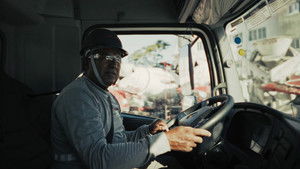
Work A Lot
In Work A Lot, Memphis Depay steps off the pitch and into the daily lives of the people who keep São Paulo moving. The mini-documentary weaves interviews with Brazilian workers — from street vendors to truck drivers, from bakers to hairdressers — with behind-the-scenes moments of Depay’s own life in Brazil, spanning music, football, and visits to local communities. Stripped of glamour and filters, the film connects different realities through a shared truth: working hard isn’t a lifestyle choice, it’s survival. A raw, urban and honest portrait of daily struggle, belonging, and real life.
2025

Claude Lelouch, la vie en mieux
Claude Lelouch was a Jewish child in occupied France. In this documentary, he talks about the trauma he still feels from that experience, but also how it inspired him to become a filmmaker. The 1940s appear to be a formative period, key to understanding the work and career of this famous director, whose films and life have always been inseparable.
2025
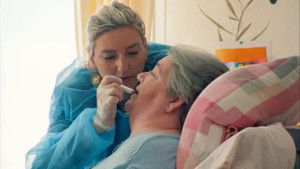
Derniers soins
While everyone wants to die "at home" without suffering and surrounded by loved ones, in reality almost everyone dies in hospital. What healthcare provisions enable people to die at home? Are we all equal in terms of the support we receive, regardless of where we live? Young caregivers in a home hospitalization unit drive day and night along the Alabaster Coast. From house to house, from dying person to dying person. Accompanying a dying person at home also means accompanying their loved ones, immersing oneself for a few days or weeks in the intimacy of a family history. Thanks to them, the end of life returns to the home, to the family, and is rehumanized.
2025
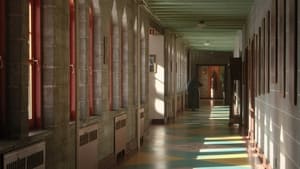
On the Other Side
The oldest Quebecois Benedictine convent open its gates to a documentary filmmaker for the first time. Observed up close, life behind its walls is busier than one would expect. About twenty cloistered nuns, most of them over 70, share their daily life with diligence and humor. A contemplative portrait of a community of sisterhood and solidarity emerges, punctuated by prayer, work and games evenings.
2022
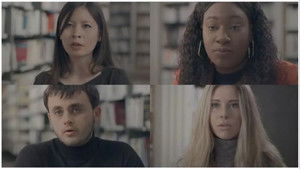
Mes premiers pas d'éducateur
Hannah, Laure, Adrien, and Halima are students at the Regional Institute of Social Work in Paris. Four students among the fifty in the first year of training to become educational support workers. They chose this profession out of commitment and vocation. Between the classroom and their field placements, they will confront their dreams and ideals with the realities on the ground, discover new sides of themselves, and begin to shape the contours of the profession they will practice—each in their own way.
2021
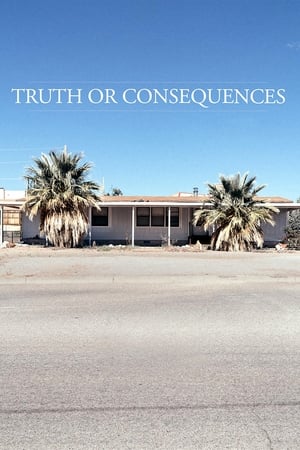
Truth or Consequences
Truth or Consequences is a speculative documentary about time and how we weave the past into the present and our possible future. Set in the small desert town of Truth or Consequences, New Mexico, the film takes place in the shadow of a nearby Spaceport and the commercial exploration of space. Through the lives of the people in town and a filmmaker from the future, the film explores progress, echoes of history, and how we each navigate a sense of loss, within ourselves and within a changing world.
2020
Un tout petit pays
2019
Himlens mörkrum
All people are beautiful when they work. Respectfully, Jean Hermanson photographed workers, mainly of the Swedish engineering and industrial divisions, and the images later became part of our modern cultural heritage.
2017
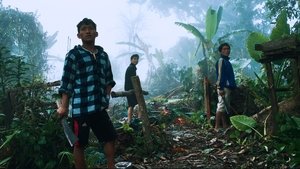
Blood Amber
Somewhere in Myanmar is a forest rich in amber and controlled by the Kachin Independence Army (KIA). Most of its inhabitants work in a mine, digging the earth night and days in the hope of finding the precious ore that will get them out of poverty. But on top of the excruciating hardship of the work, they also have to fear an attack from the army.
2017
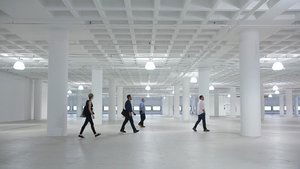
Workplace
Workplace is a documentary made by Gary Hustwit, in association with R/GA, for the 2016 Venice Architecture Biennale.Workplace is about the past, present, and future of the office. It looks at the thinking, innovation, and experimentation involved in trying to create the next evolution of what the office could be. The film follows the design and construction of the New York headquarters of digital agency R/GA (in collaboration with architects Foster + Partners) who have been experimenting with how physical and digital space can better interact. Digital technology has radically changed how and where most of us work, but the physical spaces we work in haven’t kept up with that transformation.
2016
Keep Up the Good Work
It is a fetish, a mantra, a secret religion to modern man: work. In times of the financial crisis and massive job reductions, this documentary movie questions work as our 'hallow' sense in life in a way that both humors and pains us.
2013
TIME TO DIE
L'initiation
2008
East of Walbrzych
2004
Money for Bread
Women from Turkey and Mecklenburg are working together side-by-side at a fish-processing factory in Lübeck. As they work, they share stories about their lives, including their sorrows, griefs, hopes, and dreams, while expressing their longing for home and feelings of being lost in a foreign place.
1994
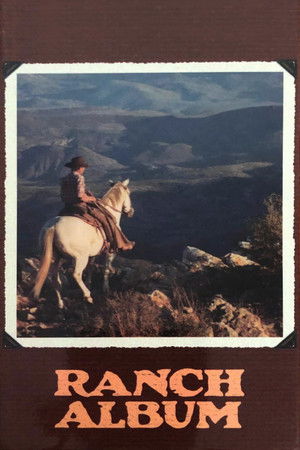
Ranch Album
Ranch Album depicts real cowboy life and rough country ranching in Northern Arizona season by season, revealing a sense of spirit and culture that have survived in the American west for a very long time.
1988
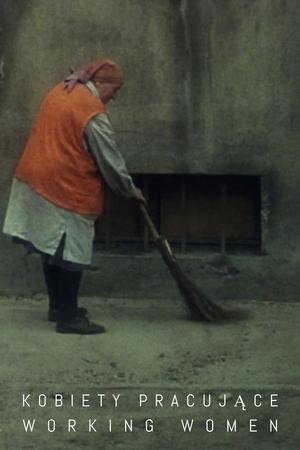
Working Women
Stylized with dramatic interiors and a distorted frame rate, this early documentary miniature from Szulkin depicts six sequences of solitary, repetitious labor.
1978
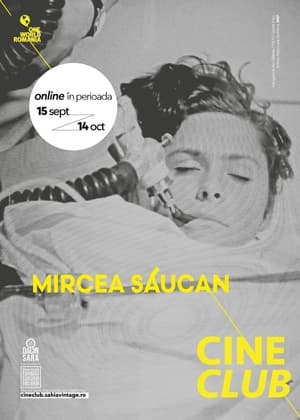
Open files
A more experimental aproach to labor protection films. In the line of Săucan's style, the soundtrack is as important as the image, the threatening music, full of shrillness, composed by Ion Dumitrescu potentiating the visual construction that mixes - in a montage reminiscent of the Soviet avant-garde school of the 1920s - all kinds of shooting techniques and frame combinations.
1975
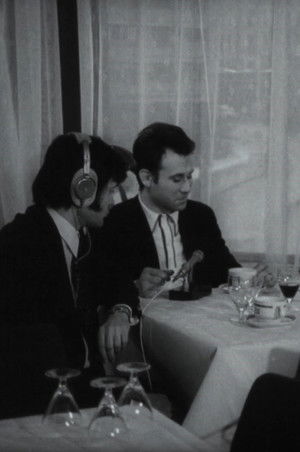
Winter of a slacker
At the beginning of the 70s, Sahia Studio produced a number of social investigations commissioned by the Central Committee of the Romanian Communist Party, intended to expose the so-called "social parasitism". The decision was taken after the theses of July 1971, which provide that "one of the main objectives of political work, especially among the youth, is the firm fight against the tendencies of parasitism, of an easy life, without work, the cultivation of responsibility and the duty to work , in the service of the country, the people, the socialist society". The most famous films, made with the competition of the Ministry of the Interior and the Ministry of Justice, are Să treacă vara and Iarna unor pierde vară
1974
Transamazônica
1973