Watch The Empire of Dreams (1982) Online Free
Loading Cinehub...
A stubborn director who wants to rediscover the Algiers of his childhood comes up against the “Hollywood” fantasies of his characters, non-professionals all hoping to be able to become “someone else”, at least for the duration of a film… Mise en abyme for a journey into megalomania…
Cast
Sid Ali Kouiret, Fettouma Ousliha-Bouamari, Brahim Hadjadj, Mustapha El Anka, Salah Teskouk, Abdelkrim Baba Aissa, Mohamed Bouamari, Aissa Ifrah, Mahmoud Aziz
More Like This

Fanon
Frantz Fanon, a French psychiatrist from Martinique, has just been appointed head of department at the psychiatric hospital in Blida, Algeria. His methods contrast with those of the other doctors in a context of colonization. A biopic in the heart of the Algerian war where a fight is waged in the name of Humanity.
2025

End of Trip, Sahara
In the 1970s, groups of young Europeans ventured into the Sahara Desert with the intention of crossing it and experiencing “an adventure”. Unprepared, reckless and ignorant of the terrain they were crossing, they faced extreme situations with unexpected consequences. From the passion of these young people for adventure, the most famous rally in the world was born. “End of the Journey, Sahara” tells the story of one of these adventures.
2024

The King of Algiers
Omar, better known as Omar the Strawberry, is an old-fashioned bandit. Forced to flee to Algeria, he makes a living out of petty crime, accompanied by his famous sidekick Roger. After decades of ruling the French criminal underworld, they must come to terms with their new life together, which until now has been one of debauchery and violence.
2023
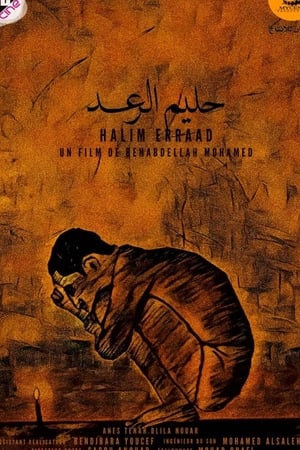
Halim El Raâd
Halim, a young man with intellectual disability, who's living with his single mother that struggles to take care of him
2022
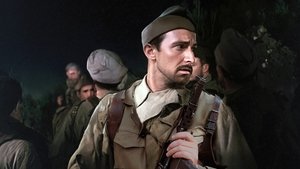
Krim Belkacem
This film retraces the combat journey of Krim Belkacem, one of the leading figures of the Algerian War. When he left the Dellys barracks in October 1945, the day after the Second World War, Krim Belkacem was 23 years old. He is a man revolted by the May massacres in Sétif, Guelma, Kherrata and several other localities in the ravaged country. But it is also and above all a young Algerian who questions the future of Algeria. On March 21, 1947, Krim at the age of 25, he dug up his "Sten" submachine gun, he took action against the boss of his douar who was none other than his cousin. He goes into hiding with six companions. He meshes this entire part of Algeria with a dense and dense network with the sole objective of taking action which will lead to the outbreak of the armed struggle on November 1, 1954.
2014
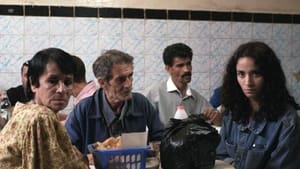
Enough!
Set amidst the civil war of Algeria in the 1990s, Enough! is the story of two women. Emel is a Westerner whose husband, a journalist, is missing - perhaps kidnapped or even killed for articles he's written.
2006

Douar de Femmes
At a dangerous time in Algeria, 'Douar de Femmes' is a story of ordinary women who manage to defend themselves in extraordinary situations. The film focuses on a small village that has been attacked more often by terrorists from the surrounding mountains. While the men work, the women learn how to handle machine guns and explore the area. “Fear has armed us,” says the young woman Sabrina. But despite that fear, people get married, children come and keep watch.
2005

The Harem of Madame Osmane
In Algiers in 1993, while the civil war is starting, Mrs Osmane's tenants have to endure her bad temper. Her husband left her and the fear to lose her respectability haunt her. The former member of the Resistance during the Independence War persists in controlling the slightest moves of the households rather than struggle against her own frustrations. Learning her daughter is in love, the possibility of finding herself alone will push her to the limit: The symbolical Mrs Osmane "harem" is about to collapse.
2000

The Sorcerer's Apprentice
60 years ago, in the Algerian desert, an atomic bomb, equivalent to three or even four times Hiroshima, exploded. Named the “Blue Gerboise”, it was the first atomic bomb tested by France, and of hitherto unrivaled power. This 70 kiloton plutonium bomb was launched in the early morning, in the Reggane region, in southern Algeria, during the French colonial era. If this test allowed France to become the 4th nuclear power in the world, it had catastrophic repercussions. France had, at the time, certified that the radiation was well below the standard safety threshold. However, in 2013, declassified files revealed that the level of radioactivity had been much higher than announced, and had been recorded from West Africa to the south of Spain.
1996
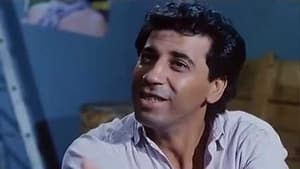
لحن الأمل (Lahn El-Almel)
Abderrahim is a mechanic and singer in his spare time. One day, he receives a car to repair, driven by a very beautiful girl. It's love at first sight. They want to get married and start a family, but the girl's parents do not view this love favorably. They decide to marry their daughter to another man. Subsequently, Abderrahim became a famous singer. The loss of her love leaves the young girl in a state of silence from which only Abderrahim can break her.
1993

Deux Femmes
An Algerian social satire that tells the story of Boujemaa, who marries a second wife in addition to his first wife, who is ill and with whom he has a son and a daughter. Living all under the same roof, the new wife imposes her authority in the house. The lives of the family members are then turned upside down.
1992
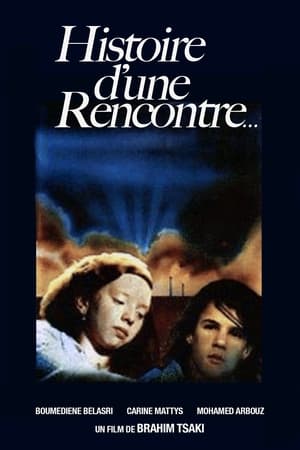
Tale of an Encounter
Two deaf and dumb children. She is the daughter of an American Oil engineer. He is the son of an Algerian farmer. They meet and manage to communicate, transcending all the cultural barriers that separate them.
1985
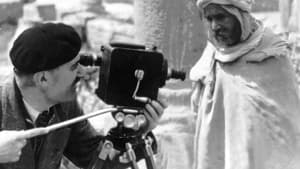
The Zerda or the Songs of Forgetting
“La Zerda and the songs of oblivion” (1982) is one of only two films made by the Algerian novelist Assia Djebar, with “La Nouba des femmes du mont Chenoua” (1977). Powerful poetic essay based on archives, in which Assia Djebar – in collaboration with the poet Malek Alloula and the composer Ahmed Essyad – deconstructs the French colonial propaganda of the Pathé-Gaumont newsreels from 1912 to 1942, to reveal the signs of revolt among the subjugated North African population. Through the reassembly of these propaganda images, Djebar recovers the history of the Zerda ceremonies, suggesting that the power and mysticism of this tradition were obliterated and erased by the predatory voyeurism of the colonial gaze. This very gaze is thus subverted and a hidden tradition of resistance and struggle is revealed, against any exoticizing and orientalist temptation.
1983
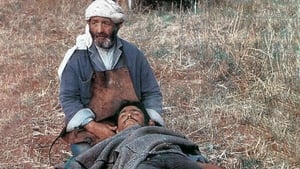
Song of Autumn
Chants d’Automne (Song of Autumn), is a story of daily life on a colonial farm, at the start of the war of liberation in Algeria, describing individual and group behavior in this context. An unthinkable, even dangerous, romantic relationship, born in this context between Catherine, daughter of a settler, and Abdelmalek, son of a blacksmith. Managing his vast property in a feudal manner, Monsieur Marcel whose only ambition is his personal enrichment to the detriment of the community. Everyone fears his authority except his daughter Catherine, a student in France, who returns home during the holidays. She does not stop herself from expressing to him her ideas of justice which go against family and colonial practices. Catherine and Abdelmalek's romance makes relationships increasingly strained, but the call for freedom will be stronger than a woman's love.
1983

Saha Dahmane
Film about Dahmane El Harrachi, musician, singer and composer of the famous song "Ya Rayah", a cult song covered by Rachid Taha, which will enjoy international success. Virtuoso of the banjo, the work of Dahmane El Harrachi did not initially respond to the canons of the purists of Algiers Chaâbi song. However, he will end up establishing himself alongside great masters of the genre, El Hadj M'hamed El Anka, Boudjemaâ El Ankis, El Hachemi Guerouabi, Amar Ezzahi... He plays his own role in this film shot with his musician friends, just before his tragic death in 1980 in a car accident on the Corniche of Algiers.
1980

Wind from the South
Néfissa, a student in Algiers, returns to her village in the south in the summer. Her father wants her to marry the mayor but she wants to continue her studies. Confronting her father and the opinion of the villagers who do not understand her, she decides to flee to Algiers. The shepherd Rabah discovering her wounded and lost in the mountains, has her treated by her mother. In contact with Nefissa, Rabat becomes aware of his exploited condition and discovers the possibilities offered to him by the cooperatives of the agrarian revolution. The two young people will go through the decisive stage together which will allow them to escape obscurantism and exploitation. Based on the novel "Le vent du sud" by Abdelhamid Benahouga
1975
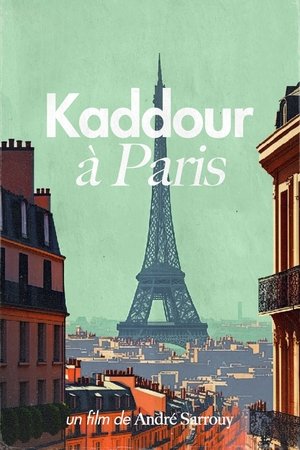
Kaddour à Paris
1938

Pépé le Moko
Pépé le Moko, one of France's most wanted criminals, hides out in the Casbah section of Algiers. He knows police will be waiting for him if he tries to leave the city. When Pépé meets Gaby, a gorgeous woman from Paris who is lost in the Casbah, he falls for her.
1937
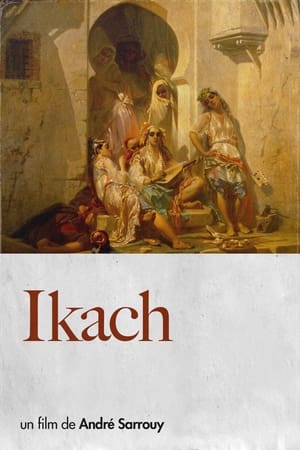
Ikach
Ikach, is a farce in two acts in popular Arabic, written by André Sarrouy and adapted and directed by himself. A critique of marriage in colonial Algeria at a time when women were little taken into account. Cunning of women and stupidity of husbands, on an original soundtrack composed by Mohamed Iguerbouchène.
1937

A Son of the Sahara
As a boy, Raoul is reared by an Arab tribe in Algerian Sahara. Years later, as a refined Europeanized gentleman, he falls in love with Barbara, an officer's daughter, who rejects him when she discovers his background. Affecting a raid, he captures her and then secretly buys her at a slave auction. When she is rescued by French troops, however, his ancestry is established and they find happiness together.
1924