Watch The Danish Collector: Delacroix to Gauguin (2021) Online Free
Loading Cinehub...
Wilhelm Hansen was a visionary businessman who lived in Denmark in the 19th century. He was one of the few collectors to take an interest in Impressionist painters at a time when they were attacked and denigrated. The film takes us to Hansen's summer house on the outskirts of Copenhagen and takes us on a tour of the extraordinary exhibition at the Royal Academy in London dedicated to his collection.
More Like This

Margaret Kilgallen: Heroines
"I especially hope to inspire young women, because I often feel like so much emphasis is put on how beautiful you are, and how thin you are, and not a lot of emphasis is put on what you can do and how smart you are. I'd like to change the emphasis of what's important when looking at a woman." Filmed in San Francisco in 2000, Margaret Kilgallen (1967-2001) discusses the female figures she incorporated into many of her paintings and graffiti tags. Loosely based on women she discovered while listening to folk records, watching buck dance videos, or reading about the history of swimming, Kilgallen painted her heroines to inspire others and to change how society looks at women. Three of Kilgallen's heroines—Matokie Slaughter, Algia Mae Hinton, and Fanny Durack—are shown and heard through archival recordings. Kilgallen is shown tagging train cars with her husband, artist Barry McGee, in a Bay Area rail yard and painting in her studio at UC Berkeley (source: Art21).
Klimt & The Kiss
The Kiss by Gustav Klimt is one of the most recognised and reproduced paintings in the world. It is perhaps the most popular poster on student dorm walls from Beijing to Boston. Painted in Vienna around 1908, the evocative image of an unknown embracing couple has captivated viewers with its mystery, sensuality and dazzling materials ever since it was created. But just what lies behind the appeal of the painting – and just who was the artist that created it? Delving into the details of real gold, decorative designs, symbolism and simmering erotica, a close study of the painting takes us to the remarkable turn of the century Vienna when a new world was battling with the old.
2023
Las Muralistas: Our Walls, Our Stories
Las Muralistas features women muralists whose works cover the walls of San Francisco’s Mission District. The muralism movement that emerged in the 1970s in the Mission District marked the beginning of a tradition of activism, expression, and community building through public art.
2022
Albert Anker. Malstunden bei Raffael
With his vivid oil paintings, Albert Anker captured Swiss folk life like no other. Together with musician Endo Anaconda we discover the "Anker-House", Anker's old studio.
2022

Yarik vive
2021
I, Claude Monet
From award-winning director Phil Grabsky comes this fresh new look at arguably the world’s favourite artist – through his own words. Using letters and other private writings I, Claude Monet reveals new insight into the man who not only painted the picture that gave birth to impressionism but who was perhaps the most influential and successful painter of the 19th and early 20th centuries. Despite this, and perhaps because of it, Monet’s life is a gripping tale about a man who, behind his sun-dazzled canvases, suffered from feelings of depression, loneliness, even suicide. Then, as his art developed and his love of gardening led to the glories of his garden at Giverney, his humour, insight and love of life is revealed. Shot on location in Paris, London, Normandy and Venice I, Claude Monet is a cinematic immersion into some of the most loved and iconic scenes in Western Art.
2017
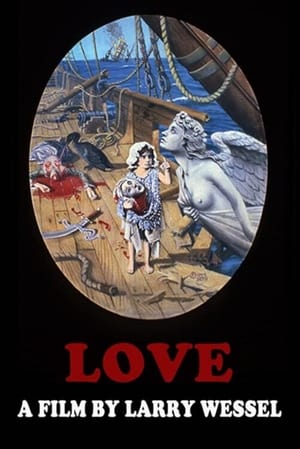
Love
Beth Moore-Love is perhaps the greatest living artist working in America today. Her works can be found in private collections throughout the United States and Europe. She is a national treasure and yet, she is virtually unknown. Filmmaker Larry Wessel is determined to change that with his nine year labor of love.
2014
The Great Museum
This feature documentary portrays one of the most important museums in the world, the Kunsthistorisches Museum Wien. It presents a unique look behind the scenes of this fascinating institution and encounters a number of charismatic protagonists and their working fields unfolding the museum’s special world – as an art institution as well a vehicle for state representation.
2014

The Mona Lisa Myth
2014
Counterfeit Culture
A documentary that explores the dangerous and sometimes deadly world of fake products. An industry that once dealt in imitation designer handbags and shoes has exploded into a global epidemic of counterfeit pharmaceuticals, foods, toys, electronic goods, car parts and microchips. COUNTERFEIT CULTURE challenges consumers to take a deeper look at what appears to be harmless knock-offs at bargain prices.
2013

Being and Becoming Chua Ek Kay
The film offers exclusive and intimate insights into how and why the classically trained artist risked rejection to revolutionize the traditional Chinese ink art form in Singapore.
2012
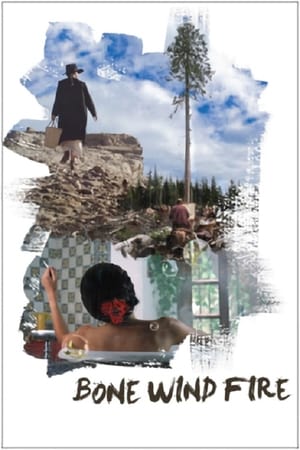
Bone Wind Fire
A journey into the hearts, minds and eyes of Georgia O’Keeffe, Emily Carr and Frida Kahlo - three of the 20th century’s most remarkable artists.
2011

Graffiti Wars
A look at the feud between graffiti artists King Robbo and Banksy.
2011
Exit Through the Gift Shop
Banksy is a graffiti artist with a global reputation whose work can be seen on walls from post-hurricane New Orleans to the separation barrier on the Palestinian West Bank. Fiercely guarding his anonymity to avoid prosecution, Banksy has so far resisted all attempts to be captured on film. Exit Through the Gift Shop tells the incredible true story of how an eccentric French shop keeper turned documentary maker attempted to locate and befriend Banksy, only to have the artist turn the camera back on its owner.
2010
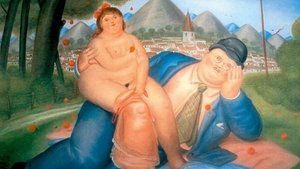
Botero Born in Medellin
To mark the artist Fernando Botero's 75th birthday, Peter Schamoni made a documentary film about his moving life. Fernando Botero is immediately recognizable by his colourful and exuberant works. Schamoni convinces us that, behind the cliché of the naïve, Fernando Botero is an artist who also devotes himself to serious and profound themes. Schamoni not only accompanies Botero to Tuscany, where he creates his sculptures, and to his Parisian painter's studio. The film also takes us on a journey to Colombia, where Schamoni lets the viewer take part in the world in which the artist lives and works, in the highs and lows of his life.
2008

Empire of the Nude: The Victorian Nude
The Victorian era is often cited for its lack of sexuality, but as this documentary reveals, the period's artists created a strong tradition surrounding the classical nude figure, which spread from the fine arts to more common forms of expression. The film explains how 19th-century artists were inspired by ancient Greek and Roman works to highlight the naked form, and how that was reflected in the evolving cultural attitudes toward sex.
2001
Speaking of Abstraction: A Universal Language
At the beginning of the twenty-first century, abstraction - that most quintessentially modernist innovation - maintains a peculiarly contradictory position. Used, on one hand, by post-modernist artists as just one more quotable style amongst many, it is on the other hand still considered an elitist or hermetic language by audiences intimidated by its lack of recognizable subject matter. Yet ultimately, abstraction continues to be a viable creative path for contemporary artists of all generations, many of whom embrace it as the most inclusive and fundamentally resonant of artistic languages. Filmed at the artists' studios, the Dia Center for the Arts, and the Guggenheim Museum during their exhibition, "Abstraction in the Twentieth Century."
1999
Ich lebe in der Gegenwart - Versuch über Hans Richter
1973
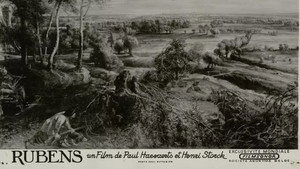
Rubens
This surreal abstract film falls into three sections, or movements, the first taking place on the ground, the second in the air and the third again on the ground. In the first movement various motifs or themes are introduced, which are again picked up and developed in the third movement. Six spheres, evolved in the first movement, become the sole subject matter–or “dancers”–of the second movement, which consists of a simple type of ballet using the floor-plan choreography or traditional ballet as a basis of interest.
1948
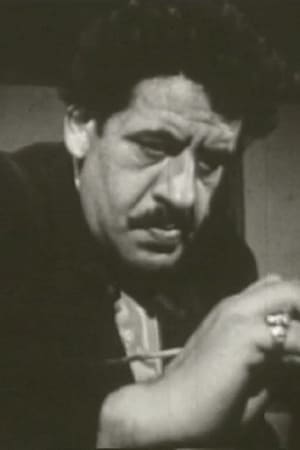
Visite à Oscar Dominguez
This is the legendary meeting between a young filmmaker and one of the masters of surrealism: the spanish painter Óscar Domínguez, born in La Laguna, Tenerife, in 1906, died in Paris in 1957. In the "Visite," the artist -admirer of Picasso, rebellious disciple of Breton- is presented in solitude, far from the tumult of the exhibitions and parisian circles. An austere approach, almost “povera”, with no audio, nor flashy camera movements, but rarely attractive. Why Resnais could not finish his movie? Hope one of our experts help us to solve the mystery.
1947