Watch The Cuban Method (2021) Online Free
Loading Cinehub...
A documentary on the legacy of ballet in Cuba that aired on PBS in Rochester, NY. Filmed on location in Havana, Cuba July – August, 2016. Featuring Laura Alonso, the history of the National Ballet of Cuba, and interviews with staff and dancers attending CUBALLET at or studying at The Center Prodanza of Cuba.
Cast
Laura Alonso
More Like This
Bumpa
This documentary will explore the Afro-Caribbean dance, ‘whining’ alongside the practice of twerking to analyze respectability politics, pressures to accommodate whiteness, and gendered criticism of sexual expression within the Black diaspora. Using archival footage of West African dance, expert opinion from dancing and gender studies professors, and the active participation of partygoers in a dance experiment, Watkins will paint the picture of the defiance, autonomy, and ancestral veneration intrinsic to these traditional movement styles.
2025
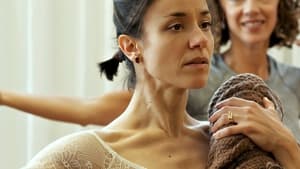
Becoming Giulia
Giulia Tonelli, principal dancer at the Zurich Opera House, returns from maternity leave. She has to fight to find her place and a new balance, between the competitive and extremely demanding world of an elite ballet company and her new family life.
2024
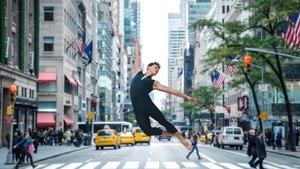
Cuban Dancer
Alexis, a talented and proud student of the National Ballet School of Cuba, spends his life practicing chassé and entrechats with his girlfriend and dance partner Yelenia. However, when his family moves to Florida to be reunited with his sister, he must adjust his expectations and dreams to a radically new environment. Alexis, facing rejection and homesick for his native Cuba, feels lost and alone. He must find his way in the world of American ballet while remaining faithful to his roots.
2020
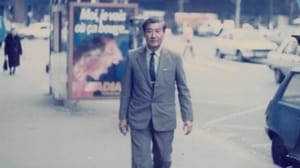
Jeronimo
Born to Korean immigrant parents freed from indentured servitude in early twentieth century Mexico, Jerónimo Lim Kim joins the Cuban Revolution with his law school classmate Fidel Castro and becomes an accomplished government official in the Castro regime, until he rediscovers his ethnic roots and dedicates his later life to reconstructing his Korean Cuban identity. After Jerónimo's death, younger Korean Cubans recognize his legacy, but it is not until they are presented with the opportunity to visit South Korea that questions about their mixed identity resurface.
2019
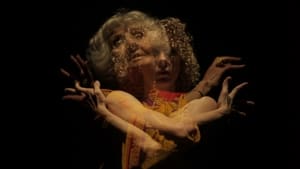
The Euphoria of Being
Alone, Eva Fahidi returned home to Hungary after WWII. At 20 years of age, she had survived Auschwitz Birkenau, while 49 members of her family were murdered, including her mother, father, and little sister. Today, at age 90, Eva is asked to participate in a dance theatre performance about her life's journey. This would be her first experience performing on a stage. Reka, the director, imagines a duet between Eva and a young, internationally acclaimed dancer, Emese. Reka wants to see these two women, young and old, interact on stage, to see how their bodies, and stories, can intertwine. Eva agrees immediately. Three women - three months - a story of crossing boundaries. Whilst the extraordinary moments of Eva's life are distilled into theater scenes, a truly wonderful and powerful relationship forms among the three women.
2019
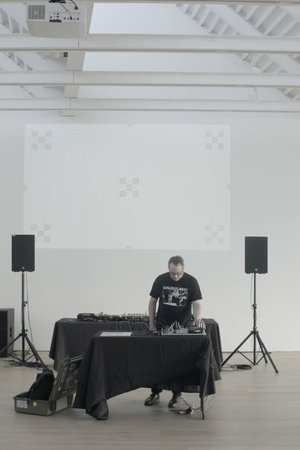
Tights Worship: Inside the Practices of The Rita
The film traces Sam McKinlay’s early days as a punk skateboarder through his academic development as a conceptual artist into a highly esteemed noise practitioner whose work bridges the gap between the gallery world and the sleaze of exploitation film imagery. It documents the physical processes of his work and the distillation of visuals into sound, most notably addressing the appeal of abstraction—from the cheap effects of old monster movie makeup to the ‘masks’ created by the heavy cosmetic makeup of 1920s flapper culture and actresses like Pamela Stanford in Jess Franco’s Lorna the Exorcist (The Rita has albums or EPs named after several eurotrash actresses, including The Nylons of Laura Antonelli (2009) and Monica Swinn/Pamela Stanford (2016)).
2019
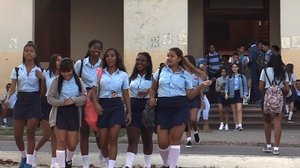
The Voice of Innocence
"The Voice of Innocence" is a documentary that shows how, starting in 1959, the Cuban Revolution put into practice a comprehensive and universal policy of safeguarding the rights of the child, even under the multiple difficulties resulting from the economic, commercial and financial blockade imposed by the United States more than six decades ago. Cuba is one of the main signatories of the Convention on the Rights of the Child, signed on 20 November 1989, when the country had already made extraordinary progress in protecting the rights of the child, in comparison to developed countries, such as the United States, which as of today hasn't yet ratified the Convention.
2019
Cuba, A Paradise on the Brink
Will Cubans be able to safeguard their heritage of pristine Nature and preserved ecological treasures under this new era, as they are facing the combined pressure of money and tourism? What policies can be implemented to maintain the island’s spectacular wilderness?
2017
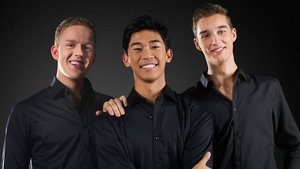
Ballet Boys
Ballet Boys takes you through disappointments, victories, forging of friendship, first loves, doubt, faith, growing apart from each other, finding your own way and own ambitions, all mixed with the beautiful expression of ballet.
2014
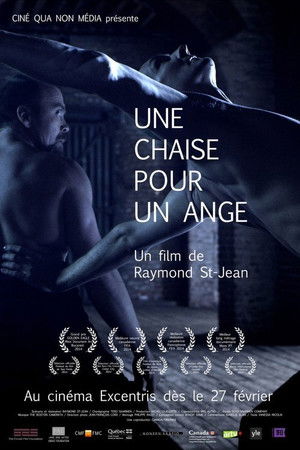
A Chair Fit for an Angel
For two hundred years, the Shakers have been America's most successful utopian society. While seeking harmony, order and perfection in every aspect of their lives, they built minimalistic furniture and buildings that influenced modern design. The Shakers wrote songs of exquisite beauty and danced to the point of ecstasy during their religious meetings. Inspired by this music and dance, choreographer Tero Saarinen created Borrowed Light, a dance piece about communal life and individual sacrifice. Shot in Finland and the United States, featuring interviews and excerpts from Borrowed Light, this documentary explore the cultural legacy of this religious group devoted to creating heaven on earth.
2014
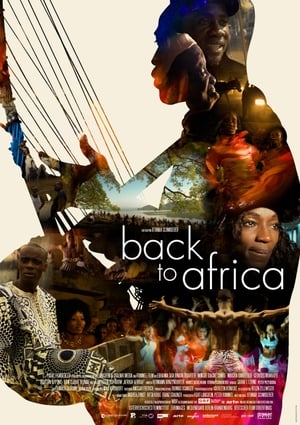
Back To Africa
An Austrian director followed five successful African music and dance artists with his camera and followed their lives for a year. The artists, from villages in Ghana, Gambia and Congo, were the subjects of Africa! Africa! touring across Europe, but they have unbreakable roots to their homeland and their families. Schmiderer lovingly portrays his heroes, who tell their stories about themselves, their art and what it means to them to be African with captivating honesty. The interviews are interwoven with dance scenes and colourful vignettes set to authentic music.
2008

Sicko
A documentary about the corrupt health care system in The United States whose main goal is to make profit even if it means losing people’s lives. "The more people you deny health insurance, the more money we make" is the business model for health care providers in America.
2007

Busby Berkeley: A Journey with a Star
Profile of famed dance director Busby Berkeley's career, in particular "The Gang's All Here"
2007
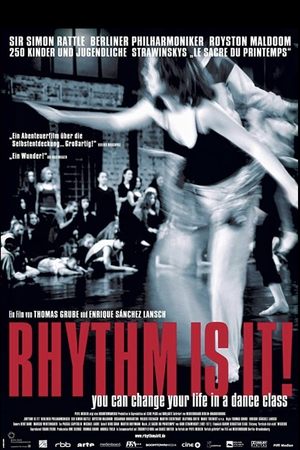
Rhythm is it!
RHYTHM IS IT! records the first big educational project of the Berlin Philharmonic Orchestra under Sir Simon Rattle. The orchestra ventured out of the ivory tower of high culture into boroughs of low life for the sake of 250 youngsters. They had been strangers to classical music, but after arduous but thrilling preparation they danced to Stravinsky's 'Le Sacre du Printemps' ('The Rite of Spring'). Recorded with a breathtaking fidelity of sound, this film from Thomas Grube and Enrique Sánchez Lansch documents the stages of the Sacre project and offers deep insights into the rehearsals of the Berlin Philharmonic Orchestra.
2004
A Belated Premiere
A prominent Russian ballet dancer and teacher Alexander Shiryaev had another talent hidden for almost a century. Archive materials that date back to 1906 reveal his bold experiments at stop-motion and paper animation.
2004

Flamenco
The film presents thirteen rhythms of flamenco, each with song, guitar, and dance: the up-tempo bularías, a brooding farruca, an anguished martinete, and a satiric fandango de huelva. There are tangos, a taranta, alegrías, siguiriyas, soleás, a guajira of patrician women, a petenera about a sentence to death, villancicos, and a final rumba.
1995
Genius on the Wrong Coast
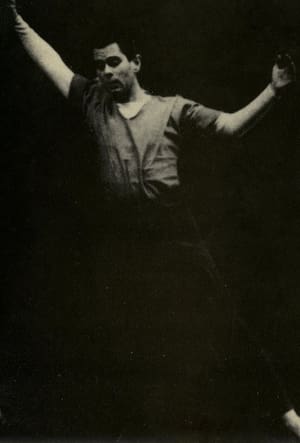
Portrait of Lester Horton, a Los Angeles-based dancer, choreographer and teacher who trained many world-reknowned dancers and built the first American theater devoted permanently to dance. Former students and friends, including Bella Lewitzky, Alvin Ailey, and Carmen de Lavallade, help create a picture of Horton through interviews. Includes numerous dance excerpts.
1993

Divine Horsemen: The Living Gods of Haiti
This intimate ethnographic study of Voudoun dances and rituals was shot by Maya Deren during her years in Haiti (1947-1951); she never edited the footage, so this “finished” version was made by Teiji Ito and Cherel Ito after Deren’s death.
1993
Café Müller
Pina Bausch created and performed Café Müller for her dance company Tanztheater Wuppertal. The dance was inspired by and based on her childhood memories of watching her father work at his café in Germany during and immediately following World War II. In this silent style featurette, Bausch shows a restaurant after closing, in which the ghosts of the departed customers stumble blindly into walls and onto chairs but fail to find one another.
1985
Analógie
Poetic documentary about works of several artists from ideas to “births” of works of art.
1965