Watch The Companions Of The Void (1989) Online Free
"Les Compagnons Du Vide" (The Companions of the Void) is a documentary made in 1989 by Claude Andrieux and Gilles Chappaz, broadcast in two parts on the FR3 program "Montagne." The film explores the history of the mountain guide profession through portraits of mountain guides, showcasing the diversity of this high-risk occupation. It also delves into the intimate relationship between the climbing team and the client, using the example of prestigious guides. The documentary follows these teams on major climbs around Chamonix, on Mont Blanc, and on La Meije in the Écrins massif.
Cast
Jean-Franck Charlet, Denis Ducroz, Sylviane Tavernier, Patrick Berhault, Roger Canac, Lionel Wibault, Roland Marie, Jean-Paul Vion, Agnès Ducroz, René Tournier, Joël Vincent, Guy Martin
More Like This
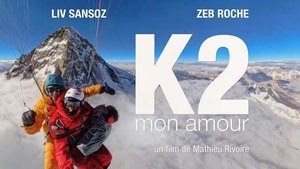
K2 Mon Amour
In July 2024, Liv Sansoz and Bertrand Roche (aka Zébulon) made history in Himalayan mountaineering by climbing K2 (8,611m) without supplemental oxygen, then paragliding from the summit. The couple achieved a highly coveted first, and for Zébulon, the feat was all the more impressive as he had already completed the first tandem paragliding flight from Everest in 2001. More than just a climb, this film is a love story where Liv and Zeb share their doubts, emotions, and determination, carrying a shared dream where every step is taken together, united to the very end.
2025
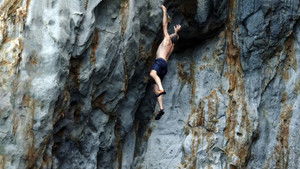
Via Annaba
Via Annaba takes us to the 2023 Annaba Mountain Week in Algeria, an event organized by the French Institute of Annaba and produced by CSPS Aïn Beïda and Nephrops Prod. During this event, climbers from Algeria, France, and Spain gathered for numerous outdoor sports workshops along Annaba's magnificent, rugged coastline: rock climbing, setting a via ferrata route, deep water soloing, scuba diving, and more. This film, a true postcard of Annaba, a city nicknamed "the charming one," is also, and above all, a pretext for inspiring encounters and a contribution to the development of mountain sports in Algeria.
2024
Berg
A journey at high altitude seen through the eyes of three mysteriously connected hikers. After their coincidental meeting we follow these three on their personal odysseys. The levels of concentration they exhibit in trying to avoid mistakes makes their experience of the overwhelming landscape even more intense.
2021
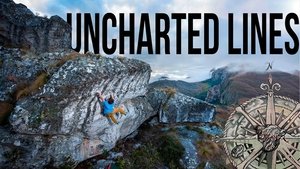
Uncharted Lines
Every climbing reward comes at the cost of a potential risk, but when you are a climbing pioneer, driven by the unknown and unexpected, you are willing to risk whatever it takes for the chance to find the perfect first ascent line. This is a story of exploration and discovery, a journey of friendship and solitude, a quest to fuel an obsessive passion. Starring Paul Robinson, Jimmy Webb, Daniel Woods, Chris Sharma and Niky Ceria.
2017
Killerslope
Mountain climbers achieve fame, despite the many deadly accidents. The image is partly created by the climbers themselves. But because of the difficult circumstances at these great heights, it is practically impossible to find out if all these incredible stories are actually true. In April 2014, Dutch climbers start an expedition the sixth highest mountain in the world. Investigative journalist Geertjan Lassche closely follows the group. How ruthless do you need to be? And are these mountain climbers really as arrogant as they seem to be? The closer the group gets to the top, the more we learn about all kinds of universal dilemmas. And then, even the mountain itself turns against the climbers.
2014
Jurek
This documentary follows the feats of high-altitude climber Jerzy Kukuczka and his ascent to higher heights before his death in 1989.
2014
Cerro Torre: A Snowball's Chance in Hell
Movie about David Lama climbing the Patagonian mountain Cerro Torre for the first time free, a mountain that has been dubbed the most difficult to climb in the world.
2013
Apö Karim, Ambassadeur de l'Himalaya
2012
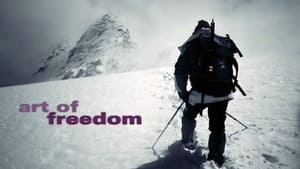
Art of Freedom
The documentary film Art of Freedom answers the most poignant questions on the phenomenon of Polish expeditions to the Himalayas. Poles have reigned the highest mountaintops of the world for more than 20 years. They not only set down new trails, but new rules of behavior. They set themselves apart with an original style of climbing, endurance, conscientiousness about the overall well-being of the team - and solidarity.
2011
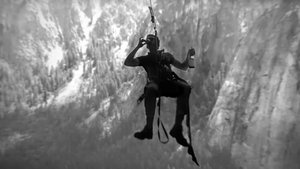
Warren Harding - Recollections of the First Ascent of El Capitan in Yosemity Valley
On November 12, 1958, nearly a year and a half after planting his first piton, Warren Harding climbed to the summit of El Capitan, the legendary face of Yosemite, which he became the first to climb via the equally legendary Nose route. An extraordinary undertaking closer to a heavy Himalayan expedition than to rock climbing. Climbing mainly on weekends in the fall and spring with companions whose level of skill was of little importance to him, Warren Harding spent a total of 47 days (spread over 17 months) on the face. 675 pitons (including 125 expansion pitons) and several thousand hammer blows were necessary to build his legend, despite the displeasure of the "Christians of the valley," as he somewhat sardonically nicknamed Royal Robbins and his cronies, who swear by style.
2011
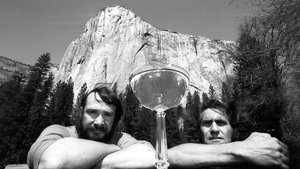
Warren Harding - Recollections of the Wall of the Early Morning Light
In 1970, Warren Harding and Dean Caldwell set out to climb Early Morning Light, better known as Dawn Wall, in Yosemite National Park. Arguably the most controversial climb in the park's history, due to multiple storms and a rescue attempt by the Yosemite Service. The climb thrust the event into the media spotlight, creating a controversy within the local climbing community. In this short documentary, Warren Harding himself recounts the climb.
2011
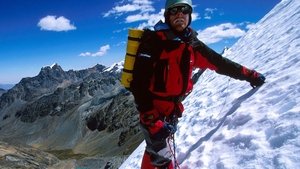
Touching the Void
The true story of Joe Simpson and Simon Yates' disastrous and nearly-fatal mountain climb of 6,344m Siula Grande in the Cordillera Huayhuash in the Peruvian Andes in 1985.
2003
Mister Karim
1997
Moving Over Stone
Writer and mountain guide Doug Robinson explains the sport of climbing, focusing on the climbing movement, with several leading climbers providing examples on challenging routes across the United States.
1988

Little Karim
1985
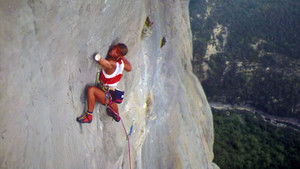
Opera Vertical
Vertical Opera is a documentary film directed by Jean-Paul Janssen, with climbers Patrick Edlinger and Jean-Paul Lemercier in the Gorges du Verdon. The film opens with a training sequence of Patrick Edlinger then he links the routes with Jean-Paul Lemercier "L'Ange en décongelation" (7a), in which he falls voluntarily to demonstrate the usefulness of the rope, then "Le Septième Saut" (7b+). Finally, the final scene, an anthology, consists of a close-up of Edlinger who climbs free solo and barefoot the route "Débiloff", still in the Verdon, above hundreds of meters of void, all to lyrical music. It is "Wie Furchtsam Wankten Meine Schritte", the aria for alto voice from Johann Sebastian Bach's cantata BWV 33, music not unrelated to the subject of the documentary: "How faltering and fearful my steps were".
1984

The Backstage Wall
Behind the scenes of the filming of a film on climbing a cliff by Patrick Berhault and Georges Unia on the parishes of the route "La Tête de Chien" in Monaco. Director Laurent Chevallier explains the difficulties of filming at height, the kind of shots that are suitable and the specifications of equipment suitable for filming on a cliff.
1983
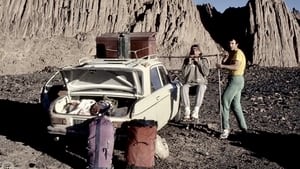
Oversand
Oversand is one of the first films about free climbing, the third film in a series of three with "Overdon" and "Over-Ice". Directed by Jean-Paul Janssen, the film was shot in 35mm in Algeria, in the Sahara Desert, in the Tamanrasset region, on the walls of the majestic peaks of the Atakor massif, central sub-region of Hoggar, mountainous heart of Hoggar, a volcanic plateau of almost circular shape, whose average altitude is 2000 meters, and which culminates at Mount Tahat (2918m), the highest point in Algeria. The Atakor is distinguished by its spectacular volcanic peaks, its needles, and its rugged landscapes, resulting from the erosion of ancient volcanic chimneys, which make it the most emblematic summits of the Hoggar, such as the Assekrem, the Ilamane, or the Tizouyag, where climbers Patrick Edlinger, Patrick Bérhault, Bernard Gorgeon, Hugues Jaillet, Jacques Perrier, Stéphane Troussier and Odette Schoënleb evolve under the watchful eye of the Tuareg caravans.
1981
Stars at Noon
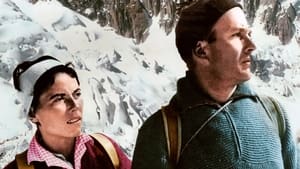
Les Etoiles de Midi is an engaging docudrama about some of the more spectacular exploits of French mountain climbers over the last several decades. In one re-enacted story, there is a wartime escape through the mountains, and in another, a daring rescue of a pair of climbers who had been missing. The actors themselves are adept at the sport of climbing, and they give the scenes an immediacy and real daring that brings the stories alive. A combination of their acrobatics and skill and the outstanding episodes in the history of French climbing creates a winning 78 minutes.
1959
In the Shadow of Karakorum
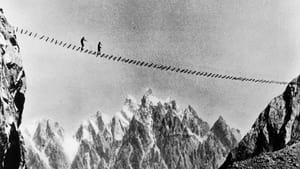
In 1954, a German-Austrian expedition led by Mathias Rebitsch set off for the difficult-to-access Karakoram Mountains, geographically north of the Himalayas. They come across the Hunza, a people who live in the valley of the same name and believe they are descended from the soldiers of Alexander the Great. The documentary conveys impressions of the poor life of the Hunza people, the harvest, a court hearing, festivals and the children's everyday school life. Finally, the expedition sets off again and sets up its main camp on the moraine ridge of a glacier, where they measure the glacier and the earth's magnetic field. Finally, some men from the research community set off for a sub-peak of Batura.
1955