Watch The Cinematograph: Birth of an Art (2021) Online Free
Throughout the 19th century, imaginative and visionary artists and inventors brought about the advent of a new look, absolutely modern and truly cinematographic, long before the revolutionary invention of the Lumière brothers and the arrival of December 28, 1895, the historic day on which the first cinema performance took place.
Cast
Vimala Pons, Bertrand Lemoine, Vanessa Schwartz, Tacita Dean, Paul Perrin, Mark Lewis, Dominique Païni, Marie Robert, Thierry Frémaux, Christian Petzold, Olivier Assayas
More Like This
Uzbek Madonna
Documentary highlighting clips and providing historical context to surviving silent films from Uzbekistan.
2024
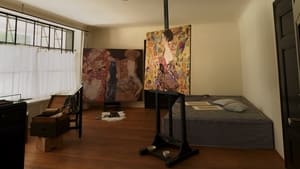
Klimt & The Kiss
The Kiss by Gustav Klimt is one of the most recognised and reproduced paintings in the world. It is perhaps the most popular poster on student dorm walls from Beijing to Boston. Painted in Vienna around 1908, the evocative image of an unknown embracing couple has captivated viewers with its mystery, sensuality and dazzling materials ever since it was created. But just what lies behind the appeal of the painting – and just who was the artist that created it? Delving into the details of real gold, decorative designs, symbolism and simmering erotica, a close study of the painting takes us to the remarkable turn of the century Vienna when a new world was battling with the old.
2023

Kathryn Bigelow: Hollywood Adrenaline
For more than 40 years Kathryn Bigelow has been making films that explore male violence. With movies like Blue Steel, Point Break, The Hurt Locker and Zero Dark Thirty, the Oscar winning American filmmaker has impressed with hard-hitting moviemaking that holds a mirror up to contemporary America and the world.
2023
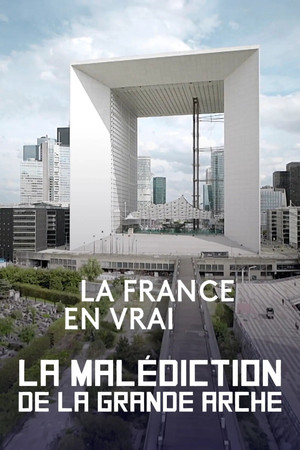
La Malédiction de la Grande Arche
2023

In Search of Tomorrow
A nostalgic journey through ’80s Sci-Fi-films, exploring their impact and relevance today, told by the artists who made them and by those who were inspired to turn their visions into reality.
2022
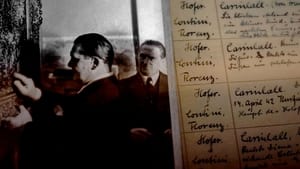
Goering's Catalogue: A Collection of Art and Blood
For more than a decade, Reichsmarschall Hermann Goering, Adolf Hitler's right-hand man during the infamous Third Reich, assembled a collection of thousands of works of art that were meticulously catalogued.
2021
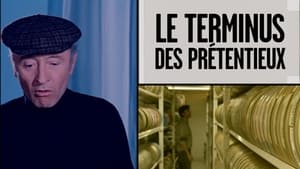
Le Terminus des prétentieux
This year, Michel Audiard would have turned 100. To celebrate the life and work of the French screenwriter and director, Gaumont opens their vault and reveals some unknown information on the legendary witty dialogues writer.
2020

Sur les traces de Louis Braille
2018

La Cicciolina: Godmother of Scandal
The personal and professional story of Ilona Staller, known as Cicciolina, is probably unique: she left communist Hungary and moved to Italy, where she found a fertile environment for a life dedicated to scandal.
2017
Hitler's Hollywood
Film journalist and critic Rüdiger Suchsland examines German cinema from 1933, when the Nazis came into power, until 1945, when the Third Reich collapsed. (A sequel to From Caligari to Hitler, 2015.)
2017
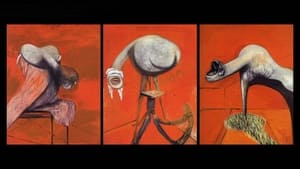
Francis Bacon: A Brush with Violence
In this unique, compelling film, those who knew him speak freely, some for the first time, to reveal the many mysteries of Francis Bacon.
2017

This Is Not a Dream
The video revolution of the 1970s offered unprecedented access to the moving image for artists and performers. This Is Not a Dream explores the legacies of this revolution and its continued impact on contemporary art and performance. Charting a path across four decades of avant-garde experiment and radical escapism, This Is Not a Dream traces the influences of Andy Warhol, John Waters and Jack Smith to the perverted frontiers of YouTube and Chatroulette, taking in subverted talk shows and soap operas, streetwalker fashions and glittery magic penises along the way.
2012

A Brief History of Slasher Films
Writer Adam Rockoff provides a basic overview of the slasher movie genre.
2011
Inside the Keystone Project
Documentary short regarding the preservation and restoration of the worldwide remains of the Keystone films.
2010
Yakuza Eiga, une histoire du cinéma yakuza
The history of the Yakuza Eiga at the TOEI studio is roughly outlined. Real Yakuza and also their connections to the movie business are discussed, and many important actors and directors of the genres are interviewed. Former real yakuza boss turned actor Noboru Ando, Takashi Miike, Sonny Chiba and many more get a chance to speak.
2009
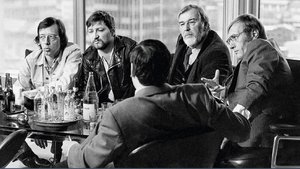
Counter Shot: Departure of the Filmmakers
Documentary about filmmakers of the New German Cinema who were members of the legendary Filmverlag für Autoren (Film Publishing House for Authors). Among them are Werner Herzog, Rainer Werner Fassbinder, and Wim Wenders.
2008
Drama, Tanz und Beine
2007

God Does Not Believe in Us Anymore
After his father is murdered by the Nazis in 1938, a young Viennese Jew named Ferry Tobler flees to Prague, where he joins forces with another expatriate and a sympathetic Czech relief worker. Together with other Jewish refugees, the three make their way to Paris, and, after spending time in a French prison camp, eventually escape to Marseille, from where they hope to sail to a safe port.
1982

Lenin in Paris
1911. Lenin organizes the first Bolshevik party school near Paris, in the small town of Longjumeau. Through a chain of historical parallels and associations, this time is intertwined with the events of the Paris Commune, the October Revolution and the political struggles of the post-revolutionary years.
1981
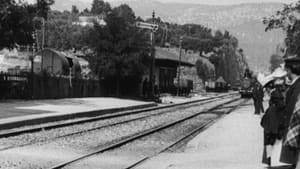
The Arrival of a Train at La Ciotat
A group of people are standing along the platform of a railway station in La Ciotat, waiting for a train. One is seen coming, at some distance, and eventually stops at the platform. Doors of the railway-cars open and attendants help passengers off and on. Popular legend has it that, when this film was shown, the first-night audience fled the café in terror, fearing being run over by the "approaching" train. This legend has since been identified as promotional embellishment, though there is evidence to suggest that people were astounded at the capabilities of the Lumières' cinématographe.
1896