Watch The Binocle (2018) Online Free
A short film based on the short story "De Binocle" by Dutch writer Louis Couperus. It tells the story of a nervous man who on one evening while going to the opera becomes the victim of his own obsessive thoughts.
Cast
Dion Vincken, Julien Croiset, Ingeborg Ansing, Edgard Geurink, Arnoud Cambier, Leonore Tismeer, Ruth Borg, Jacob Bisschops, Ulrica de la Mar, Alwin Kloekhorst, Maaike Damen
More Like This

The Ballad of Suzanne Césaire
An actress, three months post-partum, reads through fragments of the archive of Suzanne Césaire as she prepares to perform excerpts of the writer's work.
2025
Rise, Grind & Die
The job-addicted stock entrepreneur Tor is faced with a task when he must choose health over success.
2023
Strangle
When love has turned cold and the best dish served cold is done with passion. A new killer is in town strangling those who seem to be connected in keeping a secret.
2023

Alice, Darling
Pushed to the breaking point by Simon, her psychologically abusive boyfriend, Alice becomes an unwitting participant in an intervention staged by her two closest friends while on vacation. As she rediscovers the essence of herself and gains some much-needed perspective, she slowly starts to fray the cords of codependency that bind her. However, Simon's vengeance is as inevitable as it is shattering, and once unleashed, it tests her strength, her courage, and the bonds of deep-rooted friendships.
2022
Consumed
After her mother comes back from an extended hospital stay, a young girl begins to envision an ominous monster lurking in her home.
2018

Luz, Câmera, 50 Anos: Presença de Anita - O Filme
Adapted from the series aired in 2001. Looking for inspiration during the holidays, Nando sees Anita as the ideal character for his novel. She lives in a townhouse where a passionate crime happened in the past. Intense, Anita seduces Nando and awakens to
2015

Neandertal
17-year-old Guido suffers since his early childhood from neurodermatitis. After being taken to the hospital due to a heavy attack, he starts to question his personal and familiar environment and discovers that his parents’ relationship – which he assumed to be happy and sound – is built on lies. Unable to deal with this disappointment, he flees from it and moves in with his older brother and his roommates...
2006

Marie Antoinette
A retelling of the story of France’s iconic but ill-fated queen, Marie Antoinette - from her betrothal and marriage to Louis XVI at fifteen to her reign as queen at nineteen and ultimately the fall of Versailles.
2006
Freedomland
A black police detective must solve a strange case of a kidnapped boy and deal with a big racial protest.
2006

Pola X
A writer leaves his upper-class life and journeys with a woman claiming to be his sister, and her two friends.
1999

Face to Face
A psychiatrist temporarily separated from her family begins to experience severe psychological distress while working at a mental hospital and returning to her childhood home. As her professional responsibilities and personal relationships intersect, she undergoes a breakdown that forces her to confront long-suppressed memories and fears. (Note: This entry refers to the 1976 theatrical feature film (approximately 135 minutes), created by condensing and re-editing the four-part Swedish television miniseries originally produced the same year.)
1976
Lady in Black Cracks the Gate of Hell
Ghost-faced To is murdered in a mortuary after paying a visit to Muk Lan-fa. A set of teeth is found missing from another dead body. Lan-fa’s sister Sau-chen follows the leads on a business card To left behind to a dental clinic which suddenly bursts into flame. The news of her sister’s abduction by the infamous Japanese criminal Katsu Saburo soon reaches Lan-fa. Working together with her police friend Ko Cheung to crack the case, Lan-fa analyses photo evidences in minute detail. The duo order the retrieval of a pole that has survived the explosion intact while lying in wait at the clinic. Sau-chen, who has escaped, saves the duo from the chiller where they are detained. Inspector Yeung retrieves the operation plan concealed in the pole and the secret codes in the set of teeth, but the spook is shot dead by Katsu before he could reach the Hell’s Gate and the treasure buried there. Constable Kwan, and others and wipes out the gang at the Hell’s Gate.
1967
Spy No. 13
During World War II, spy Wu Lai-sheung is instructed by her superior Fan Yeung-shan to murder spy number 13 Cheung Chi-ping. While Wu establishes a relationship with Sakei, the assistant general of the Japanese army, she also gets acquainted with Cheung. Cheung and Wu fall in love. Wu recommends Cheung to become Sakei's driver. Cheung pretends to court the Japanese spy Siu-kuen, but Siu-kuen arranges to kill the spies contacting with him. Cheung has seen through Kuen's identity for long. When Kuen is going to kill Wu, Cheung kills Kuen, Fan compels Wu to kill Cheung. Wu follows the instruction to murder Cheung. After the murder, Wu disappears. After the war, Fan discovers Wu ends up in asylum. When he visits Wu, he tells her of Cheung's innocence. This breaks Wu's heart. Cheung turns out to have seen through Wu's identity for a long time and pretended to have been killed to cover up his identity and facilitate his work. With the truth known and the war ended, Cheung and Wu married.
1964
Torrents of Spring
Sojourning in Macau, Su Erning by chance helps Pan Meiniang resuscitate his younger brother and fends off the thug. In her admiration, Pan calls off the engagement arranged by her mother to exchange vows with Su despite having known him for only three days. To raise the money for the wedding, Su plans to sell his family yacht to the rich wife of his classmate Lu Zuhua in Hong Kong and promises to buy Pan a pearl necklace. The promiscuous Mrs Lu seduces Su on the yacht and then dumps him. 18 years later, Pan's daughter is getting married. Su prepares a wedding gift—a stolen pearl necklace—for the bride but is too ashamed to show himself.
1960
A Lovely Girl's Lovely Dreams
Songstress Mui Yee-wah falls head over heels for painter Wai Tik-fung despite their age difference. Because Wai is a married man, Mui's mother is against the match. Mui falls ill from grief. Rich heir Siu Kar-wai seizes the chance to successfully propose to Mui. However, Siu is unable to let go of Mui's past. In a fit of anger, he fires a deadly shot at Wai.
1958
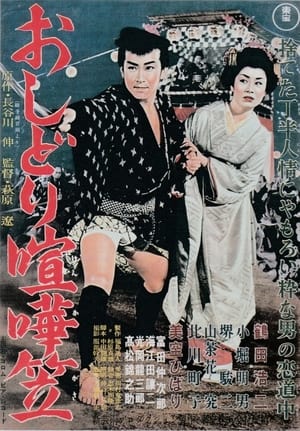
Oshidori kenkagasa
1957
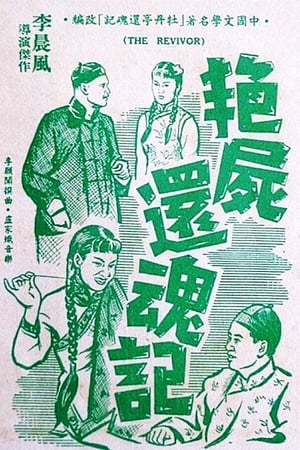
Beauty Raised from the Dead
Lau Mung-mui chances on To Lai-leung and their encounter transcends to a rendezvous in their dreams. They admire each other, but they do not know each other's names and addresses. They keep on thinking of each other and decide to take each other as their future husband and wife. Mui's father wants his son to get married, but he pays no attention to his father's wishes. Mui leaves home to look for Leung. Leung's father forces his daughter to marry her rich and powerful cousin. Leung becomes despondent and dies, following an arranged marriage with her cousin. Mui sought everywhere for Leung for three years, but to no avail. He locates the home of Leung, but the household has moved out. The house is guarded by an old servant. Mui, chasing Leung's spirit, has a brief romance with her. Acknowledging that their union will be hindered by their incompatibility as a mortal and a spirit, Leung reincarnates as a mortal so that their love may be rekindled.
1956
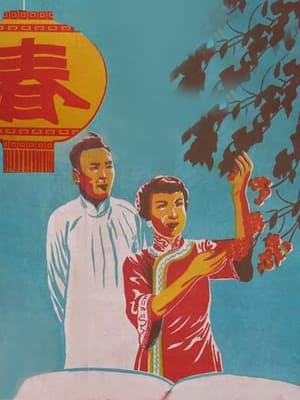
Spring
Ko Suk-ying is saddened over her arranged marriage as manipulated by her father Hak-ming. Ko Kok-sun's Cousin Chow Wai's spends the Mid-Autumn Festival before her marriage with the Kos. She has been in love with Sun. Sun finds out about her love for him when she is about to be married off, he is too weak to oppose to Wai's betrothal to another man. Sun's son, Hoi-sun, falls ill. Fearing the displeasure of his elders, Sun dares not consult a western doctor. Meanwhile, another dispute arises among members of the family over the ancestral land. When accused of being incompetent in his management, Sun takes the blame silently. Wai dies of grief while Hoi-sun becomes a victim of mistreatment. Sun is devastated at this double blow. Hak-ming instructs Sun to arrange for Ying's wedding. Knowing the kind of man Ying's fiancee is, Sun is reluctant. Not wanting to follow in Wai's footsteps, Ying fights for her own rights, and backed by an enlightened Sun, she leaves for a new start.
1953

The Juggler
A Holocaust survivor moves to Israel and experiences difficulty adjusting to life.
1953
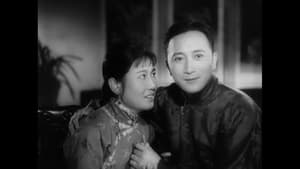
Family
"Family" (1953), which launched the Union Film legacy, "Spring" (1953) and "Autumn" (1954) are adaptations of Ba Jin's highly regarded novel "Torrent Trilogy". In "Family", director Ng Wui skilfully condenses the voluminous first part of the novel into an emotionally powerful and intellectually focused story of youngsters struggling to survive oppression and repression in a feudalistic family. This well-received film quickly established the company's reputation.
1953