Watch The Batman Shootings (2012) Online Free
The premiere of The Dark Knight Rises was the big event in Aurora, Colorado. So popular with young cinema-goers, the city's theatre complex put on an extra showing. But minutes into the film, lone gunman James Holmes, dressed as the Joker, entered the room and started firing indiscriminately. Twelve people died, many more were injured. This documentary tells the life story of Holmes, of his victims and speaks to survivors.
Cast
Amal Fashanu, James Holmes
More Like This
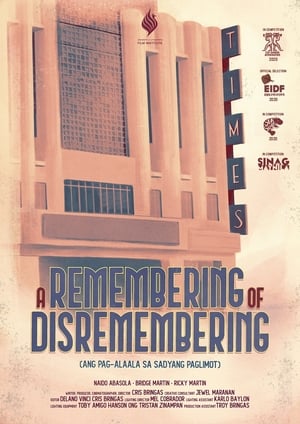
A Remembering of Disremembering
Told through the tales of love of a retiring film projectionist and a late-blooming actress, the short documentary delves into the journey of Manila’s oldest movie theater from grandiosity to obsolescence.
2020
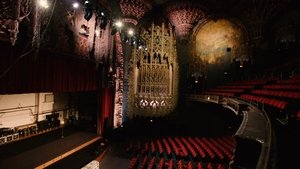
Going Attractions: The Definitive Story of the Movie Palace
Celebrating the splendor and grandeur of the great cinemas of the United States, built when movies were the acme of entertainment and the stories were larger than life, as were the venues designed to show them. The film also tracks the eventual decline of the palaces, through to today’s current preservation efforts. A tribute to America’s great art form and the great monuments created for audiences to enjoy them in.
2019
22 July
On 22 July 2011, neo-Nazi terrorist Anders Behring Breivik murdered 77 young people attending a Labour Party Youth Camp on Utøya Island outside of Oslo. This three-part story focuses on the survivors, the political leadership of Norway, and the lawyers involved.
2018
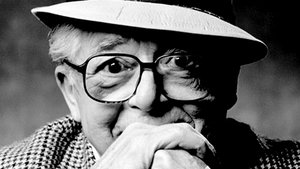
Never Be Boring: Billy Wilder
A funny walk through the life story of Billy Wilder (1906-2002), a cinematic genius; a portrait of a filmmaker who never was a boring man, a superb mind who had ten commandments, of which the first nine were: “Thou shalt not bore.”
2017
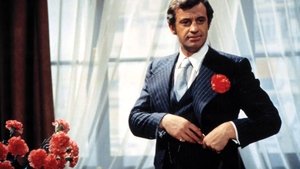
Belmondo, le magnifique
With more than 70 films and 160 million cumulative tickets in France, Jean-Paul Belmondo is one of the essential stars of French cinema.
2017
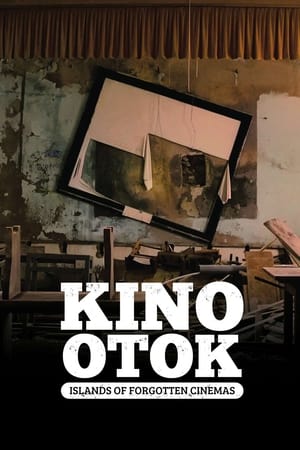
Islands of Forgotten Cinemas
A poetic documentary about the lost film culture in the small villages on the Croatian islands during the SFR of Yugoslavia.
2016
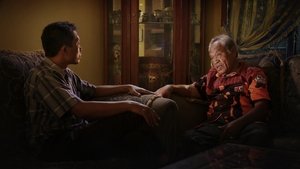
The Look of Silence
An Indonesian man with a communist background named Ramli was brutally murdered when the "Communist" purge occurred in 1965. His remaining family members lived in fear and silence until the making of this documentary. Adi, a brother of his, decided to revisit the horrific incident and visited the men who were responsible for the killings and one survivor of the purge. These meetings uncovered sadistic details of the murders and exposed raw emotions and reactions of the killers' family members about what happened in the past - much to Adi's disappointment.
2014
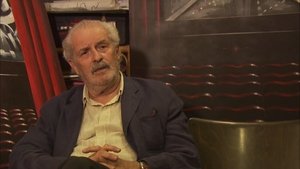
Red Chairs - Parma and the Cinema
The relations between Parma and cinema were so strong for almost the whole of the twentieth century that this city became an early laboratory of ideas and theories on cinema and a set chosen by some of the greatest Italian authors and beyond. Furthermore, a considerable number of directors, actors, screenwriters and set designers were born in Parma who have made their way internationally, testifying to the fact that in this small city in Northern Italy there was a decidedly cinematic air. Red armchairs takes up the thread of this story, wondering why, unique among the Italian provincial cities, Parma has given so much to the cinema, accompanying the viewer on a journey backwards that from the first projections of the Lumière cinema reaches the ultramodern experience of new multiplexes. During this journey we will meet the characters who created the conditions for this diffusion of cinematographic culture in Parma.
2014
Made in Hollywood
A breathtaking investigation into blockbusters, a film genre that enjoys worldwide success yet keeps its secret weapon well hidden backstage in Hollywood. The blockbuster appeals to a very wide audience, from 7 to 77 years and from Paris to Beijing. These films, which have boosted the film industry, started out with "Jaws" and "Star Wars" and are still prospering with Avatar or Alice in Wonderland. To succeed, the films must meet a few precise criteria, one of them being their cost - at 100 million dollars minimum. But in Hollywood, the films' ingredients are a well-kept secret; perhaps for fear of discovering that the studios' house rules are not as rosy as in certain fruitful happy endings? The pressure and the stakes are colossal. This fascinating documentary reviews the numerous professions affiliated with the blockbuster, via interviews with producers of the major studios (Walt Disney Studio, 20th Century Fox...)...
2011
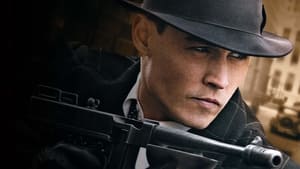
Public Enemies
Depression-era bank robber John Dillinger's charm and audacity endear him to much of America's downtrodden public, but he's also a thorn in the side of J. Edgar Hoover and the fledgling FBI. Desperate to capture the elusive outlaw, Hoover makes Dillinger his first Public Enemy Number One and assigns his top agent, Melvin Purvis, the task of bringing him in dead or alive.
2009
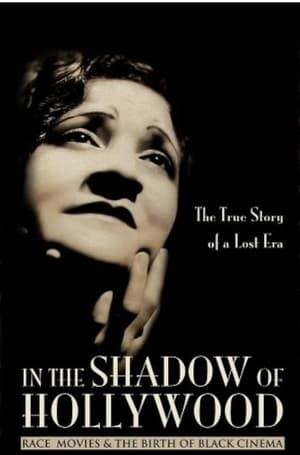
In the Shadow of Hollywood: Race Movies and the Birth of Black Cinema
This documentary captures the sounds and images of a nearly forgotten era in film history when African American filmmakers and studios created “race movies” exclusively for black audiences. The best of these films attempted to counter the demeaning stereotypes of black Americans prevalent in the popular culture of the day. About 500 films were produced, yet only about 100 still exist. Filmmaking pioneers like Oscar Micheaux, the Noble brothers, and Spencer Williams, Jr. left a lasting influence on black filmmakers, and inspired generations of audiences who finally saw their own lives reflected on the silver screen.
2007
Comrades in Dreams
Four lives that could not be more different and a single passion that unites them: the unconditional love for their cinemas, somewhere at the end of the world. Comrades in Dreams brings together six cinema makers from North Korea, America, India and Africa and follows their efforts to make their audiences dream every night.
2006
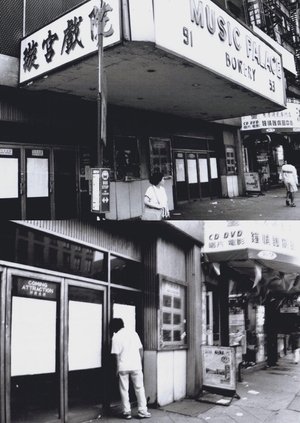
Music Palace
Previously a central part of communal life, the movie palaces of New York’s Chinatown are now extinct. This documentary short takes us inside the title theater located on the Bowery, as it’s about to close its doors, with its caretakers ruefully looking back at the life that once was. Eric Lin’s poignant first film serves as a glimpse into the usually private—and, according to the Music Palace’s projectionist, “lonely”—operations of a theater, and mourns the loss of a once-vital movie-going locale.
2005
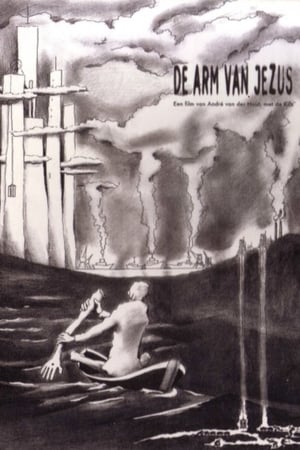
De Arm Van Jezus
Jakob Yzermans is an American salesman looking for his roots in Rotterdam. He thinks his father (Hendrik Yzermans) has left Holland with the money he took from his collegues. Jakob is trying to get the money together to repay the money. While doing so he encounters more and more problems.
2003

Bowling for Columbine
This is not a film about gun control. It is a film about the fearful heart and soul of the United States, and the 280 million Americans lucky enough to have the right to a constitutionally protected Uzi. From a look at the Columbine High School security camera tapes to the home of Oscar-winning NRA President Charlton Heston, from a young man who makes homemade napalm with The Anarchist's Cookbook to the murder of a six-year-old girl by another six-year-old. Bowling for Columbine is a journey through the US, through our past, hoping to discover why our pursuit of happiness is so riddled with violence.
2002

São Paulo, Cinemacity
Mixing new images to existing São Paulo movies takes, the documentary presents the city from the perspective of five main attributes: transformation, anonymity, crowd, precariousness and dimension.
1994
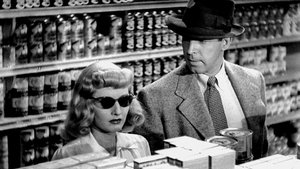
Barbara Stanwyck: Fire and Desire
Actress Sally Field looks at the dramatic life and successful career of the superb actress Barbara Stanwyck (1907-90), a Hollywood legend.
1991
Thank You, Mr. Robertson
A glimpse of the pre-history of cinema starting with the projections of Etienne Gaspard Robert (also known as M. Robertson), who used magic lanterns and other optical illusions to develop the genre of the Gothic phantasmagoria in the late eighteenth century.
1985
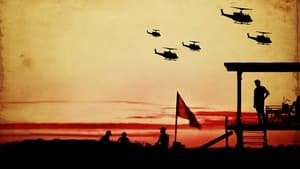
The Killing Fields
New York Times reporter Sydney Schanberg is on assignment covering the Cambodian Civil War, with the help of local interpreter Dith Pran and American photojournalist Al Rockoff. When the U.S. Army pulls out amid escalating violence, Schanberg makes exit arrangements for Pran and his family. Pran, however, tells Schanberg he intends to stay in Cambodia to help cover the unfolding story — a decision he may regret as the Khmer Rouge rebels move in.
1984
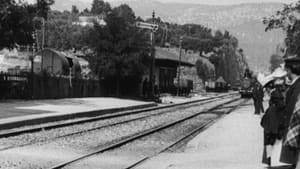
The Arrival of a Train at La Ciotat
A group of people are standing along the platform of a railway station in La Ciotat, waiting for a train. One is seen coming, at some distance, and eventually stops at the platform. Doors of the railway-cars open and attendants help passengers off and on. Popular legend has it that, when this film was shown, the first-night audience fled the café in terror, fearing being run over by the "approaching" train. This legend has since been identified as promotional embellishment, though there is evidence to suggest that people were astounded at the capabilities of the Lumières' cinématographe.
1896