Watch The Antarctica Challenge (2009) Online Free
An up-to-date look at the climate change research currently being done by the scientists stationed in Antarctica.
More Like This
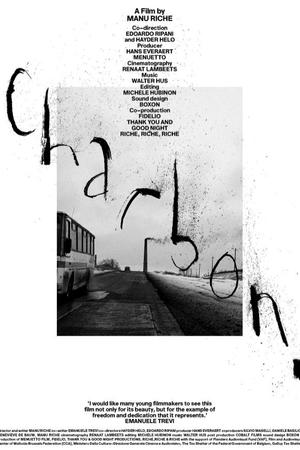
Coal
CHARBON depicts how Europe was built on fossil fuels over the past 100 years. And how it was torn apart by wars that were the result of these same fossil fuels. During 3 trips to Ukraine, Italy and Iraq, filmmaker Manu Riche explains how he and his French-German family are inseparably connected to the fate of the Iraqi filmmaker and refugee Hayder Helo.
2025

Been Here Stay Here
For generations, fishermen have made their home on Tangier Island, in the heart of the Chesapeake Bay on the east coast of the US. Two-thirds of the island has disappeared over the last 150 years, and local people are concerned about rising sea levels—and the lack of progress on reinforcing the sea wall—but the church remains the bedrock of this small, close-knit community.
2024
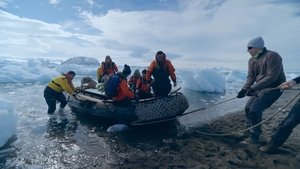
Čeští vědci v Antarktidě
2024

Antarctica: War Diaries
Despite the full scale Russian invasion to Ukraine in 2022, a team of 14 Ukrainian researchers travelled 15,000 km from home to replace another team of researchers at "Vernadsky" station in Antarctica.
2024

Purple Mountains: Live Free or Die
Professional snowboarder and POW founder Jeremy Jones has always had a deep connection to the outdoors. It’s not just his escape—it’s his identity, his passion and his legacy. Growing up in New England, Jeremy carved out his beginnings in the mountains, but in the years since, he’s witnessed troubling changes: wilder weather, fewer snow days and mountain towns struggling to survive.
2024

Canvi
2024

Ungezähmt - Im Fluss des Lebens
We get to know a few inhabitants of central European rivers.
2024
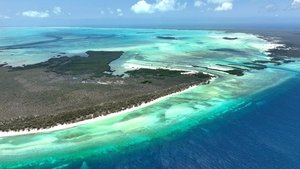
Einsame Atolle, unbekannte Tiefen
The endless expanses of the Indian Ocean are home to the last natural paradises: Remote atolls surrounded by coral reefs in crystal clear water. Whole regions of this ocean are still unexplored, many reefs are not marked on any map. The departure of the research vessel Agulhas II from the island of La Réunion marks the beginning of one of the greatest scientific adventures of our time. The expedition, initiated by Monaco Explorations with the support of the Prince Albert II of Monaco Foundation, lasted six weeks and led into the Western Indian Ocean along the Mascarene Plateau.
2023
Nuclear Now
With unprecedented access to the nuclear industry in France, Russia, and the United States, Nuclear Now explores the possibility for the global community to overcome the challenges of climate change and energy poverty to reach a brighter future through the power of nuclear energy. Beneath our feet, Uranium atoms in the Earth’s crust hold incredibly concentrated energy. Science unlocked this energy in the mid-20th century, first for bombs and then to power submarines. The United States led the effort to generate electricity from this new source. Yet in the mid-20th century as societies began the transition to nuclear power and away from fossil fuels, a long-term PR campaign to scare the public began, funded in part by coal and oil interests.
2023
83 and Alone: Bhutan's Water Crisis
Bhutan, despite being one of the world's two carbon negative countries, suffers from a changing climate that has led to a disastrous water shortage. After his children leave him, Daw, an elderly Bhutanese villager, must fend for himself. 83 AND ALONE explores a community made empty because of water.
2022
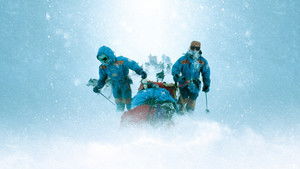
After Antarctica
In a dramatic attempt to bring attention to climate change, an international expedition led by renowned explorer Will Steger embarked on the first-ever coast-to-coast expedition across Antarctica in 1989. Six men and their sled dogs braved howling storms, sub-zero temperatures, snow crevasses, and other perils as they traversed the icy terrain. Tasha Van Zandt’s enthralling feature debut catches up with Steger 30 years later as he revisits the frigid continent, deftly weaving his contemporary journey with rare, dynamic footage of his original, treacherous seven-month odyssey.
2021
Efter floden
2019
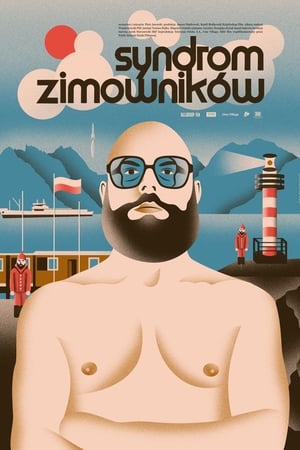
The Antarctic Syndrome
Does doctor Jan Terelak belong to an “elitist” group of the most unethical experimenters? The Polish scientist tested boundaries of human mental resilience in extreme conditions of solitude in Antarctica. The starting point for Piotr Jaworski's documentary is the psychologist's journal. The project from forty years ago was focused on studying the mental condition of polar explorers at the Polish station. Men were in the situation of confinement, comparable to a space mission. The film reconstructs these events, referring to the then contemporary context and changes in the perception of science.
2019
Normal Is Over
Documentary about human impact on the world.
2015
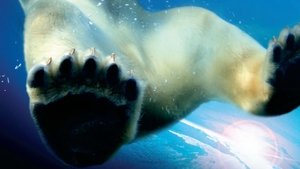
Earth
An epic story of adventure, starring some of the most magnificent and courageous creatures alive, awaits you in EARTH. Disneynature brings you a remarkable story of three animal families on a journey across our planet – polar bears, elephants and humpback whales.
2007
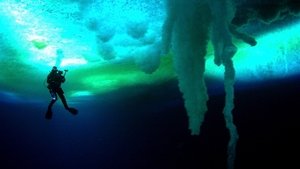
Encounters at the End of the World
Acclaimed filmmaker Werner Herzog travels to Antarctica, where he finds a desolate, beautiful landscape, largely untouched by human hands, and a group of truly unique people who risk their lives to study it. Centered at McMurdo Station, the United States' largest Antarctic research center, Herzog explores the minds of the scientists willing to abandon civilization and endure volatile conditions to learn more about the continent's wildlife and awe-inspiring natural wonders.
2007

The Great Global Warming Swindle
This film tries to blow the whistle on what it calls the biggest swindle in modern history: 'Man Made Global Warming'. Watch this film and make up your own mind.
2007
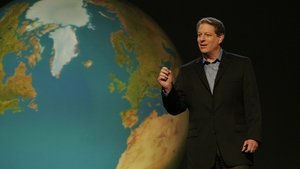
An Inconvenient Truth
A documentary on Al Gore's campaign to make the issue of global warming a recognized problem worldwide.
2006
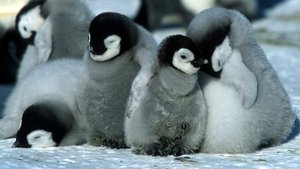
March of the Penguins
Every year, thousands of Antarctica's emperor penguins make an astonishing journey to breed their young. They walk, marching day and night in single file 70 miles into the darkest, driest and coldest continent on Earth. This amazing, true-life tale is touched with humour and alive with thrills. Breathtaking photography captures the transcendent beauty and staggering drama of devoted parent penguins who, in the fierce polar winter, take turns guarding their egg and trekking to the ocean in search of food. Predators hunt them, storms lash them. But the safety of their adorable chicks makes it all worthwhile. So follow the leader... to adventure!!
2005
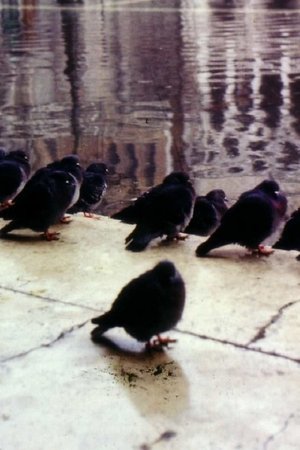
City by the Sea, or how to survive in Venice
Yannick Bellon's documentary paints a portrait of a city torn between the problem of unsanitary housing, pollution corroding walls and statues, and the recurring and increasing floods—all consequences of human activity. Faced with job shortages and rampant speculation, the overarching question arises of how industries can coexist with the city of Venice. Allowing them to develop risks destroying it; driving them out risks turning it into a museum, causing its inhabitants, and thus its soul, to leave.
1970