Watch The Angelmakers (2005) Online Free
The Angelmakers is a 2005 documentary that provides insight into the epidemic of arsenic murders by women, known as The Angel Makers of Nagyrév, in 1929. The film is shot on location in the rural Hungarian village of Nagyrév, alternating between portraits of the surrounding landscape and first-hand narrations by the elderly inhabitants.
More Like This

The Dynasty
The Dynasty by the Direkt36 investigative center tells the story of the business dealings of the Prime Minister’s family over several decades. With hidden camera footage, it also shows the luxurious world built by Viktor Orbán’s son-in-law István Tiborcz and his daughter Ráhel Orbán.
2025
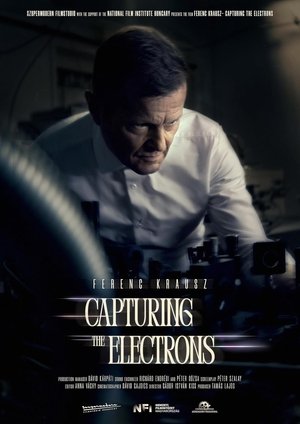
Capturing the Electrons
Capturing the Electrons documents the life and career of Nobel Prize-winning Hungarian physicist Ferenc Krausz. His research team has generated and measured the first attosecond light pulse and used it for capturing electrons' motion inside atoms, marking the birth of attophysics. In 2023, jointly with Pierre Agostini and Anne L'Huillier, he was awarded the Nobel Prize in Physics.
2024

Murder in a Teacup
When members of a workforce began falling violently ill, locals believed a virus was sweeping the area, but after the death of two men it became clear that the only impurity was a serial poisoner with a toxic past.
2024
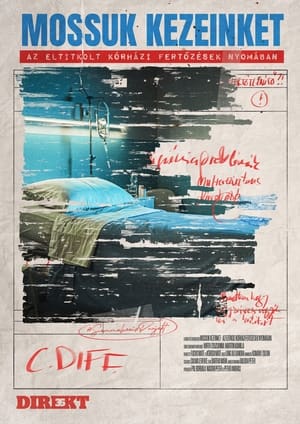
Washing Our Hands
This film is part of the Semmelweis Project, launched by Direkt36, an investigative journalism center based in Hungary, to show the reality and the causes of hospital-acquired infections, which are a growing problem in the country.
2023
You Think the Earth Is a Dead Thing
Just one of the many far-reaching impacts of the slave trade on human history is on agriculture and horticulture. While the French plantation owners on the Caribbean island of Martinique had their gardens laid out, Versailles-style, their enslaved workers continued their tradition of using medicinal wild herbs. Nowadays these herbs represent one of several resources through which the people of Martinique counter the health and ecological ravage caused by the use of pesticides on the banana plantations. Farmers are reclaiming uncultivated lands to grow indigenous vegetables, without any industrial pesticides; they fight boldly for simple biodiversity.
2019
Liquid Gold: In Quest of the Aszu of Tokaj
The Aszú of Tokaj, a sweet wine of Hungary, was once cherished by King Louis XIV, Queen Victoria, Peter the Great, Goethe and Beethoven. But the world has since forgotten the noble Aszú, two world wars, the enforced collectivisation of the Communist regime and the deadly filoxera epidemic had all wreaked havoc on the vines. Three dedicated heroes, one passion: to create The Great Wine that can return to the most refined tables of the world.
2019

Forbidden Zone - Wildlife on the Battlefield
Not far from Budapest, in the outskirts of Táborfalva, a board stops the arriving: "Keep out! Entry is dangerous and forbidden!" The Forbidden Zone starts here, the second biggest shooting and drill ground in Hungary, where military field exercises have been performed for one and a half century. In spite of the danger and prohibition, the area is densely populated. Many plant and animals species live their secret lives here, some of them being rare creatures that almost completely disappeared from the cultivated parts of the Hungarian Alföld. They are protected by weapons...
2017

Kornél on Tour
The story of the first Hungarian NBA player.
2017

Moleman 4: Longplay
It is the year 2546. Corporations rule the world, and an agent is on a secret mission to explore the untold stories of the past. His journey leads him into a secret virtual reality where one corporation has recreated the 1980s, an era that witnessed the birth of video game development, an event in which a politically and economically restricted small European country, Hungary, had a significant role. He discovers a strange but exciting world, where computers were smuggled through the Iron Curtain and serious engineers started developing games. This small country was still under Soviet pressure when a group of people managed to set up one of the first game development studios in the world, and western computer stores started clearing room on their shelves for Hungarian products.
2017
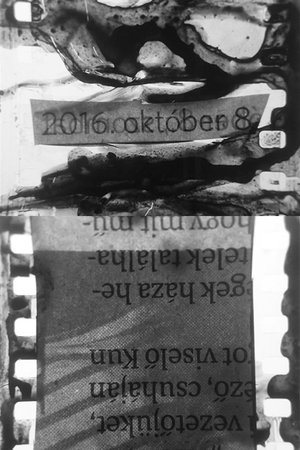
8th October 2016
The title of the film is the date on which the editorial staff of Hungary’s largest opposition newspaper, Népszabadság, was fired. The filmmaker tore up copies of that day’s issue, layered them, and then turned them into an urgent collage expressing his yearning for the free expression of opposition viewpoints. The visible edges of the film emphasize the impossibility of presenting information in a complete context.
2016
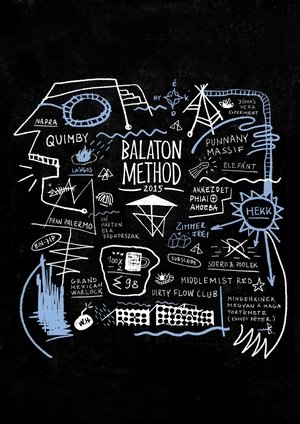
Balaton Method
A music documentary about Hungarian musicians creating music around lake Balaton. The feature film continuation of the acclaimed Kodály Method (2011) videos.
2015
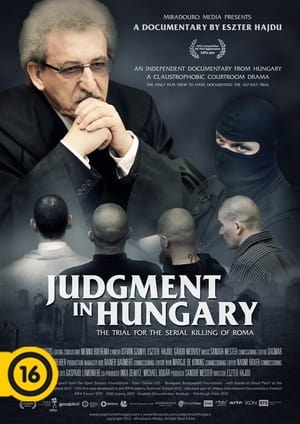
Judgement in Hungary
Hungary was the site of serial murders on ethnic basis. Over the course of one year, the murderers killed and seriously injured Roma children and adults. The state charged 4 men with committing the crime with racial motivation. This historical trial started March, 2011, and ended August, 2013 in Budapest. The 167 days of hearings was only documented continuously by our crew. We had exclusive permission to use multiple cameras in the court-room. The film is a classical chamber-drama, taking place in a small, claustrophobic court room, in the middle of Europe. What will be the outcome of the marathon, 3 year-long trial?
2013
Játék a tér
An apartment for 3.30 forints. Petra Pelsőczy's film deals with LOTTO houses and their owners of the 1960s.
2011

The Forgotten Soldier
Captured by the Red Army during World War II, Hungarian soldier András Toma was admitted to a Soviet psychiatric hospital. After disappearing from prisoner-of-war records, he was presumed dead in Hungary. Because his name was incorrectly recorded in medical documents and he spoke only Hungarian—mistaken by staff for incoherent speech—Toma spent decades misunderstood and isolated in the institution. Fifty-three years later, a visiting Slovak doctor recognised his language, triggering an investigation by Hungarian authorities. Toma was repatriated in 2000, believed to be the last prisoner of war from World War II to return home.
2010
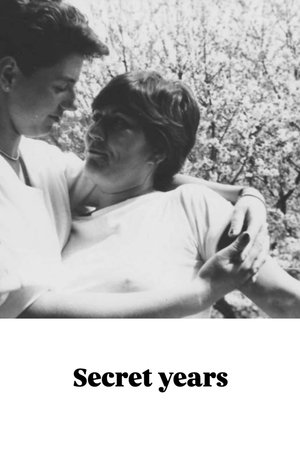
Secret Years
Documentary on living as a lesbian in Hungary during state socialism (1949 - 1989). Eleven Hungarian women talk about their secret years: how they discovered their identities and tried to define themselves. Finding love, community and friendship, evolving into the first gay liberation and feminist movements in the country.
2009
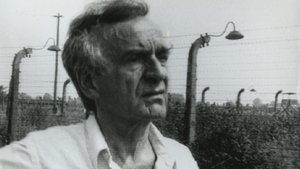
Elie Wiesel Goes Home
A documentary chronicling the adolescent years of Elie Wiesel and the history of his sufferings. Eliezer was fifteen when Fascism brutally altered his life forever. Fifty years later, he returns to Sighetu Marmatiei, the town where he was born, to walk the painful road of remembrance - but is it possible to speak of the unspeakable? Or does Auschwitz lie beyond the capacity of any human language - the place where words and stories run out?
1997
Message of Stones - Budapest
The first film in Miklós Jancsó's documentary series Message of Stones.
1994

In memoriam Hajnóczy Péter
The footage was shot in the writer's room a few days after his death. Everything in the room was untouched. The poet György Petri reads from one of Péter Hajnóczy's works, Miss Embolia. A sacred image of the Eastern European "beaten generation".
1985
The Fallen
The documentary was shot in the prison for juvenile delinquents in Hungary. It does not aim at judging whether the perpetrators were convicted rightly or not but, given the burden they carry, how they can reintegrate into society after they are released.
1985