Watch The 21st Century Race For Space (2017) Online Free
A new age of space exploration, and exploitation, is dawning. But surprisingly, some of the boldest efforts at putting humans into space are now those of private companies started by a handful of maverick billionaire businessmen. Beyond mass space travel, and even space mining and manufacturing, the dream of Elon Musk and others is true space exploration. His company, SpaceX, already delivers supplies to the International Space Station, and their next step is delivering astronauts too. But their true ambition is to ensure the survival of the human race by crossing our solar system and colonizing Mars in the next decade. Could commercial spaceflight companies eventually make us a space-faring civilization?
Cast
Professor Brian Cox, Richard Branson
More Like This
Project Artemis: Back to the Moon
An inside look at NASA’s new Artemis program and its mission to return astronauts to the moon for the first time in 50 years.
2022
L'odyssée d'Hubble, un œil dans les étoiles
The Hubble Space Telescope has spent more than 30 years scrutinizing the cosmos in an attempt to unravel the secrets of the Universe and go as close as possible to its origin. But Hubble has also become the superstar of space, offering us magnificent paintings of the Universe.
2022
C Jamy - Émission spéciale Thomas Pesquet
2021

Never Surrender: A Galaxy Quest Documentary
A feature-length documentary about the film Galaxy Quest and its legacy, celebrating its milestone 20th anniversary.
2019
Black Hole Hunters
A team of international scientists attempt to document the first-ever image of a black hole.
2019

Miniverse
What if you could get behind the wheel and race through space? We scale down the Solar System to the continental United States and place the planets along the way to better appreciate the immense scale of the Universe. See space as never before, with Mars looming over the Freedom Tower and Jupiter towering above the Lincoln Memorial. Join former astronaut Chris Hadfield - a YouTube sensation for his performance of David Bowie’s “Space Oddity” aboard the International Space Station - and his interstellar hitchhikers Michio Kaku and astronomers Derrick Pitts and Laura Danly. It’s a joyride from coast to coast - and from the sun to Pluto.
2017
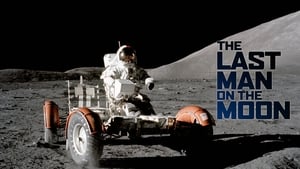
The Last Man on the Moon
The 1960s was an extraordinary time for the United States. Unburdened by post-war reparations, Americans were preoccupied with other developments like NASA, the game-changing space programme that put Neil Armstrong on the moon. Yet it was astronauts like Eugene Cernan who paved the uneven, perilous path to lunar exploration. A test pilot who lived to court danger, he was recruited along with 14 other men in a secretive process that saw them become the closest of friends and adversaries. In this intensely competitive environment, Cernan was one of only three men who was sent twice to the moon, with his second trip also being NASA’s final lunar mission. As he looks back at what he loved and lost during the eight years in Houston, an incomparably eventful life emerges into view. Director Mark Craig crafts a quietly epic biography that combines the rare insight of the surviving former astronauts with archival footage and otherworldly moonscapes.
2016
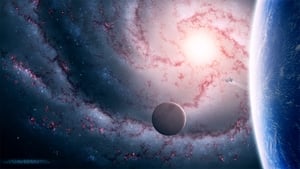
National Geographic: Journey to the Edge of the Universe
In one single, epic camera move we journey from Earth's surface to the outermost reaches of the universe on a grand tour of the cosmos, to explore newborn stars, distant planets, black holes and beyond.
2008
When We Left Earth
Commemorating the space agency's 50th anniversary, follow John Glenn's Mercury mission to orbit the earth, Neil Armstrong's first historic steps on the moon, unprecedented spacewalks to repair the Hubble stories, and more!
2008
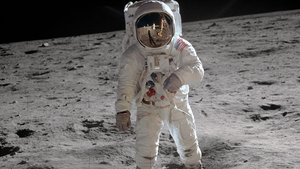
In the Shadow of the Moon
Archival material from the original NASA film footage – much of it seen for the first time – plus interviews with the surviving astronauts, including Jim Lovell, Dave Scott, John Young, Gene Cernan, Mike Collins, Buzz Aldrin, Alan Bean, Edgar Mitchell, Charlie Duke and Harrison Schmitt.
2007
The Wonder of It All
The Wonder of it All focuses on the human side of the men behind the Apollo missions through candid interviews with seven of the Apollo astronauts: Buzz Aldrin, Alan Bean, Edgar Mitchell, John Young, Charles Duke, Eugene Cernan and Harrison Schmitt. They all reflect on the training, the tragedies, the camaraderie, and the effect that their space travel has had on their families.
2007
Comet Collision
Comets pose one of the greatest threats to life on Earth - a threat that can only be countered if we find out more about them. In 2005, in an audacious bid to do just that, NASA scientists launched a space probe to collide with a comet in the emptiness of deep space. This film follows the amazing story of mission Deep Impact, from its inception through to the final nail-biting moments when the probe and comet Tempel 1 met head-on.
2006
Roving Mars
Join the Mars rovers Spirit and Opportunity for an awe-inspiring journey to the surface of the mysterious red planet.
2006
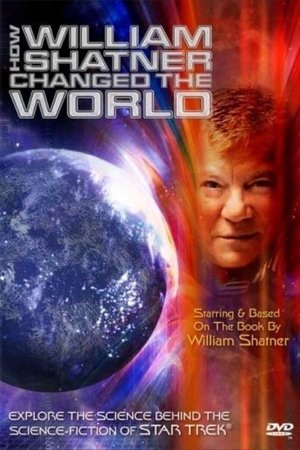
How William Shatner Changed the World
William Shatner presents a light-hearted look at how the "Star Trek" TV series have influenced and inspired today's technologies, including: cell phones, medical imaging, computers and software, SETI, MP3 players and iPods, virtual reality, and spaceship propulsion.
2005

Space Station 3D
Some 220 miles above Earth lies the International Space Station, a one-of-a-kind outer space laboratory that 16 nations came together to build. Get a behind-the-scenes look at the making of this extraordinary structure in this spectacular IMAX film. Viewers will blast off from Florida's Kennedy Space Center and the Baikonur Cosmodrome in Russia for this incredible journey -- IMAX's first-ever space film. Tom Cruise narrates.
2002
Cosmic Fireballs
214 million years ago a gigantic meteorite broke up and impacted Earth. 65 million years ago, the impact that killed the dinosaurs occurred where the country of Belize stands today. 200 thousand years ago early humans were walking and died when they were hit by a 40 meter wide meteorite hit South Africa creating a 1.4 km wide crater. This meteorite fragment, the largest ever found hit Namibia 80 000 years ago and more recently a major impact occurred in Toungouska, Russia in 1908. Every year 10 000 tons of meteoritic matter fall onto Earth in much smaller but not necessarily less influential pieces. This film will explore how the impact of these meteorites big and small through the ages have changed our world and what they brought from outer space with them that may have been the seed of life itself on Earth.
2001
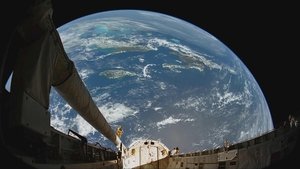
Blue Planet
From the unique vantage point of 200 miles above Earth's surface, we see how natural forces - volcanoes, earthquakes and hurricanes - affect our world, and how a powerful new force - humankind - has begun to alter the face of the planet. From Amazon rain forests to Serengeti grasslands, Blue Planet inspires a new appreciation of life on Earth, our only home.
1990
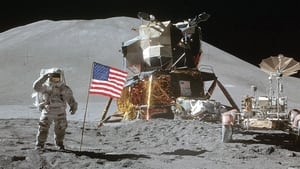
For All Mankind
A testament to NASA's Apollo program of the 1960s and '70s. Composed of actual NASA footage of the missions and astronaut interviews, the documentary offers the viewpoint of the individuals who braved the remarkable journey to the moon and back.
1989
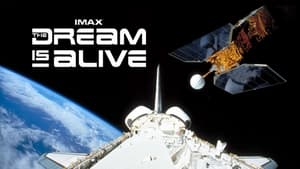
The Dream Is Alive
The Dream Is Alive takes you into space alongside the astronauts on the space shuttle. Share with them the delights of zero gravity while working, eating and sleeping in orbit around the Earth. Float as never before over the towering Andes, the boot of Italy, Egypt and the Nile. Witness firsthand a tension-filled satellite capture and repair and the historic first spacewalk by an American woman.
1985
Who Invented The Yoyo? Who Invented The Moon Buggy?
Stuck in the German lands of “Yodelburg,” our hero Kidlat dreams of space and muses on humanity’s endless capacity for creativity, whether on the moon or at home in the Philippines. A delightful, self-proclaimed “third-world space spectacle.”
1979