Watch Tamar (2018) Online Free
Tamar, a 33-year-old Tel Aviv comics artist, watches passersby, listens to their conversations and translates her impressions into comics with an ironic expression. She peels off the mask from a society, in the eye of the storm, that claims to be liberal and in which everyone has an opinion about everything. Secure between her four walls, she touches the darkest spots of her life- a bomb attack, a failed marriage, coping with depression. A young, modern woman in today's Israel.
Cast
Tamar Blumenfeld
More Like This
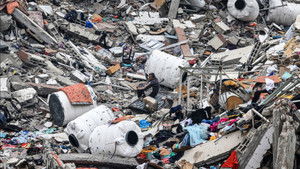
Inside Gaza
Free access to the Gaza Strip has remained closed to international journalists since the war began on October 7, 2023. AFP's permanent reporters are among the few professional witnesses to have experienced this conflict from the inside. They have watched, filmed, photographed, testified, all whilst struggling to ensure their own survival. From their exile, they recount this war, which is the deadliest ever recorded for members of the press.
2025

Drugged and Abused: No More Shame
Caroline Darian, Gisèle Pelicot's daughter, looks back on the tragedy that shook her family: for ten years, her father drugged her mother to subject her to rapes committed by strangers recruited on the Internet. This case exposes the scandal of chemical submission, a practice where attackers, generally close to the victims, use prescription or over-the-counter medications to commit their crimes. This phenomenon, far from being marginal, affects victims with varied profiles...
2025
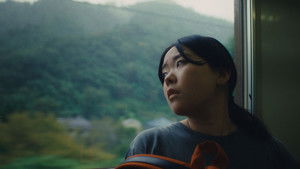
Chronicle of a City
A patchwork of millions of lives, urban spaces are not only streets and concrete. They are where our dreams and deepest worries unfold. Chronicle of a City drifts and strolls through time and chance encounters, moving between fantasy and reality, echoing the intimate and ghostly voices of our metropolises, reminding us that we inhabit The City as much as it inhabits us. This roaming essay is a visual and sonic meditation that invites us to see urban life as a web of sensations that move through us and draw us closer to one another, even in the midst of solitude.
2025
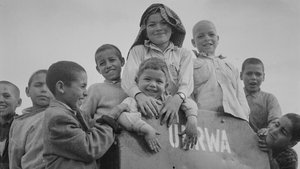
UNraveling UNRWA
Following the October 7th massacre and allegations that UNRWA staff were involved in the kidnappings, the agency made headlines around the world. Israel enacted legislation to suspend cooperation with UNRWA, despite the ongoing humanitarian crisis in Gaza. The film presents a historical examination of UNRWA’s role—a temporary agency, initially mandated to resolve the refugee crisis following the 1948 war, which has never ceased its operations and, after 75 years, continues to perpetuate generations of refugees
2025
La mer n'oublie pas
Saud now lives in Paris, caring with devotion and tenderness for his two young children while closely following the drama in Gaza. “It's hard to be far away.” He speaks sadly of his situation as a Palestinian citizen of Israel. When he accompanies his daughter to school, they both stick up placards for the liberation of Palestine...
2024
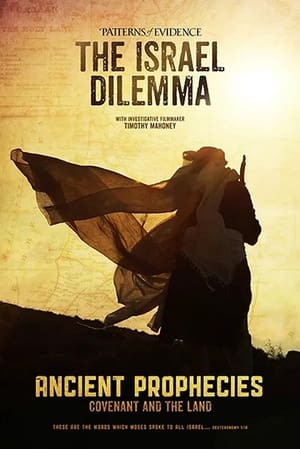
Patterns of Evidence: The Israel Dilemma – Ancient Prophecies
The conflict in Israel today is often linked to the belief that the Bible serves as the Israelis' claim to the land, based on God's covenant with Abraham, Moses, and the Israelites. Filmmaker Timothy Mahoney investigates this by exploring ancient prophecies made by Moses, which predicted Israel’s rise as a kingdom, its fall due to breaking the covenant, the scattering of its people, their persecution, and eventual return to the land. Using archaeological evidence and expert insights, Mahoney delves into these events, raising deeper questions about Israel's suffering, their chosen status, and its relevance today. "The Israel Dilemma – Ancient Prophecies" is part one of a two-part film series exploring these themes.
2024
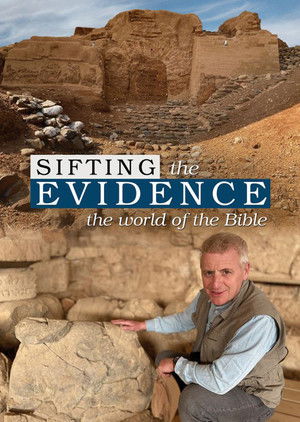
Sifting the Evidence: The World of the Bible
Dr. Chris Sinkinson presents in a thoughtful, accessible and engaging manner, demonstrating through on site location and interviews with experts, that archaeology affirms that the Bible is reliable and fits with important events that occurred in the ancient world. He cites Jerome who considered Israel the “fifth gospel” and his avid interest and expertise in the land and history is clearly evident. Indeed if we visit and study Israel, that will illumine and enrich our understanding of the Bible. Interestingly and additionally, when Blaise Pascal was asked by Louis XIV for evidence for the existence of God, he simply similarly responded, “The Jews, your majesty, the Jews.”
2020
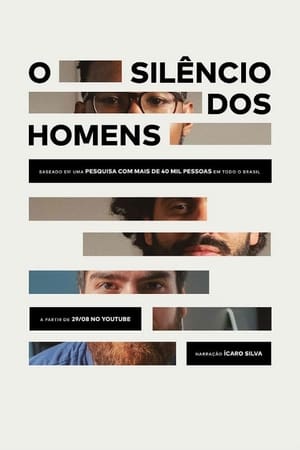
The Silence of Men
This film is part of a project that has listened to over 40,000 people on masculinity issues and has resulted in a documentary and a tool book based on this publicly available study through an agreement with the Social Information Consortium (CIS) of the University of São Paulo.
2019
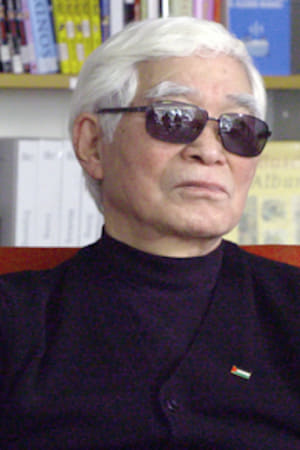
Bruno & Bettina
Masao Adachi, the author and director of experimental works and pinku-eiga in the 1960s, was a member of the Japanese New Left that shifted from being a filmmaker to a guerrilla fighter. In 1974, he joined the Japanese Red Army in Lebanon, which worked closely with the Popular Front for the Liberation of Palestine. Filmmaker Lutz Dammbeck met Adachi in Tokyo in 2018 and talked with him about a wide range of topics, including art, revolution, the influence of western avant-garde art and American underground; the Japanese Red Army; collaboration with secret services; the role of the Left after 1968; and the reasons for failures of leftist ideas and strategies.
2018
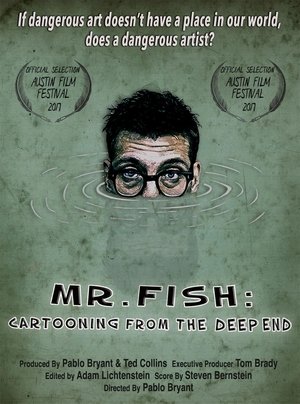
Mr. Fish: Cartooning from the Deep End
In this documentary we discover the dangerously funny cartoonist Mr. Fish, struggling to make a living in an industry that is dying out.
2017
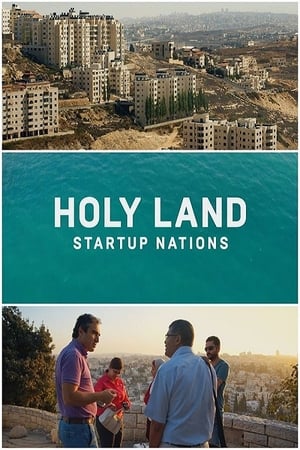
Holy Land: Startup Nations
With the most tech startups and venture capital per capita in the world, Israel has long been hailed as The Startup Nation. WIRED’s feature-length documentary looks beyond Tel Aviv’s vibrant, liberal tech epicenter to the wider Holy Land region – the Palestinian territories, where a parallel Startup Nation story is emerging in East Jerusalem, Nazareth, Ramallah and other parts of the West Bank, as well as in the Israeli cybersecurity hub of Be’er Sheva. And we will learn how the fertile innovation ecosystem of Silicon Wadi has evolved as a result of its unique political, geographical and cultural situation and explore the future challenges – and solutions – these nations are facing.
2017
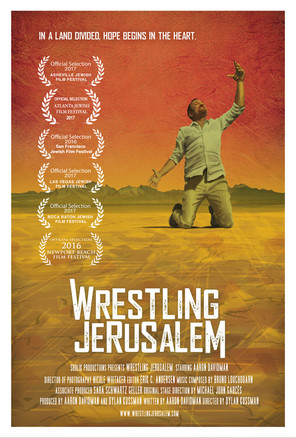
Wrestling Jerusalem
Writer-actor Aaron Davidman embodies seventeen different characters in and around the sacred city of Jerusalem as he takes us on an eye-opening journey into the heart of the Israeli-Palestinian story. Exploring universal questions of identity and human connection, the film is about one man's effort to embrace a multiplicity of conflicting viewpoints, chronicling a brave exploration of the complex humanity at the heart of one of the world's most troubling conflicts.
2016
The Occupation of the American Mind
Over the past few years, Israel's ongoing military occupation of Palestinian territory and repeated invasions of the Gaza strip have triggered a fierce backlash against Israeli policies virtually everywhere in the world—except the United States. This documentary takes an eye-opening look at this critical exception, zeroing in on pro-Israel public relations efforts within the U.S.
2016
Patterns of Evidence: The Israel Dilemma – Part 2
The conflict in Israel today is often linked to the belief that the Bible serves as the Israelis' claim to the land, based on God's covenant with Abraham, Moses, and the Israelites. Filmmaker Timothy Mahoney investigates this by exploring ancient prophecies made by Moses, which predicted Israel’s rise as a kingdom, its fall due to breaking the covenant, the scattering of its people, their persecution, and eventual return to the land. Using archaeological evidence and expert insights, Mahoney delves into these events, raising deeper questions about Israel's suffering, their chosen status, and its relevance today. Part two of a two-part film series exploring these themes.
Africa Light / Gray Zone
"Africa Light" - as white local citizens call Namibia. The name suggests romance, the beauty of nature and promises a life without any problems in a country where the difference between rich and poor could hardly be greater. Namibia does not give that impression of it. If you look at its surface it seems like Africa in its most innocent and civilized form. It is a country that is so inviting to dream by its spectacular landscape, stunning scenery and fascinating wildlife. It has a very strong tourism structure and the government gets a lot of money with its magical attraction. But despite its grandiose splendor it is an endless gray zone as well. It oscillates between tradition and modernity, between the cattle in the country and the slums in the city. It shuttles from colonial times, land property reform to minimum wage for everyone. It fluctuates between socialism and cold calculated market economy.
2010
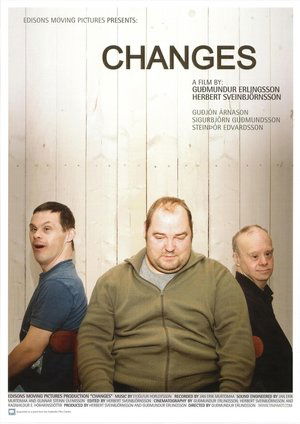
Changes
Tímamót, or Changes in English. An upbeat, heartwarming story about Gudjon, Sigurbjorn and Steinthor who lived together for decades along with several other inhabitants in the Tjaldanes Institution, in a peaceful valley close to Reykjavik. When a decision is made to close down the institution, their life takes an unexpected turn and they discover a new side to life and to themselves.
2007
Promises
Documentarians Justine Shapiro and B.Z. Goldberg traveled to Israel to interview Palestinian and Israeli kids ages 11 to 13, assembling their views on living in a society afflicted with violence, separatism and religious and political extremism. This 2002 Oscar nominee for Best Feature Documentary culminates in an astonishing day in which two Israeli children meet Palestinian youngsters at a refugee camp.
2001

The Simpsons: America's First Family
The Simpsons: America's First Family is a 50 minute program which features the production of The Simpsons, celebrating the 10th anniversary of the series.
2000
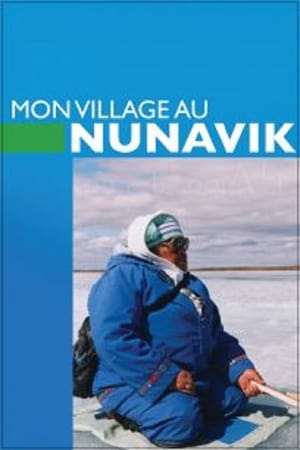
My Village in Nunavik
Shot during three seasons, Kenuajuak's documentary tenderly portrays village life and the elements that forge the character of his people: their history, the great open spaces and their unflagging humour. Though Kenuajuak appreciates the amenities of southern civilization that have made their way north, he remains attached to the traditional way of life and the land: its vast tundra, the sea teeming with Arctic char, the sky full of Canada geese. My Village in Nunavik is an unsentimental film by a young Inuk who is open to the outside world but clearly loves his village. With subtitles.
1999
Theatre In Israel
An English-speaking film produced on behalf of the Israeli Center of the International Theater Institute, providing international audience with an overview of modern Israeli theater, including scenes of renowned Israeli theater productions from the theater season of 1967. The film opens with excerpts from “The Dybbuk” at Habima Theater, and includes scenes from the successful musicals of the Cameri Theater “Utz Li Gutz Li” (Rumpelstiltskin) and “King Solomon and Shalmai The Shoemaker”. Other excerpts include scenes from the plays “The American Princess” by Nissim Aloni at the Seasons Theater, “He Walked Through the Fields” by Moshe Shamir at the Haifa Theater, Ibsen’s “Hedda Gabler”, “Who’s Afraid of Virginia Wolf”, and more.
1967