Watch Sundae in New York (1983) Online Free
A character closely resembling then-mayor Ed Koch sings a variation on the "Theme from 'New York, New York'" in an entirely clay-animated film depicting a variety of locations and celebrities associated with New York City. Preserved by the Academy Film Archive in 2006.
Cast
Scott Record
More Like This
A Close Shave
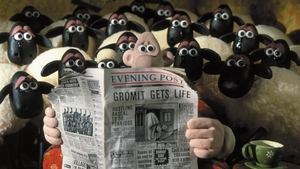
Wallace's whirlwind romance with the proprietor of the local wool shop puts his head in a spin, and Gromit is framed for sheep-rustling in a fiendish criminal plot.
1996

The Wrong Trousers
Wallace rents out Gromit's former bedroom to a penguin, who takes up an interest in the techno trousers created by Wallace. However, Gromit later learns that the penguin is a wanted criminal.
1993
A Grand Day Out
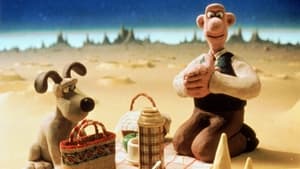
Wallace and Gromit have run out of cheese, and this provides an excellent excuse for the duo to take their holiday to the moon, where, as everyone knows, there is ample cheese.
1990
Sing Beast Sing
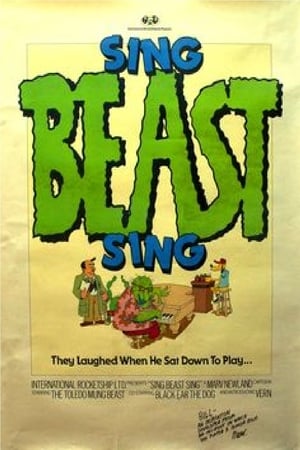
Animated short film. Preserved by the Academy Film Archive in 2009.
1980

Asparagus
A symbolic reflection on issues of female sexuality, art and identity constructs.
1979

Shapes and Gestures
Begins as a whimsical piece with 'sheets' of lines running down the screen, progressing into more and more complex geometic patterns but without deviating from the basic precepts of 'dot and line' animation. Jazz piano on a lazy Sunday afternoon, and a spring color palette. -- Stephanie Sapienza. Preserved by the Academy Film Archive in 2001.
1977
Mountain Music
Mountain Music illustrates what happens when technology gets too advanced too soon. Preserved by the Academy Film Archive in 2012.
1976
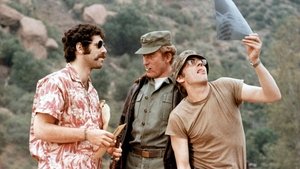
M*A*S*H
One of the world's most acclaimed comedies, M*A*S*H focuses on three Korean War Army surgeons brilliantly brought to life by Donald Sutherland, Tom Skerritt and Elliott Gould. Though highly skilled and deeply dedicated, they adopt a hilarious, lunatic lifestyle as an antidote to the tragedies of their Mobile Army Surgical Hospital, and in the process infuriate Army bureaucrats. Robert Duvall, Gary Burghoff and Sally Kellerman co-star as a sanctimonious Major, an other-worldly Corporal, and a self-righteous yet lusty nurse.
1970
The Letter
A collaborative piece by Gore and Beckett, the film begins with one of Gore's characters composing a letter, to eventual mail it. Beckett's animation takes over at this point, transforming the envelope into a looping, cascading form that seems to be perpetually turning itself inside out. A brief Gore finale bookends the piece, which is one of only two extant examples of Gore's unique animation work. This film is usually appended to Gore's own Dream of the Sphinx. [Source: Mark Toscano] Preserved by the Academy Film Archive in partnership with CalArts in 2009.
1970
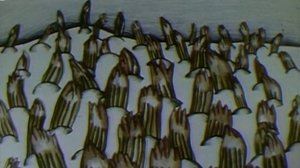
Bowl, Garden, Theatre, Marble Game
An animated short consisting of 4 segments: bowl, garden, theatre, marble game. Preserved by the Academy Film Archive in partnership with Harvard Film Archive in 2015.
1970
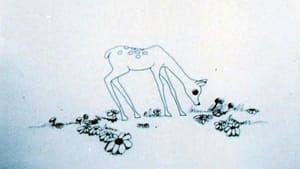
Bambi Meets Godzilla
A deer, disillusioned by the consumerism that defines his life. A lizard, ostracized from society, forever wandering. A chance meeting in the middle of a field. Who will survive? And who will transcend existence? Preserved by the Academy Film Archive in 2009.
1969
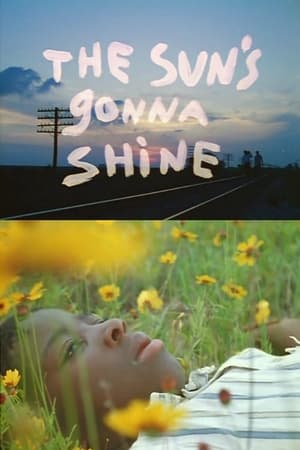
The Sun's Gonna Shine
A lyrical recreation of Lightnin’ Hopkins’ decision at age eight to stop chopping cotton and start singing for a living. Preserved by the Academy Film Archive in 2013.
1969
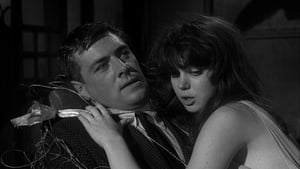
Spider Baby
In a dilapidated rural mansion, the last generation of the degenerate, inbred Merrye family lives with the inherited curse of a disease that causes them to mentally regress from the age of 10 or so on as they physically develop. The family chauffeur looks out for them and covers up their indiscretions. Trouble comes when greedy distant relatives and their lawyer arrive to dispossess the family of its home.
1967
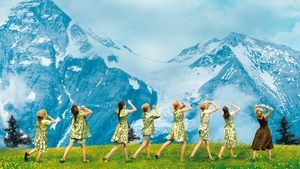
The Sound of Music
In the years before World War II, a tomboyish postulant at an Austrian abbey is hired as a governess in the home of a widowed naval captain with seven children and brings a new love of life and music into the home.
1965

The Music Room
An aging, decadent landlord’s passion for music becomes the undoing of his legacy as he sacrifices his wealth in order to compete with the opulent music room of his younger, richer neighbour.
1958
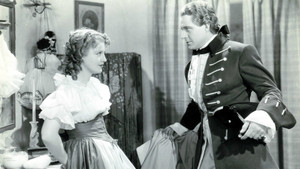
Moments in Music
Using clips from several unidentified films of the preceding decade, featuring many well-known stars of the day, this short demonstrates that an endless variety of music to entertain all tastes can be heard when you go to the movies. Preserved by the Academy Film Archive in 2012.
1950
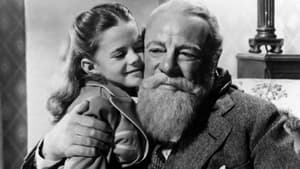
Miracle on 34th Street
Kris Kringle, seemingly the embodiment of Santa Claus, is asked to portray the jolly old fellow at Macy's following his performance in the Thanksgiving Day parade. His portrayal is so complete that many begin to question if he truly is Santa Claus, while others question his sanity.
1947
Five Film Exercises: Film 5
Opens with a short canonical statement of a theme upon which the entire film is constructed. The canon is repeated in contrasting variations by means of color. A second section poses the same image in deep film space. The image unfolds itself repeatedly, leaving the receding image to continue on smaller and smaller. Preserved by the Academy Film Archive in 2005.
1944
Angels of Mercy
Short film in support of the Red Cross showing civilian volunteers'work, radio and movie personalities at a fund-raising gala and encouraging recruitment. Deanna Durbin performs a song dedicated to the nurses. Preserved by the Academy Film Archive in 2012.
1940
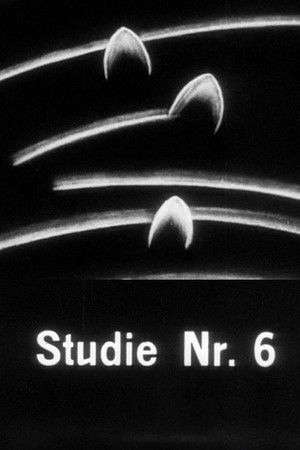
Study No. 6
The first Studies were synchronized with records (Fischinger made a total of 13 Studies all without sound). It was only with the introduction of sound, beginning with Study No 6 that the films did full justice to this musical principle. The play of the white lines, the arcs, and the upside-down U’s running hither and thither like ballet dancers was brought into perfect synchronization with the music, and thus the films offered an abstract illustration of the melodies. Study No 6 is certainly the best of his films in terms of forms. - Hans Scheugl and Ernst Schmidt, Jr. Preserved by the Academy Film Archive in 2001.
1930