Watch Sudden Death (1995) Online Free
Loading Cinehub...
In 1995 I conducted my safaris in one of Tanzania's most remote and beautiful regions called Mlele. Located along the northeast boundary of Katavi National Park, Mlele holds a wealth of game including great maned lion, heavy leopard and truly big buffalo.
Cast
Mark Sullivan
More Like This

The Way Back
The Year of Return is an initiative of the government of Ghana that is intended to encourage African diasporans to come to Africa to settle and invest in the continent. This film documents one diasporan family as they return to Africa.
2024
Missing 411: The Hunted
Hunters have disappeared from wildlands without a trace for hundreds of years. David Paulides presents the haunting true stories of hunters experiencing the unexplainable in the woods of North America.
2019
Trophy
This in-depth look into the powerhouse industries of big-game hunting, breeding and wildlife conservation in the U.S. and Africa unravels the complex consequences of treating animals as commodities.
2017
Hitler's Jurassic Monsters
This is the untold story of a Nazi vision, that went far beyond the military conquest of European countries. As part of their crazed dream to create a thousand-year Reich they developed detailed blueprints for Aryan settlements and vast hunting parks for ‘Aryan’ animals. Goering and Himmler employed Germany’s best scientists to launch a hugely ambitious programme of genetic manipulation to change the course of nature itself, both in the wild and for domestic use. In a fascinating blend of politics and biology, Hitler's Jurassic Monsters is the true and asthonishing story of how the Nazis tried to take control of nature and change the course of evolution.
2014
Wildgnorance
2012
African Adventure: Safari in the Okavango
2007
Tree Stand Safety
An in-depth review of tree stand safety from hunting expert L.J. Smith.
1997
Death: The Ultimate Horror
This grisly documentary presents horrifying journalistic footage of suicides, assassinations, bombings, mob hits, decapitations, and more in bloody detail. Not for the faint of heart.
1995
Kaali Goes for Seal Hunting
One day in the lives of an average Greenlandic family, which happens to be of great importance for 8-year old Kali - he's about to catch his first prey with the harpoon. The whole family is looking forward for the huge step in boy's maturation.
1985
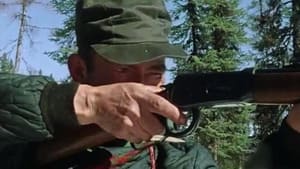
Cree Hunters of Mistassini
An NFB crew filmed a group of three families, Cree hunters from Mistassini. Since times predating agriculture, this First Nations people have gone to the bush of the James Bay and Ungava Bay area to hunt. We see the building of the winter camp, the hunting and the rhythms of Cree family life.
1974
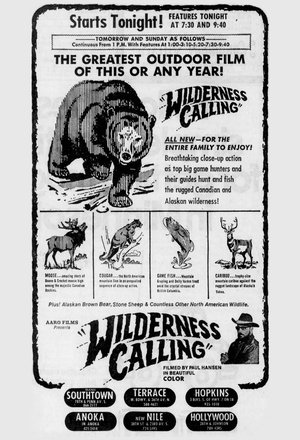
Wilderness Calling
A young boy from the Dakota prairies grows up heeding the "call of the wilderness." He hunts for pheasant in the Illinois cornfields; ducks and geese in the northern lakes; deer in the Dakota Bad Lands; mountain sheep, goats, caribou, moose, and mountain lions in British Columbia and the Yukon; and brown bears on the Alaskan peninsula. He fishes in British Columbia's mountain streams for grayling and along the Bering Sea coast for trout. The film includes footage of swans, eagles, cnd ptarmigans; a beaver colony repairing a dam; battling rams; and sheep at rest in the mountains.
1969
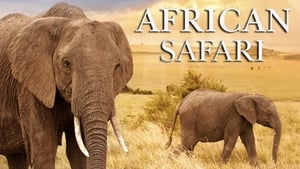
Rivers of Fire and Ice
A Wildlife Safari through Africa.
1968

The Outdoorsman
A group of outdoorsmen demonstrate duck hunting as a preliminary to traveling the various hunting and fishing centers of the world. They begin their journey with a trip to the Rocky Mountains to hunt elk and mountain lions and to fish in the freshwater lakes. They travel to Lac la Ronge in Saskatchewan and to Anchorage and the Katmai Peninsula in Alaska to fish for trout, salmon, and grayling and hunt moose and bear. In the Arctic, the hunters go with a group of Eskimos for their biggest catch, the polar bear. The hunters travel south by plane, to the Fishing Club of Panama to fish for marlin, tuna, shark, and dolphin in the Gulf of Panama. In South Africa and the Zambesi River basin, they often hunt with only a camera. Accompanied by native beaters, they hunt elephants, antelope, buffalo, crocodiles, and hippopotami. As conservationists they capture some almost extinct white rhinoceros and take them to a game preserve for protection.
1968
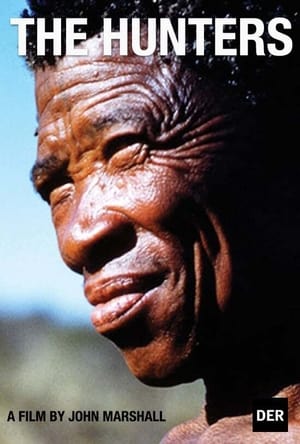
The Hunters
An ethnographic documentary following four Ju/’hoansi (!Kung) men during a multi-day giraffe hunt in the Kalahari Desert, filmed during the Smithsonian–Harvard Peabody expedition of 1952–53.
1957
Звериной тропой
1947
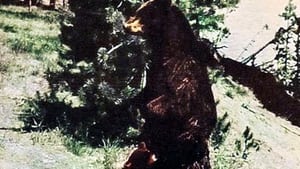
The Last Wilderness
Archery expert Howard Hill and a cameraman go to Wyoming to film this wild-animal three-reel short. Besides the scenery, the scenes include a buffalo killed by an arrow shot by Hill (for food); a wildcat and a coyote in a battle, and a fight-to-the-death between a mother bear protecting her cubs against a killer male bear.
1935
Across the World with Mr. and Mrs. Johnson
As if they were showing their film to a few friends in their home, the Johnsons describe their trip across the world, which begins in the South Pacific islands of Hawaii, Samoa, Australia, the Solomons (where they seek and find cannibals), and New Hebrides. Thence on to Africa via the Indian Ocean, Suez Canal, North Africa, and the Nile River to lion country in Tanganyika. (They are briefly joined in Khartum by George Eastman and Dr. Al Kayser.) Taking a safari in the Congo, the Johnsons see animals and pygmies, and travel back to Uganda, British East Africa, and Kenya.
1930

Edward Prince of Wales' Tour of India: Madras, Bangalore, Mysore and Hyderabad
This official travelogue of a royal tour follows the Prince on a series of regimental displays and a tiger hunt.
1922

Our Greatest Ambassador
Richly detailed record of the Prince of Wales' Indian tour.
1922
Sport and Entertainment in Batavia
Duck archery is not the same as duck hunting. This is a Pordenone moment I will never forget – in actuality short Distraction et Sport à Batavia (1909), the residents of what is now call Jakarta make the most of their leisure time by pursuing a variety of mostly healthy exploits. But really, I can see no justification, nor explanation for why a round of archery needs to be enlivened by affixing live poultry to the target. As my good man Peter tweeted at the time: “One right in the neck, yeesh.” Sensitive viewers should be aware that animal cruelty abounds in silent cinema – the most notable, and egregious, example is Edison’s notorious Electrocuting an Elephant. The most poignant fictional example is perhaps the poor horse in Eisenstein’s October. (from http://silentlondon.co.uk/2015/01/23/10-disgusting-moments-in-silent-cinema/)
1909