Watch Stone Circles (1983) Online Free
In Stone Circles, Hammer really leaves ‘nation’ as well as ‘era’ and creates a film poem on the prehistoric stone cultures of Britain.
More Like This

DRIVER
DRIVER is a soulful exploration of resolute female long-haul truck drivers pursuing validation for their hard-earned work as they navigate the oppressive forces in their industry. Employing an intimate lens, Nesa Azimi’s first feature brings the audience into a community of solidarity and self-determination.
2024
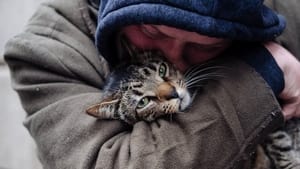
Cat Daddies
Man has a new best friend in this heartwarming portrait of nine men whose lives have been forever changed by their proud love of cats.
2022

Murdered and Missing in Montana
A documentary examining the mysterious deaths of three young Indigenous women in south-central Montana, featuring access to family members, tribal officials, law enforcement, and community activists.
2021

Undocumented in the Pandemic
With The Marshall Project and the Pulitzer Center, a look at one immigrant mother’s struggle to keep her children safe and housed, with her husband detained by ICE in a facility where COVID is spreading. Also in this two-part hour, Love, Life & the Virus.
2020
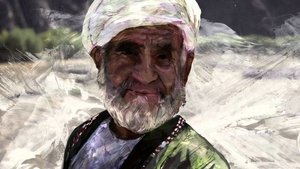
The Magic Mountain
The film investigates the adventures of mountain climber and photographer Adam J. Winkler, who fought in Afghanistan with the Mujahideen against the Soviets in the 1980s. The director employs a highly original artistic technique involving animated collage of period materials.
2015

Vita Activa: The Spirit of Hannah Arendt
The life and work of German political philosopher of Jewish descent Hannah Arendt (1906-75), who caused a stir when she coined a subversive concept, the banality of evil, in her 1963 book on the trial of Nazi war criminal Adolph Eichmann (1906-62), held in Israel in 1961, which she covered for the New Yorker magazine.
2015
Celluloid Ceilings
Even though women make up 51 percent of the U.S. population, only about 4 percent of movies are directed by women. Of the 220 TV shows, representing about 3500 total episodes, only 14 percent were directed by women. Bloomberg interviewed several female directors in Hollywood, from Oscar winners to the director of "Twilight" to explore the various forms of sexism and discrimination they have faced in Hollywood, and what they are trying to do to change things
2015

Tomie
The work of the artist.
2014
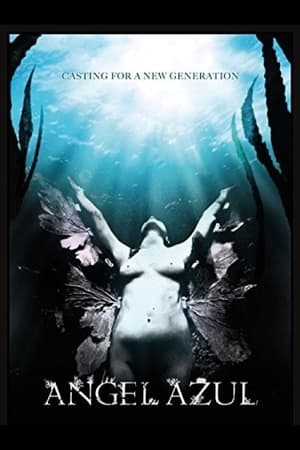
Angel Azul
Through the hauntingly beautiful lure of Jason deCaire's Taylor's underwater, life-like statues we witness the birth of an artificial coral reef, learn how we are inextricably connected to the ocean and everything in it, and are left to consider how our choices will determine what we leave to future generations.
2014

A Balloon for Allah
When the Norwegian-Turkish filmmaker Nefise Özkal Lorentzen was little, she used to send letters to Allah by balloon. Now she wants to send a new balloon to change the role of women in the Muslim culture. By following her grandmother's path as a 'sufi', she embarks on a journey to rediscover the Islam of her mother's mother. The film switches between her actual journey and her dreams. She experiences the diversity of Cairo, Istanbul and Oslo by drinking tea with the Egyptian feminist Nawal El Saadawi, finding hope and inspiration in the life of the 90-year-old author Gamal al-Banna and meeting a young Salafist. On her journey through the labyrinth, it dawns on Nefise that Islam is not the only place to search, but that there are correlations between the three Abrahamic religion and the oppression of women.
2011

The Bridge: An Observation
East meets West in this observation of the anime cosplay culture in Tokyo, Japan.
2010
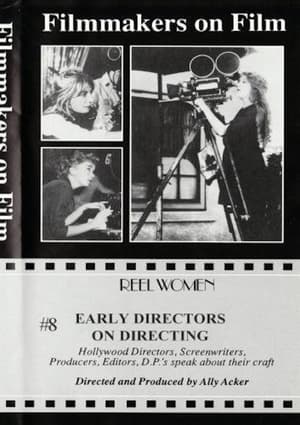
Early Directors on Directing
There were more women directors before 1920 than at any other time in history. The first director to put a narrative story on celluloid was, Alice Guy Blaché in 1896. Few people know that Lillian Gish became a director in her own right in 1920. Ida Lupino directed over a hundred episodes of "Have Gun, Will Travel," "Thriller," "Gunsmoke," and many independent features.
2009

Namrata
This short documentary tells the intensely personal story of Namrata Gill – one of the many real-life inspirations for Deepa Mehta’s Heaven on Earth – in her own words. After six years, Gill courageously leaves an abusive relationship and launches a surprising new career.
2009
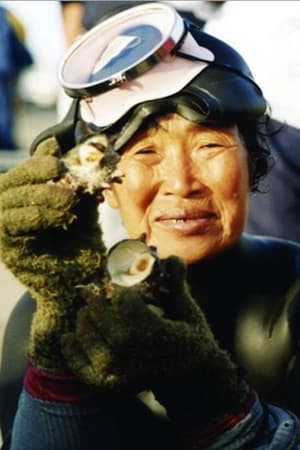
Diving Women of Jeju-do
Jeju-do is the largest of Korean islands and lies between Korea and Japan. There, for hundreds of years, women dive without breathing apparatus, to the ocean floor and collect shellfish, octopus, and urchins that they sell. The divers are in their sixties and seventies and their daughters do not want to inherit their work, lifestyle, and health problems that go with diving. As a filmmaker I was privileged to meet many of these women and dive with them. Their stories of hardship and pride confirmed my desire to record this unique and ancient tradition.
2007

Take It From Me
Captured over two years, Take It From Me is a feature-length documentary about four women struggling against great odds to raise themselves and their families out of poverty in New York City.
2001
En dame med hatt
The Jewish milliner May Aubert grew up in Kristiania with an English father and a German mother. Before WW II she was an apprentice hat maker in Berlin and delivered hats to UFA film studio's brightest stars such as Marlene Dietrich and Elisabeth Bergner. Later, she became a refugee, war hero and currency smuggler. Eighty-seven years old, she still goes to work every day and is the Norwegian Queen Sonja's regular hat maker.
1999
Biker Women
A fresh take on the outlaw spirit, focusing on a road trip by four motorcyclists who forge deep friendships over nearly 3,000 miles. Zeros in on four California women who get to know one another while traveling to and from Sturgis, South Dakota, for the world’s largest biker gathering, an annual event since 1938. The rally is a heady brew of races, partying, and exhibitionism under the Great Plains sun. The central quartet have come to Sturgis not merely to revel but to work: Among them are two journalists (Cris Sommer-Simmons, cofounder-founder of Harley Women magazine; and Jamie Elvidge, who specializes in test-riding bikes), a singer-songwriter (Gevin Fax) and a photographer (Gail DeMarco). Combines footage of the women’s trip and post-travel interviews.
1996
Let It Be (1970-1974)
Chapter 15 of the series 18 decades of life in Mexico in the twentieth century. Images of the cultural, social and political life in Mexico from 1970 to 1974. During the presidential term of Luis Echeverria Alvarez fantasies of prosperous and modern country it dissolves; Mexico live in political crisis. It is a time of omnipotence, barbarism, and violence intervention: the world seeks new ways. In Mexico, it held the World Cup, unionism is strengthened and inflation responds to the continuing economic imbalances.
1993

Hair Piece: A Film for Nappy Headed People
An animated satire on the question of self-image for African American women living in a society where beautiful hair is viewed as hair that blows in the wind and lets you be free. Lively tunes and witty narration accompany a quick-paced inventory of relaxers, gels, and curlers. This short film has become essential for discussions of racism, African American cinema, and empowerment.
1984

Totems
For Indigenous peoples the totem pole is the symbol of life, portraying the relationship between humans and animals. Fitting into the landscape of British Columbia, these monuments, witnesses to an ancient and powerful culture, look down at us. The group "Indians of British Columbia" singing group provide a powerful soundtrack as Haida and Tsimshian people talk about poles in their communities.
1944