Watch Stockholms negrer (1986) Online Free
The film is about the band Stockholms Negrer, but also about what formed their music, about being Swedish but still being viewed as an outsider.
Cast
Michael Alonzo, Christian Alonzo, Rolf Elving, John Schubert, Mats Larsson, Mia Alonzo, Sofia Alonzo
More Like This

I Don’t Have the Codes
This is the story of an ordinary man transformed by history. A simple baker from Besançon who became a political symbol of resistance. That of a France that knows how much it needs others to grow. Of working classes rejecting the siren calls of populism. He says: "I was nothing and I became a monster" to express the vertigo of his transformation. And so the baker entered politics, visited the United States in the footsteps of Martin Luther King, brought aid to the Ukrainians, and ran for legislative elections. Fearless. Fighting with all his heart. It is this inspiring, touching, and funny human epic that Pedro da Fonseca's camera followed closely, capturing his doubts, his hesitations, and his emotions.
2025

The Dawn is Too Far: Stories of Iranian-American Life
The Dawn is Too Far: Stories of Iranian-American Life poetically narrates the story of a community of Iranian Americans who have made the San Francisco Bay Area their home over the past five decades. The film explores Iranian immigration through turbulent histories of dissent, revolution, war, and separation, and the reinvention of identity in a new land and culture. The Dawn is Too Far highlights how Iranian students, activists, and artists have navigated displacement while drawing on and influencing Bay Area culture. This community offers a more nuanced story of the Iranian diaspora—the ways that this community enriches the region where they live, work, and build families. The Dawn is Too Far undermines the tired and overplayed news headlines that are dominated by narratives of enmity and mistrust between the government of Iran and the U.S., to offer a more humane understanding of the how people's lives and the sacrifices they make are part of the larger story of immigration.
2024
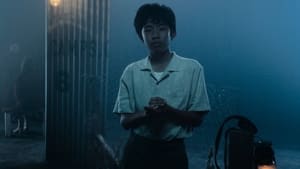
Enemy Alien
A poetic retelling of the experiences of Joseph Murakami, a fourteen-year-old boy from Darwin, who is summarily rounded up and interned by his government on the basis of his ethnicity, leaving wounds unhealed to this day.
2022
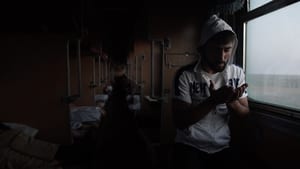
Not My Job
The documentary follows the life of Farroukh, a young Tajik immigrant who lives in Moscow outskirts with his family and does odd jobs in dreams of becoming an actor.
2015
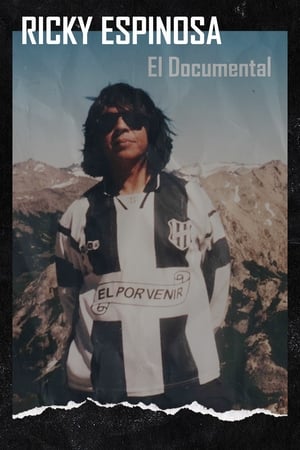
Ricky Espinosa: El Documental
Ricky Espinosa: The Documentary is a self-managed and independent project created by Juan Pablo Duarte in Buenos Aires, Argentina. It explores the life of Ricky Espinosa as an artist—his beginnings, his career, and his discography—featuring previously unreleased archival material and exclusive interviews.
2015
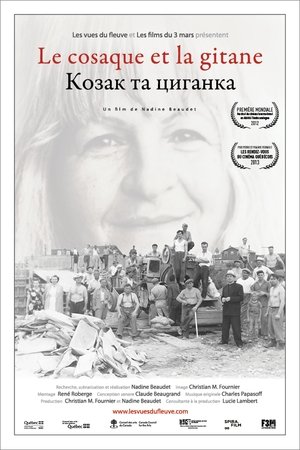
The Cossack and the Gypsy
The Cossack and the Gypsy takes us to the heart of intimate worlds of Lev Chayka and Régine Gabrysz, illustrating their memories, interior views composed of the stories about their childhood and devotion to their country of origin (Ukraine and Soviet Union). The wars and dictatorship of the past in the Eastern Europe is set in contrast with the Far North of Quebec in a forgotten boom town. Vera and Jack, the last miner, Régine and Lev are among the last first immigrants. Their Slavic voices and accents still lull the Abitibi sonorous landscapes, but for how long...
2013
Kelly
2013

Monaco, Italia. Storie di arrivi in Germania
2011

Sum 41: Don't Try This at Home
The making-of documentary of the fifth studio album by Canadian punk band Sum 41, "Screaming Bloody Murder".
2011
Una identidad en absurdo Vol. 1
Guillermo Gómez Álvarez explores the identity politics of Puerto Rico via archival footage from various sources that clash with nine original songs from local independent musicians and a thematic analysis from a psychoanalyst and a historian. From the juxtaposition the absurd becomes coherent and the coherent becomes absurd as Puerto Rican identity is defined and rejected almost simultaneously.
2011

Last Fast Ride: The Life, Love and Death of a Punk Goddess
Henry Rollins narrates Lilly Scourtis Ayers' no-holds-barred profile of volatile Bay Area punk legend Marian Anderson, whose hypnotic beauty, devil-may-care rebellion and shocking sexual exploits onstage launched her to infamy before tragically dying of a heroin overdose at the tender age of 33.
2011
Brazillians Like Me
The encounter with a growing, and mostly undocumented, brazilian community allows us to bear witness to its energy, its vivacity, and its diversity. This film attempts to work for a larger acceptance of foreigners in their land of exile.
2008
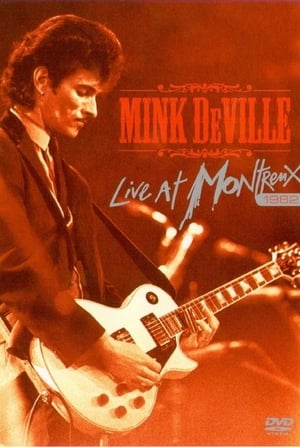
Mink DeVille: Live at Montreux 1982
1982 found Mink DeVille in the middle of the transition from their CBGB's New York punk origins to a more subtle, rootsier sound blending soul, R & B, Cajun and other influences. Led by Willy DeVille, whose unique style and inimitable gravelly voice always made them stand out from the crowd, Mink DeVille released their first album in 1977 and immediately had a huge hit with the track Spanish Stroll. By the time of this appearance at Montreux in 1982 they were touring in support of the fourth album Coup De Grace and the show features tracks from across their career to that point as well as a couple of unreleased gems including their cover of the Ben E. King classic Stand By Me.
2008
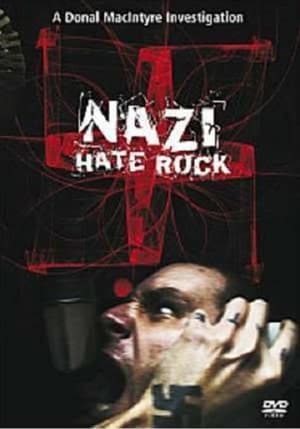
Nazi Hate Rock
Donal MacIntyre investigates the secretive world of white power music and how the money made helps fund far right political organizations in many countries, including the British National Party in the UK. In this documentary, the crew gained access to the men and women behind one of the most disturbing musical movements. It reveals how British neo-Nazis and skinheads plan to launch 'Project School-Yard' in Britain after a similar scheme was tried out in the United States. In the UK, the team follows one of the most infamous British white-power bands, Whitelaw, as they prepare for one of the biggest gigs of their career. The band are filmed on stage, with riot police surrounding the venue, performing as the forces of law and order move in to shut down their hate-filled act. The film also contains shocking images of hate rock concerts in the USA where, thanks to the first amendment protecting freedom of speech, anything goes.
2006
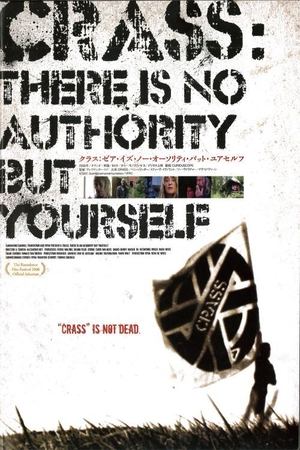
There Is No Authority But Yourself
A Dutch documentary about the history of the anarchist punk band Crass. The film features archival footage of the band, and interviews with former members Steve Ignorant, Penny Rimbaud and Gee Vaucher.
2006
The Scene
What is "la escena" (the scene) and what is its importance, if any? Guillermo Gómez Álvarez tries to answer these questions with candid interviews from musicians and fans of the vibrant and, many times controversial, punk music scene in Puerto Rico. The decadence, rage, drugs, alcohol, politics, and social aspects are showcased in this documentary that tells an important part of the history of the great dysfunctional family that is "el punk boricua".
2005
Visions of Europe
Twenty-five films from twenty-five European countries by twenty-five European directors.
2004

90 Miles
Having grown up within the Cuban Revolution, in 1980, Juan Carlos Zaldívar was a 13-year-old "pioneer" jeering in the streets at the thousands of "Marielitos" leaving the island by boat for the United States. Within weeks, he was a Marielito himself, headed with the rest of his family for a new life in Miami. Now a U.S.-based filmmaker, Zaldívar recounts the strange twist of fate that took him across one of the world's most treacherous stretches of water in 90 Miles, a new documentary having its broadcast premiere on PBS's acclaimed P.O.V. series in the summer of 2003. As related by Zaldívar in the intensely personal and evocative 90 Miles, arrival in South Florida is only the beginning of the family's struggles to comprehend the full meaning of their passage into exile. What follows is an intimate and uneasy accounting of the historical forces that have split the Cuban national family in two, and which shape the passage of values from one generation to the next.
2001

Swallowtail Butterfly
The struggles of a group of outcasts living in "Yentown", in an alternate-future Japan.
1996
38/79: Sentimental Punk
'It was in San Francisco at a punk festival. I was already high and the air was so thick in the rooms that you could cut it with a knife. I had a photograph camera with me; I stood in a corner of the entrance hall and took 36 pictures on slide film. At home I put the slides into a slide projector. I took out the lens and filmed the slides by filming directly from the projector - using single frames according to a certain plan.'
1979