Watch Stanford Prison Experiment: Psychology of Imprisonment (1991) Online Free
The Stanford prison experiment was a landmark psychological study of the human response to captivity, in particular, to the real world circumstances of prison life, and the effects of imposed social roles on behaviour. It was conducted in 1971 by a team of researchers led by Philip Zimbardo of Stanford University.
Cast
Philip Zimbardo
More Like This
Aap tot Aap
2025

Beyond
Inmates at Sing Sing prison share their passions, thoughts, and aspirations in a unique speaking event.
2025
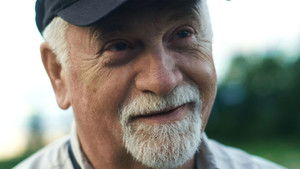
Seeds of Change
An organic farmer in Maine sets out to transform the prison food system. Seeds of Change captures the intersecting stories of life-long farmer Mark McBrine and several incarcerated men as they harvest their own meals from a five-acre prison garden unlike any other.
2023

The Unpredictable Factor
In today's climate debate, there is only one factor that cannot be calculated in climate models - humans. How can we nevertheless understand our role in the climate system and manage the crisis? Climate change is a complex global problem. Increasingly extreme weather events, rising sea levels, and more difficult living conditions - including for us humans - are already the order of the day. Global society has never faced such a complex challenge. For young people in particular, the frightening climate scenarios will be a reality in the future. For the global south, it is already today. To overcome this crisis, different perspectives are needed. "THE UNPREDICTABLE FACTOR" goes back to the origins of the German environmental movement, accompanies today's activists in the Rhineland in their fight against the coal industry and gives a voice to scientists from climate research, ethnology and psychology.
2022
Into Light
A mother embarks on a journey of acceptance and joy while supporting her child's gender transition in this heartfelt portrayal of single parenting and navigating the complexities surrounding gender and consent.
2021

Death and the Judge
The documentary, " Death and the Judge", revolves around Iran's most famous criminal judge, Azizmohammadi. He served as a criminal judge for 45 years and issued about 4500 death sentences; a record in not only Iran, but also the world. This documentary looks into his personal and professional life as he is followed within his home with his family, in the court of law, and in his retirement days. The ultimate purpose of the documentary is to deduce the role of death in the judge's life as he either takes life away from criminals or death comes to his loved ones. During his retirement, he is once again given the choice between the life and death of a person, despite no longer being a judge.
2018

Forbryder på pension
2017
The 10 Minute Project
An experimental project made up of 10 minute silent portraits with 60+ participants.
2017
A Tale of Singers and Murderers
The documentary depicts the remarkable phenomenon of the national competition Kalina Krasnaya, organised with a flourish in which the convicts from all over Russia sing their way to victory with songs about longing, war, love and forgiveness.
2016

Sara - My Whole Life Was a Struggle
Documentary on Sakine Cansız (Sara), the Kurdish revolutionary and PKK co-founder killed in Paris in January 2013 by Turkish agents.
2015
Out of Mind, Out of Sight
Four-time Emmy winner John Kastner was granted unprecedented access to the Brockville facility for 18 months, allowing 46 patients and 75 staff to share their experiences with stunning frankness. The result is two remarkable documentaries: the first, NCR: Not Criminally Responsible, premiered at Hot Docs in the spring of 2013 and follows the story of a violent patient released into the community. The second film, Out of Mind, Out of Sight, returns to the Brockville Mental Health Centre to profile four patients, two men and two women, as they struggle to gain control over their lives so they can return to a society that often fears and demonizes them.
2014
Petite Roquette, une prison-machine
2013

Sniper: Bulletproof
Sniper: Bulletproof deconstructs and analyzes the little-known sniper events that have occurred when no other course of action was possible. The people who planned the takedowns, or pulled the trigger, share their techniques and bring to light the many factors that had to be considered in each mission: terrain, wind speed, temperature, elevation changes... all are critical to taking out targets considered bulletproof. A sniper has one chance, one breath, to rise to the occasion and save the day... if they miss, there may never be another opportunity. As these never told before stories unfold, the viewer also learns about the high-tech gear each sniper carries on their classified missions.
2011
The Farm: 10 Down
One decade after THE FARM: ANGOLA, USA (Oscar nominated 1999; two-time Emmy winner 1999), we go back inside Louisiana's maximum security penitentiary, to catch up with our characters' lives. While the theme of THE FARM was "to err is human, to forgive divine", we now delve more deeply and find hope for "reconciliation and release". Angola is America's oldest and largest prison, with 5,000 inmates, most of whom have received life -, or death-, sentences for violent crimes, and will never leave Angola. THE FARM continues to provide extraordinary opportunities for learning through storytelling.
2009
Dragon's World: A Fantasy Made Real
"The Last Dragon" is a nature mockumentary about a British scientific team that attempts to understand the unique incredible beasts that have fascinated people for ages. CGI is used to create the dragons.
2004
Super Size Me
Morgan Spurlock subjects himself to a diet based only on McDonald's fast food three times a day for thirty days without exercising to try to prove why so many Americans are fat or obese. He submits himself to a complete check-up by three doctors, comparing his weight along the way, resulting in a scary conclusion.
2004
Mr. Death: The Rise and Fall of Fred A. Leuchter, Jr.
Documentary filmmaker Errol Morris investigates the case of a man who became an authority on capital punishment, but was discredited when he got involved on the wrong side of a court case. Leuchter, a meek man whose appearance belies his grim expertise, develops what he says is a more effective electric chair. Before long he's in demand from officials who want his opinions on other kinds of execution. But when called to aid the case of an accused Holocaust denier, Leuchter's problems begin.
1999
Recidīvisti
For thousands of years, there has been a struggle between good and evil in the world; it also takes place within each person from birth to death. By getting to know and trying to understand prisoners – repeat offenders – the filmmakers encourage us to think about human nature, morality, and destiny, as well as the place of prisoners in society. The film was shot in Valmiera Prison, where inmates knit socks and mittens for children in orphanages, sing hymns and read the Bible, develop their artistic talents and train their muscles, but will all this help them to reintegrate into society after their imprisonment?
1998

The Big One
The Big One is an investigative documentary from director Michael Moore who goes around the country asking why big American corporations produce their product abroad where labor is cheaper while so many Americans are unemployed, losing their jobs, and would happily be hired by such companies as Nike.
1997
Jacques Lacan: La Psychanalyse 1 & 2
In "psychanalyse", a two part documentary, the psychoanalyst Jacques Lacan answers to questions submitted by his son-in-law Jacques-Alain Miller under the direction of Benoit Jacquot. The Office de Radiodiffusion Television Francaise (ORTF, the french public TV) broadcast this program. This documentary and its text became famous because this is the only televisual experience practiced by Lacan. A fair amount is made of the fact that Lacan was renowned for his powers of seduction and what effect this had on transference in the clinical setting. According to some of the interviewees, he could be irresistibly seductive, so much so that some thought him "monster".
1974