Watch Ústřední loutkové divadlo (1954) Online Free
More Like This
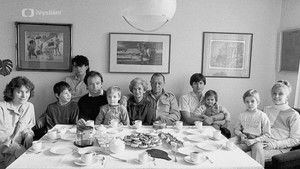
Me, brother and the name Hrušínský
According to family legend, the name Hrušínský was born after Rudolf and Jan Hrušínský's grandfather Rudolf Böhm was caught stealing pears on a theater stage. The German name Böhm suddenly became Hruškovský and shortly after that Hrušínský. Grandfather Rudolf, later known as Rudolf Hrušínský the eldest, adopted the surname as his own and began using it in 1935. However, the history of the Hrušínský acting family goes back much further. It is therefore not surprising that the brothers Rudolf and Jan also took the same path. The documentary charts their acting beginnings alongside their father Rudolf Hrušínský Sr., from their first roles, through theater engagements at the Drama Studio in Ústí nad Labem and the Drama Club in Prague, to unforgettable film and television roles, when three generations of Hrušínskýs often met in front of the camera.
2025
Forget Me Not
The onset of communism changed many people's lives. Children without homes were no longer raised in foster care, but in institutions. Through an interview with a man who grew up in such an institution and a woman who is trying to address the issue from the outside, this documentary shows how, even after thirty years of freedom, the Czech Republic still desperately needs a revolution in this area.
2020
Offline
Four teenagers, everyday life, school, work and a week-long offline challenge. What do the lives of today's teenagers look like when they find themselves without an internet connection? In addition to disconnecting, they were to record their feelings and experiences in a video diary. Without the Internet, without music, without movies and series, and without any communication with the world around them, life can turn upside down.
2019
Šturm und drunk
2019
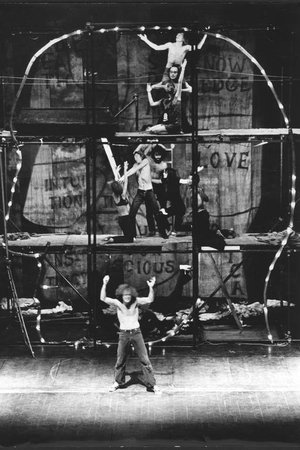
The Living Theatre - a video retrospective
The Living Theatre is an experimental company founded in New York in 1947 by Julian Beck (New York 1925-1985), painter and poet, and the actress and stage director Judith Malina (Kiel 1926), a student of Erwin Piscator. From the very beginning the group’s activities bore the stamp of social and political commitment, imbued with a strong libertarian matrix. A video montage of films and videos from The Living Theatre Archives.
2013
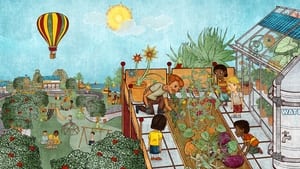
2012: Time for Change
2012: Time For Change is a documentary feature that presents ways to transform our unsustainable society into a regenerative planetary culture. This can be achieved through a personal and global change of consciousness and the systemic implementation of ecological design.
2010
El jardín de las delicias
2009
Who Killed the Federal Theatre?
Part journalistic investigation and part performance documentary, "Who Killed The Federal Theater?" tells the story of the Federal Theatre Project within the context of a volatile period in the political, social and cultural history of the United States. The film features interview segments with playwrights, including Arthur Miller, and with actors, directors, designers, and historians. It also incorporates rare archival materials and dramatic sequences, including professionally re-created scenes from Federal Theatre productions that transport viewers back in time to a bygone era in American history and entertainment.
2003
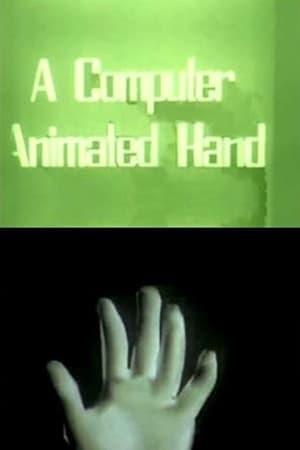
A Computer Animated Hand
Archive film showing possibly the first example of digital rendering, made by Pixar co-founders Ed Catmull and Fred Parke in 1972, was stumbled upon by the son of Robert B Ingebretsen, who also set up the world-famous U.S. studio. A six minute version shows additional CGI animation of an artificial heart valve, and human heads.
1972
Everything
Here's a strange one. First, a song on a blackboard: a Polish translation of “I love my little rooster” by American folk writer Almeda Riddle. Then, two men roll around trash bins and lift them to the garbage truck. They do it several times. A woman shouts in the distance. At the end, the picture stops, and the woman sings the song. An early short by Piotr Szulkin.
1972
Amén Jesús
An experimental and iconoclastic journey through the Spanish Holy Week in the late sixties.
1969
The Emperor
Comments on the background and popularity of disc jockey "Emperor" Bob Hudson, who bases his shows on the idea that radio is a fantasy.
1967
Zima v Československu
1964
Politická karikatura
1954
Nebe patří nám
A documentary film about parachute training in the Voluntary Union of People's Aviation.
1953
Prepared
A report from a Svazarm summer training camp where trained instructors dedicate themselves to providing children and young people with defence education.
1953
Dárci života
1953
El circo
Madrid, Spain, 1949. The Circo Americano arrives in the city. While the big top is pitched in a vacant lot, the troupe parades through the grand avenues: the band, a witty impersonator, the Balodys, acrobats, jugglers, acrobatic skaters, clowns and… Buffallo Bill.
1950
Věděli si rady
1949
Vltava po válce
A 4-year-old girl cries, lost in the city. A Soviet soldier on a ferry takes her in and takes her to her home village.
1949