Watch Sri Siddhartha Gautama (2013) Online Free
Sri Siddhartha Gautama is a Sinhala movie released on 24 January, 2013. The movie is directed by Saman Weeraman and featured Anchal Singh and Gagan Malik as lead characters.
Cast
Gagan Malik, Anchal Singh, Ranjan Ramanayake, Anshu Malik, Roshan Ranawana, Saranga Disasekara, Wilson Gunaratne
More Like This

The Man Kyung Heo
This film tells the story of Zen Master Kyeong Heo Seongu who revives modern Korean Buddhism. He cares for a woman who is sick and tired of cold and hunger, but other monks misunderstand it.
2026

Kesari Veer
The movie narrates the tale of Hamirji Gohil, a brave warrior who fought against the Tughlaq Empire to protect the Somnath Temple and the Hindu faith.
2025
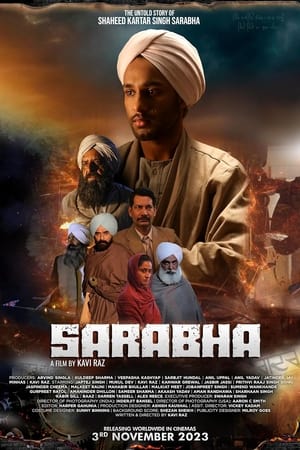
Sarabha
Young revolutionary Kartar Singh Sarabha fights for Indian Independence in the early 1900s.
2023
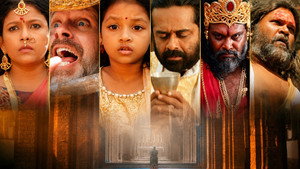
Seeds
The film is based on the true story of the Great Catholic Christian Massacre of nearly 700 Christians that took place in 1544 in Mannar and the chain of events related to the same massacre that took place in 1560.
2022
India on Film: 1899 – 1947
As part of the 2017 UK-India Year of Culture, the British Council and British Film Institute share a unique collection of films documenting the sights and culture of a bygone India. Filmed between 1899-1947, and preserved in the BFI National Archive since then, these rare films capture many glimpses of life in India, from dances and markets, to hunts and pageantry.
2017
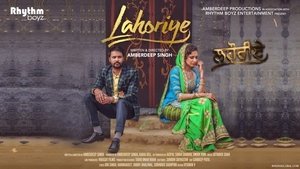
Lahoriye
Lahoriye is the story of love. The love which does not see boundaries, the love which does not see nations. Kikar Singh (Amrinder Gill) is a clerk at DTO office and his family holds a piece of land which is right at the LOC. The people living in Border areas are familiar with the situation. Right across the land in Pakistan is a Kinnow farm where Ameeran (Sargun Mehta) works and live with her family. Kikar falls for Ameeran and slowly slowly even Ameeran falls for Kikar. What follows next is a tale of romance which is worth watching on the big screen.
2017
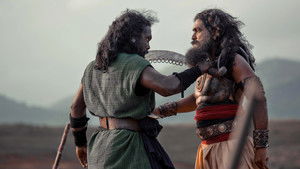
Light Arose
Aloko Udapadi is a Sinhalese epic historical film based on the story of King Valagamba of Anuradhapura (89 – 77 BCE).
2017

Razzakar
Set in post-independent India, this film narrates the story of a naive villager who has warped ideas about an atrocious communal group called Razzakars and wishes to join it until he realises what they are capable of.
2015
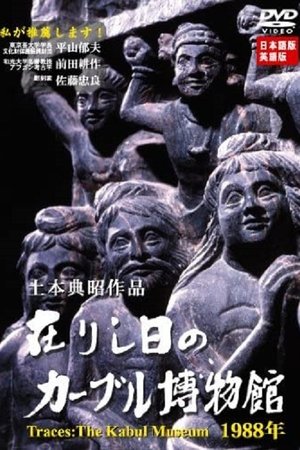
Traces: The Kabul Museum 1988
The Kabul National Museum, once known as the "face of Afghanistan," was destroyed in 1993. We filmed the most important cultural treasures of the still-intact museum in 1988: ancient Greco-Roman art and antiquitied of Hellenistic civilization, as well as Buddhist sculpture that was said to have mythology--the art of Gandhara, Bamiyan, and Shotorak among them. After the fall of the Democratic Republic of Afghanistan in 1992, some seventy percent of the contents of the museum was destroyed, stolen, or smuggled overseas to Japan and other countries. The movement to return these items is also touched upon. The footage in this video represents that only film documentation of the Kabul Museum ever made.
2003

Aśoka
A young Prince Asoka works to perfect his skills in battle and also deals with family conflict. During a struggle with one of his step-brothers, his mother urges Asoka to escape to stay alive. While away, Asoka meets Kaurwaki and falls in love, but must use his skills as a warrior to protect her. A dangerous and heartbreaking web of conspiracy follows, which leads Asoka to embrace a Buddhist path.
2001
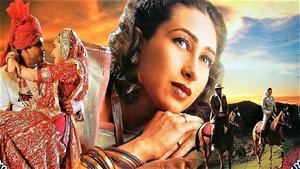
Zubeidaa
Zubeidaa, an aspiring Muslim actress, marries a Hindu prince to become his second wife. Her tumultuous relationship with her husband, and her inner demons lead her to a decision which has fatal consequences for them all.
2001

Kundun
From childhood to adulthood, Tibet's fourteenth Dalai Lama deals with Chinese oppression and other problems.
1997
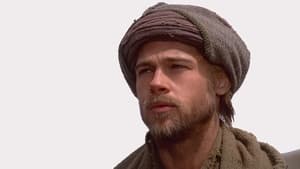
Seven Years in Tibet
Austrian mountaineer Heinrich Harrer journeys to the Himalayas without his family to head an expedition in 1939. But when World War II breaks out, the arrogant Harrer falls into Allied forces' hands as a prisoner of war. He escapes with a fellow detainee and makes his way to Lhasa, Tibet, where he meets the 14-year-old Dalai Lama, whose friendship ultimately transforms his outlook on life.
1997
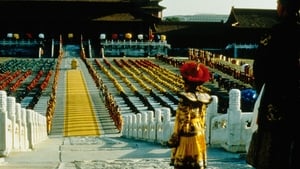
The Last Emperor
A dramatic history of Pu Yi, the last of the Emperors of China, from his lofty birth and brief reign in the Forbidden City, the object of worship by half a billion people; through his abdication, his decline and dissolute lifestyle; his exploitation by the invading Japanese, and finally to his obscure existence as just another peasant worker in the People's Republic.
1987
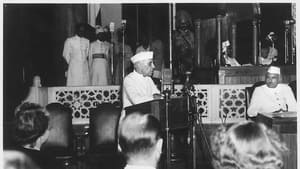
Nehru
Divided into three parts — The Awakening, The Struggle, and Freedom — this is a biographical film on Pandit Jawaharlal Nehru, the first Prime Minister of independent India. Relying on Nehru's writings and speeches, the film traces the evolution of Nehru from his birth through his life. It also deals with the effect of history on Nehru and in turn his impact on the world.
1984
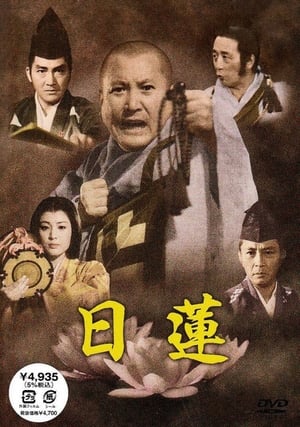
Nichiren
An epic drama about Nichiren's life. Nichiren was a Buddhist monk who lived for 60 years during the Kamakura period (1185-1333) in Japan. Nichiren taught devotion to the Lotus Sutra as the exclusive means to attain enlightenment. Because of his devout belief, Nichiren is met with opposition throught his travels, with life on the line, can Nichiren accomplish his goal?
1979
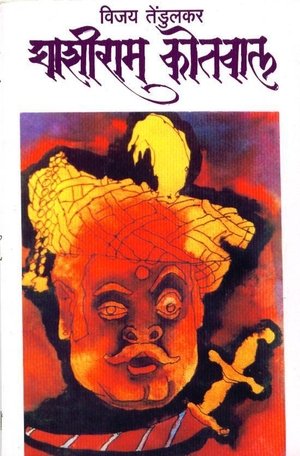
Ghashiram Kotwal
A stylized version of Vijay Tendulkar’s radical Marathi play chronicling the Peshwa regime in western India, a collective effort of direction and cinematography made by an independent group of young filmmakers.
1976
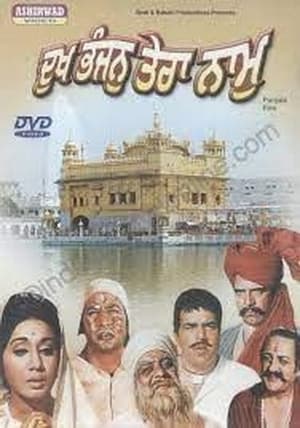
Dukh Bhanjan Tera Naam
This Punjabi Movie, Dukh Bhanjan Tera Naam is a Punjabi movie about Sikhism. It was a great success. It portrays the people's belief in the almighty god who is one and how life teaches a lesson to those who does not believe so.
1974
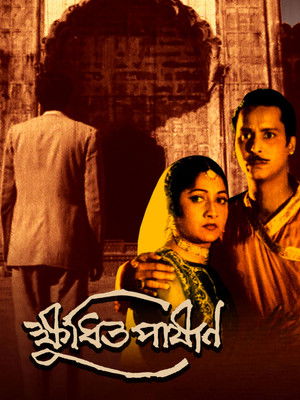
The Hungry Stones
A tax collector posted to a small town puts up at a mansion feared by the locals because it is haunted. As time passes he grows more consumed by the mansion and its air of romance, and the spirits that haunt it, especially a beautiful woman. Adapted from a Rabindranath Tagore story.
1960

Six Years of Freedom
This documentary highlights the achievements of India in the political, economic, and international fields since she attained Independence. The framing of her Constitution, the integration of the States and the general elections, the rehabilitation of displaced persons, the river valley projects, and the setting up of a chain of National Laboratories are some of the achievements shown here.
1953