Watch Small Town Universe (2024) Online Free
An intimate portrait of life in Green Bank, West Virginia, home to the world's most sensitive radio telescope and the only U.S. town where Wi-Fi and cell phones are banned. In this radio-quiet community, scientists search for signs of extraterrestrial life while residents share everyday moments of joy and loss. But when government defunding threatens the telescope's future, the town must consider which connections matter most.
More Like This

The Cholesterol Code
In a world where 92 million Americans rely on statins as their lifeline, one man's unexpected health journey uncovers a medical mystery that could upend everything we think we know about heart health, cholesterol, and the ketogenic diet.
2026
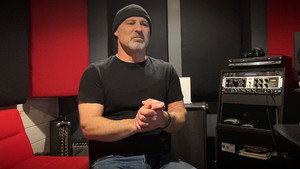
Resilience & Sacrifice
Award-winning documentary Resilience & Sacrifice follows an emerging musician from Vermont’s Northeast Kingdom who shelved his dreams to raise his family. Years later, he returns to the stage, facing the music industry and a medical crisis that nearly ends his career. A story of grit and passion.
2025
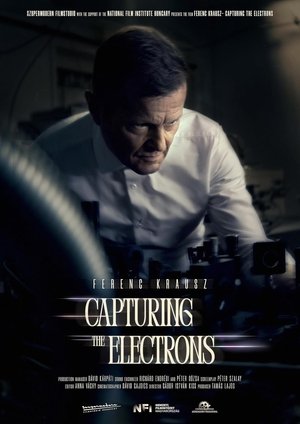
Capturing the Electrons
Capturing the Electrons documents the life and career of Nobel Prize-winning Hungarian physicist Ferenc Krausz. His research team has generated and measured the first attosecond light pulse and used it for capturing electrons' motion inside atoms, marking the birth of attophysics. In 2023, jointly with Pierre Agostini and Anne L'Huillier, he was awarded the Nobel Prize in Physics.
2024
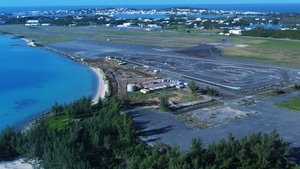
Top Rider
An in-depth look into the isolated sport of Motocross in the much more isolated island of Bermuda.
2024
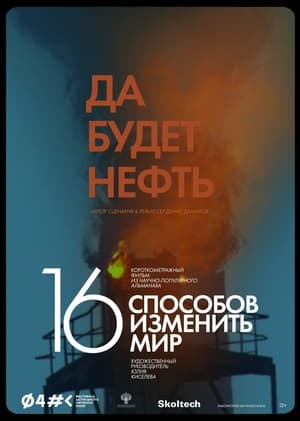
There Will Be Oil
Oil is a primary energy source in the world. Global oil consumption reached approximately 95 million barrels per day but oil fields' quality is constantly declining. A team of Russian scientists came up with more accurate, cheaper, and faster technology that can increase the oil production rate. After all, modern civilization is built in the way that 'to live well' means 'consume more oil'
2022
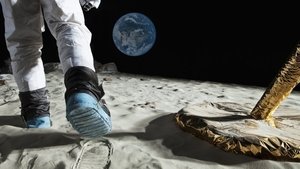
Project Artemis: Back to the Moon
An inside look at NASA’s new Artemis program and its mission to return astronauts to the moon for the first time in 50 years.
2022
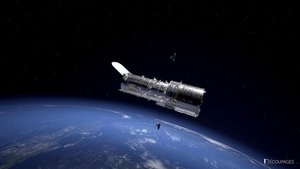
L'odyssée d'Hubble, un œil dans les étoiles
The Hubble Space Telescope has spent more than 30 years scrutinizing the cosmos in an attempt to unravel the secrets of the Universe and go as close as possible to its origin. But Hubble has also become the superstar of space, offering us magnificent paintings of the Universe.
2022
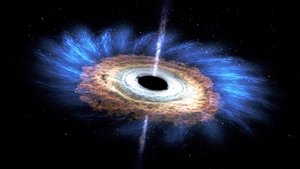
Black Hole Hunters
A team of international scientists attempt to document the first-ever image of a black hole.
2019

Miniverse
What if you could get behind the wheel and race through space? We scale down the Solar System to the continental United States and place the planets along the way to better appreciate the immense scale of the Universe. See space as never before, with Mars looming over the Freedom Tower and Jupiter towering above the Lincoln Memorial. Join former astronaut Chris Hadfield - a YouTube sensation for his performance of David Bowie’s “Space Oddity” aboard the International Space Station - and his interstellar hitchhikers Michio Kaku and astronomers Derrick Pitts and Laura Danly. It’s a joyride from coast to coast - and from the sun to Pluto.
2017
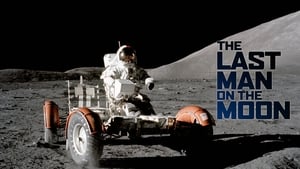
The Last Man on the Moon
The 1960s was an extraordinary time for the United States. Unburdened by post-war reparations, Americans were preoccupied with other developments like NASA, the game-changing space programme that put Neil Armstrong on the moon. Yet it was astronauts like Eugene Cernan who paved the uneven, perilous path to lunar exploration. A test pilot who lived to court danger, he was recruited along with 14 other men in a secretive process that saw them become the closest of friends and adversaries. In this intensely competitive environment, Cernan was one of only three men who was sent twice to the moon, with his second trip also being NASA’s final lunar mission. As he looks back at what he loved and lost during the eight years in Houston, an incomparably eventful life emerges into view. Director Mark Craig crafts a quietly epic biography that combines the rare insight of the surviving former astronauts with archival footage and otherworldly moonscapes.
2016
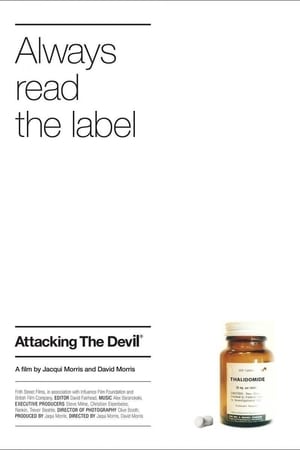
Attacking the Devil: Harold Evans and the Last Nazi War Crime
Before the internet. Before social media. Before breaking news. The victims of Thalidomide had to rely on something even more extraordinary to fight their corner: Investigative journalism. This is the story of how Harold Evans fought and won the battle of his and many other lives.
2014
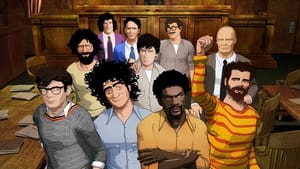
Chicago 10
Archival footage, animation and music are used to look back at the eight anti-war protesters who were put on trial following the 1968 Democratic National Convention.
2008
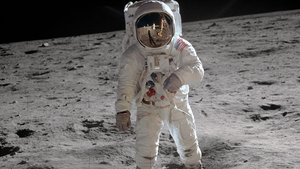
In the Shadow of the Moon
Archival material from the original NASA film footage – much of it seen for the first time – plus interviews with the surviving astronauts, including Jim Lovell, Dave Scott, John Young, Gene Cernan, Mike Collins, Buzz Aldrin, Alan Bean, Edgar Mitchell, Charlie Duke and Harrison Schmitt.
2007
The Wonder of It All
The Wonder of it All focuses on the human side of the men behind the Apollo missions through candid interviews with seven of the Apollo astronauts: Buzz Aldrin, Alan Bean, Edgar Mitchell, John Young, Charles Duke, Eugene Cernan and Harrison Schmitt. They all reflect on the training, the tragedies, the camaraderie, and the effect that their space travel has had on their families.
2007
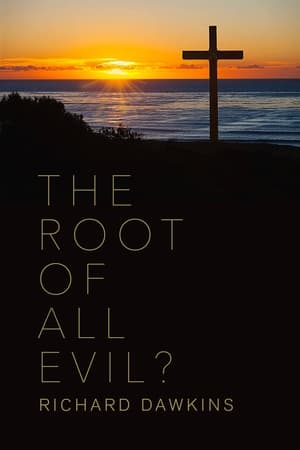
Root of All Evil?
In this two-part Channel 4 series, Professor Richard Dawkins challenges what he describes as 'a process of non-thinking called faith'. He describes his astonishment that, at the start of the 21st century, religious faith is gaining ground in the face of rational, scientific truth. Science, based on scepticism, investigation and evidence, must continuously test its own concepts and claims. Faith, by definition, defies evidence: it is untested and unshakeable, and is therefore in direct contradiction with science. In addition, though religions preach morality, peace and hope, in fact, says Dawkins, they bring intolerance, violence and destruction. The growth of extreme fundamentalism in so many religions across the world not only endangers humanity but, he argues, is in conflict with the trend over thousands of years of history for humanity to progress to become more enlightened and more tolerant.
2006
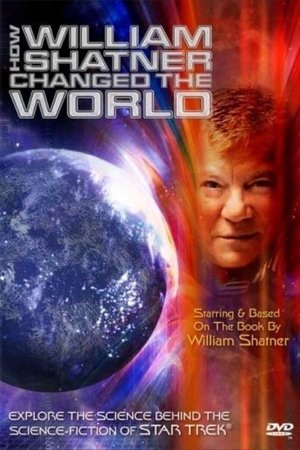
How William Shatner Changed the World
William Shatner presents a light-hearted look at how the "Star Trek" TV series have influenced and inspired today's technologies, including: cell phones, medical imaging, computers and software, SETI, MP3 players and iPods, virtual reality, and spaceship propulsion.
2005
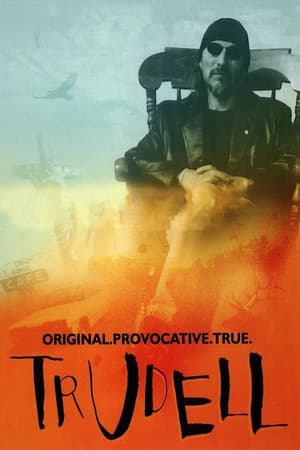
Trudell
A chronicle of legendary Native American poet/activist John Trudell's travels, spoken word performances, and politics.
2005
Spellbound
This documentary follows 8 teens and pre-teens as they work their way toward the finals of the Scripps Howard national spelling bee championship in Washington D.C.
2002
Cosmic Fireballs
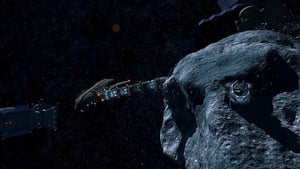
214 million years ago a gigantic meteorite broke up and impacted Earth. 65 million years ago, the impact that killed the dinosaurs occurred where the country of Belize stands today. 200 thousand years ago early humans were walking and died when they were hit by a 40 meter wide meteorite hit South Africa creating a 1.4 km wide crater. This meteorite fragment, the largest ever found hit Namibia 80 000 years ago and more recently a major impact occurred in Toungouska, Russia in 1908. Every year 10 000 tons of meteoritic matter fall onto Earth in much smaller but not necessarily less influential pieces. This film will explore how the impact of these meteorites big and small through the ages have changed our world and what they brought from outer space with them that may have been the seed of life itself on Earth.
2001
Popular Science J-8-1
A variety of scientific subjects, including the laboratory of a plastic surgeon in London, and his method for applying permanent makeup; a new school for kiddies employing finger paint so they can express their urge to put things on paper; Army aviation, showing the latest development in blind landing. Produced in Cinecolor.
1938