Watch Six Inches of Soil (2024) Online Free
The inspiring story of British farmers standing up against the industrial food system and transforming the way they produce food - to heal the soil, benefit our health and provide for local communities.
Cast
Anna Jackson, Adrienne Gordon, Ben Thomas, David Morrissey
More Like This
Die Bio-Revolution - Die Karriere der ökologischen Landwirtschaft
2024

Variations on How to Farm a City
Sprout. In the vacant lots against the hammering of buildings always under construction, between walls of granite, cement and sheet metal with rust, moss and cats; on the hillside between the train and the river, next to the traffic on the highway, facing the subway, vegetable gardens sprout. In this city, the choreography of ancient gestures of cultivating the land is repeated day after day, without fail. Sowing, digging, harvesting, watering, eating, talking, resting and returning the next day. The longest day of the year brings S. João and nobody goes to bed, but when the sun rises, the discreet gestures of resistance will restart.
2024
Hassan's Tomatoes
A farmer struggles to make a living on his land near the coast of the Dead Sea.
2024
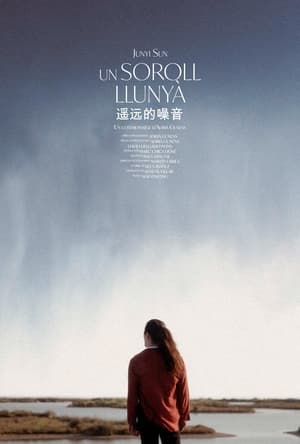
A Distant Noise
During the rice sowing season, Jun, a young Catalan of Chinese origin, works as a seasonal worker in the Ebro Delta. This ancient labour will make him confront his own roots and the distance that separates him from his family.
2023
L'Amour vache
2023
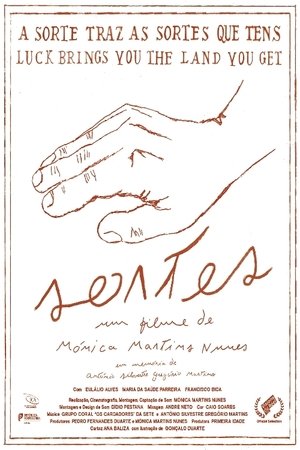
Sortes
Beneath the harvest sun and the cicada song, Mónica Martins Nunes builds a touching portrait of Serra de Serpa, an arid region in the south of Portugal affected by rural exodus. The poems sung by the shepherds and market traders resonate like the last gesture of a human landscape which resists sinking into oblivion.
2021
The Ants and the Grasshopper
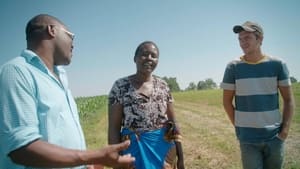
Anita Chitaya has a gift: she can help bring abundant food from dead soil, she can make men fight for gender equality, and maybe she can end child hunger in her village. Now, to save her home in Malawi from extreme weather, she faces her greatest challenge: persuading Americans that climate change is real. Traveling from Malawi to California to the White House, she meets climate sceptics and despairing farmers. Her journey takes her across all the divisions that shape the USA: from the rural-urban divide, to schisms of race, class and gender, and to the American exceptionalism that remains a part of the culture. It will take all her skill and experience to help Americans recognise, and free themselves from, a logic that is already destroying the Earth.
2021
A Hong Kong Farmer’s Lot
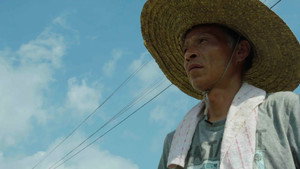
The documentary offers a glimpse into the life of a farmer who worked in the fields with his father when he was young. After spending time in the city as an adult, he returns to the countryside to take over the family’s business and learns the essence of making a living from the land.
2020
Heartland Local Food
This film explores food sustainability, how farmers' markets build community, and why local food matters. Filmmaker Dr. Benjamin Garner is an Associate Professor at the University of North Georgia. He produces films on food, marketing, and tourism. Dr. Garner consults with companies on soft skills training and produces video ads for web and social media.
2020
Dominion
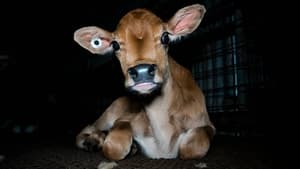
Exposing the dark underbelly of modern animal agriculture through drones, hidden & handheld cameras, the feature-length film explores the morality and validity of our dominion over the animal kingdom.
2018

Kong Rice
The film tells the story of how Hong Kong rice farmers use their crops to pour time and strength into connecting Hong Kong people and their land. To stand up to the challenges Hong Kong nature offered, the farmers put effort into farming their own rice and spread their contribution in agriculture in order to enable Hongkongers to taste the rice from the very soil they stand on. The countless stories behind a bowl of local rice, which embeds the inseparable relationship between the land and its people, are told through this film.
2016
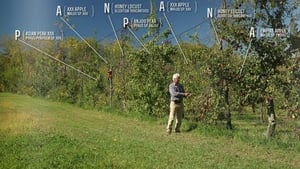
The Permaculture Orchard: Beyond Organic
This feature-length educational film teaches you how to set up your own permaculture orchard at virtually any scale. We recognize the limitations of the organic model as a substitute to conventional fruit growing, and want to propose a more holistic, regenerative approach based on permaculture principles. Based on 20 years of applied theory and trial and error, biologist and educator Stefan Sobkowiak shares his experience transforming a conventional apple orchard into an abundance of biodiversity that virtually takes care of itself. The concepts, techniques and tips presented in this film will help you with your own project, whether it is just a few fruit trees in your urban backyard, or a full-scale multi-acre commercial orchard.
2014

Once Upon a Time
Every year, a Kurdish family leaves Gaziantep (Anatolia) to work on the land near Ankara. This thankless life of seasonal labor turns upside down when the eldest son falls in love.
2014
The First Season
Paul and Phyllis van Amburgh, believing that a small, family farm is the best place to raise their children, take their life savings and buy a defunct dairy. With three children and a fourth on the way and armed only with their principles and determination, they fight to defy the odds as they become full time farmers. THE FIRST SEASON, through an intimate, cinema verite style, bears witness to the Van Amburgh's struggle as they fight against relentless toil, financial ruin and the harsh reality of diary farming to achieve their version of the American dream.
2012
Fresh
FRESH is more than a movie, it’s a gateway to action. Our aim is to help grow FRESH food, ideas, and become active participants in an exciting, vibrant, and fast-growing movement.
2009
The Grange Fair: An American Tradition
This Emmy award-winning documentary chronicles a vanishing piece of Americana: the last remaining agricultural encampment fair in the country, and the families who spend months preparing for this unique rural phenomenon.
2005
It's Hard By Oneself...
The documentary takes the viewer to the Polish countryside of the mid-1970s. Andrzej, Leszek, Eugeniusz, Ryszard and Jerzy are young men who dream of finding their other half. The film's protagonists have advertised in newspapers and talk frankly and without inhibition about their search and the dilemmas it involves. The picture is complemented by the statements of their parents, who watch their sons' efforts to start a family with love but also concern. The film also gives an insight into the problems farmers face - not only love but also hard work on the land awaits the chosen one of their hearts. "Either get married or quit this farm", "What's one to do on a farm?" - say the characters in the film. The countryside is not a place made for living alone.
1980
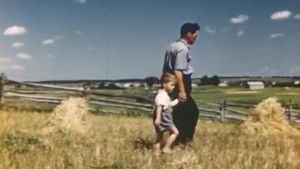
Rural Youth
This film, with an autobiographical flavor, was shot in part on the very premises where Father Proulx grew up and highlights the importance of agriculture and the very special attention given to rural youth in the from the Government of Quebec. The farm and its little world are presented during the four seasons: the introduction of children to agricultural work, the holidays, the return to school. From November to the end of April, the older ones take courses in the various agricultural schools scattered across Quebec. In addition to studying the methods of cultivation and breeding, they receive notions of carpentry, blacksmithing and other lessons likely to be useful in their future work as farmers. In the spring, the young girls go to secondary schools of agriculture to learn domestic art, beekeeping, weaving, sewing, etc.
1951
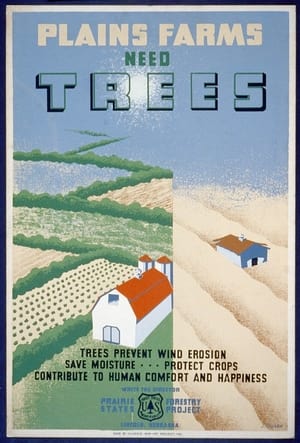
Windbreaks on the Prairies
This short film serves as a cautionary tale to farmers who recklessly cut down trees on their land. When prairie farmers engaged in this practice to facilitate plowing, they discovered that the trees had served as windbreaks protecting top soil from erosion. The Dominion Department of Agriculture's experimental station at Indian Head, Saskatchewan, cultivated acres of young trees for distribution to farmers.
1943
The Last Word in Chickens
This 10-minute short documentary exploring the shifting state of the American poultry industry was preserved in 2015 from an original nitrate print. More information is available on the film's page in the National Film Preservation Foundation's website, where this version can be found featuring original music by Michael D. Mortilla.
1924