Watch Sisam (2024) Online Free
A history drama portraying the confrontation between the indigenous Ainu people living on Japan’s northernmost main island—then called “Ezo” and now known as “Hokkaido”—and the “sisam”, the Ainu word for ethnic Japanese.
Cast
Kanichiro, Takahiro Miura, Masato Wada, Ryota Bando, Takahiro Hirano, Sahel Rosa, Takahiro Fujimoto, Kotone Furukawa, Jun Kaname, Atsushi Yamanishi, Yasuko Tomita, Naoto Ogata
More Like This

Voice
Hokkaido, Japan: An old woman -- formerly a man -- lives by a lake in the northern reaches of Japan, gazing at Nakajima Island in its center where her daughter's body was found long ago. She hasn't been able to visit for almost 50 years. Tokyo: A middle-aged man lives on an island where criminals were once exiled in the past, earning a sparse living as a cattle herder. He is descended from such exiled criminals. He raised his only daughter by himself after losing his wife in an accident. One day, the daughter comes home from the mainland, seemingly pregnant but unwilling to explain.
2024
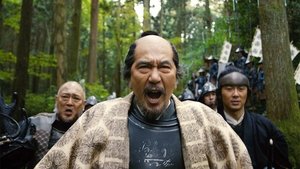
Sekigahara
The background to and depiction of a watershed battle in Japanese history, at Sekigahara in 1600, when Tokugawa Ieyasu's Army of the East defeated the Army of the West of Ishida Mitsunari. The story includes the intrigues and shifting loyalties of the various retainers, family members, and samurai.
2017
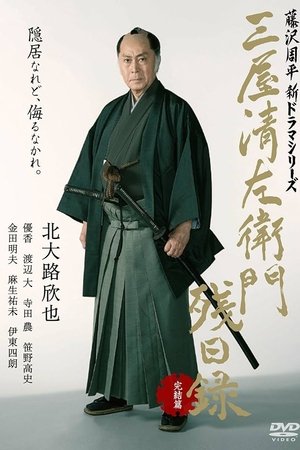
三屋清左衛門残日録 完結篇
2017
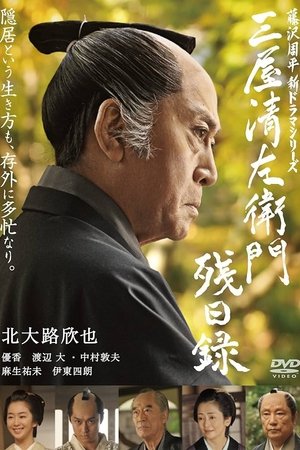
三屋清左衛門残日録
2016

ICHI
Ichi is a blind entertainer that travels the countryside with her traditional Japanese guitar and walking stick. She’s in search for the kind man that brought her up as a child, but because of her beauty she encounters problems every step of the way. Fortunately for Ichi, she is also a gifted swordswoman and carries a lethal blade within her walking stick.
2008
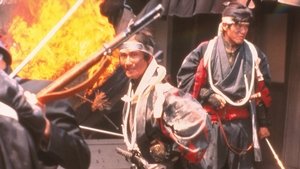
When the Last Sword Is Drawn
Kanichiro Yoshimura is a Samurai and Family man who can no longer support his wife and children on the the low pay he receives from his small town clan, he is forced by the love for his family to leave for the city in search of higher pay to support them.
2003
Vengeance for Sale
In a world where vendettas are officially sanctioned, the people sometimes needed help in carrying out their vengeance. Sanada Hiroyuki stars as Sukeroku the Helper, a ‘cool and rambling yakuza’ that has made a business out of helping victims carry out their revenge. When he returns to his hometown to pay a visit to his mother’s grave he meets a deadly ronin who carries a secret which eventually leads him into a vendetta of his own.
2002

Iemitsu, Hikoza and Isshin Tasuke - A National Crisis: Edo Castle in Danger
Yagyu Jubei, the finest swordsman in the land, is called upon to bare his blade to help Iemitsu keep his post. Meanwhile a fishmonger named Isshin Tasuke who bears an amazing resemblance to Shogun Iemitsu may be called upon to put his life on the line by acting as the Shogun's double. At the same time, the tragic story of Banzuiin Chobei and Mizuno Jurozaemon is unfolding.
1989
The Sword of Doom
Ryunosuke, a gifted swordsman plying his trade during the turbulent final days of Shogunate rule, has no moral code and kills without remorse. It’s a way of life that leads to madness.
1966
Abashiri Prison
Abashiri Prison is located in the coldest place in Japan. Two men, handcuffed together have escaped from the prison, one a yakuza, the other a petty criminal, and although they hate each other they must work together if they are to evade capture in this harshest of climates.
1965

The Tale of Zatoichi Continues
Returning to the village where a year before he had killed Hirate, a much-admired opponent, Zatoichi encounters another swordsman and former rival in love.
1962
Harakiri
Down-on-his-luck veteran Tsugumo Hanshirō enters the courtyard of the prosperous House of Iyi. Unemployed, and with no family, he hopes to find a place to commit seppuku—and a worthy second to deliver the coup de grâce in his suicide ritual. The senior counselor for the Iyi clan questions the ronin’s resolve and integrity, suspecting Hanshirō of seeking charity rather than an honorable end. What follows is a pair of interlocking stories which lay bare the difference between honor and respect, and promises to examine the legendary foundations of the Samurai code.
1962
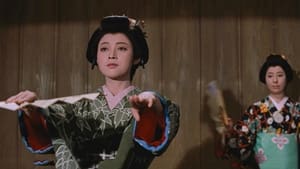
Records of loyal vassals
In the 15th year of the Genroku era (1688), the world praised the 47 ronin who avenged the death of their master Asano Takumi-no-kami. Shogun Tsunayoshi, who ruled at that time, experienced difficulties in what punishment to impose on the soldiers. As a result, it was decided to sentence them to seppuku (ritual suicide).
1962
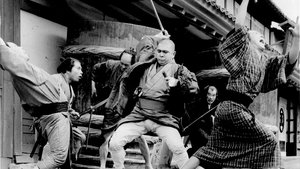
The Tale of Zatoichi
The adventures of a blind, gambling masseur and master swordsman. Zatoichi targets a yakuza-controlled village, because war with a neighbouring town's smaller gang is brewing.
1962
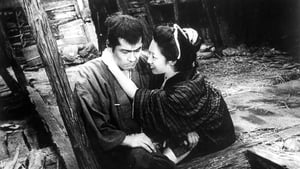
The Lower Depths
Residents of a rundown boardinghouse in 19th-century Japan, including a mysterious old man and an aging actor, get drawn into a love triangle that turns violent. When amoral thief Sutekichi breaks off his affair with landlady Osugi to romance her younger sister, Okayo, Osugi extracts her revenge by revealing her infidelity to her jealous husband.
1957

Last Days of the Samurai
Seppuku Day 17 Ako ronins, including Kuranosuke Oishi, who were entrusted to the Hosokawa family, and the events of the two days before are depicted as a tragic romance between one of the ronins, Jurozaemon Isogai, and Omino. An adaptation of Seika Mayama play "Genroku Chusingura, the Last Day of Oishi", which tells about the torments of life and death of samurai living in feudal times.
1957
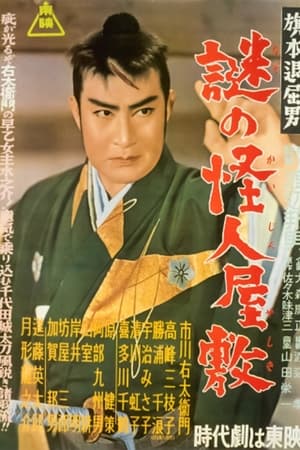
Bored Hatamoto: The Mysterious Phantom Mansion
Bored Hatamoto film #17
1954

Ugetsu
In 16th century Japan, peasants Genjuro and Tobei sell their earthenware pots to a group of soldiers in a nearby village, in defiance of a local sage's warning against seeking to profit from warfare. Genjuro's pursuit of both riches and the mysterious Lady Wakasa, as well as Tobei's desire to become a samurai, run the risk of destroying both themselves and their wives, Miyagi and Ohama.
1953
The Man from the Moon
O-Kiyo (Mitsuko Mito), who had escaped from her boss, Shoden, who controlled the Sensoji Temple district, was desperately contemplating suicide when she was rescued by ronin Kojuro Tozawa (Kazuo Hasegawa), who hid her in a dilapidated apartment building. The Shoden clan desperately searched for O-Kiyo, but Kojuro found a huge sum of 50 ryo and ransomed O-Kiyo. Unable to accept this outcome, the enraged Shoden clan attempted to win the favor of constable Jinnosuke Nakayama (Kusuo Abe), seeking to demolish the dilapidated building and transform the area into a pleasure district. However, Kojuro thwarted their plans, bringing joy to the poor residents of the building. After demonstrating his remarkable skills, Kojiro revealed his true identity - he was a prominent hatamoto.
1951
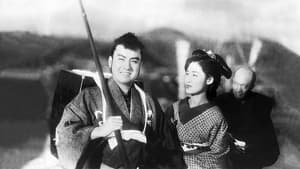
Blizzard Ronin
The film tells about the life of the former vassal of the Ako clan - Fuwa Katsuemon Masatane.
1939