Watch Silent Days (2019) Online Free
The film is separated into four chapters, each tracking a different group of protagonists who all have one thing in common – they were born deaf. Little Sandra likes to play football and admires Ronaldinho. Marián worships trains and wants to be an engine driver. Teenagers Alena and René are expecting a baby and long for it to be born healthy. The trio of Roman, Kristián and Karmen help their parents by collecting junk to be sold and dream of one day having a house with a flush toilet.
More Like This
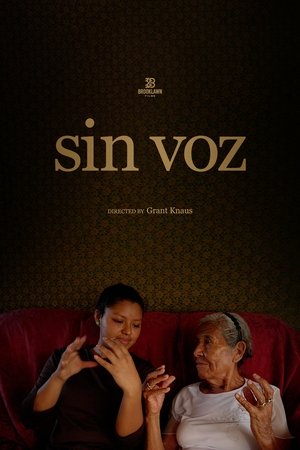
Sin Voz
Told almost entirely without spoken words, this film unfolds in the language of its subjects: Guatemalan Sign Language. In a country where more than 850,000 Deaf people receive little institutional support, silence becomes both a barrier and a form of connection. Through classrooms, homes, and everyday life, the film observes a community building its own means of understanding and belonging. Among those leading the way are Melkin, Dairy, and Jonathan, the teachers, students, and leaders within Guatemalan Deaf Ministries, where the language of hands has become the language of hope.
2025
Figlio di Giano
2025
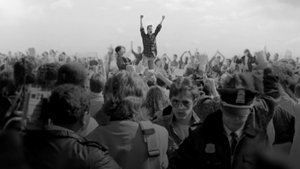
Deaf President Now!
Discover the story of the greatest civil rights movement most people have never heard about. During eight tumultuous days in 1988 at the world's only Deaf university, four students must find a way to lead a revolution—and change the course of history.
2025
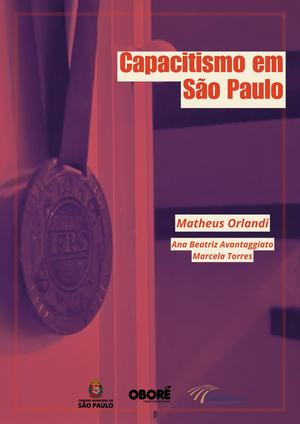
Ableism in São Paulo
Through intimate stories and day-to-day routines we get a naturalistic glimpse into the lives of individuals with disabilities in the bustling urban landscape of São Paulo. The film captures personal moments and how modern societies confront (or fail to confront) ableism and inclusion.
2024
De caballos y guitarras
A musical, and also a reflection on watching, on trying to escape an anthropocentric gaze and also on watching itself in cinema. Featuring mares and horses: Triana, Víctor K, Bambi Sailor, San Special Solano, Buck Red Skin, Onkaia, Cool Boy, the donkey Agostino, the mule Guapa. And also Alfredo Lagos, Raül Refree, María Marín, Pepe Habichuela, Virgina García del Pino, María García Ruiz, Pilar Monsell, María Pérez Sanz.
2024
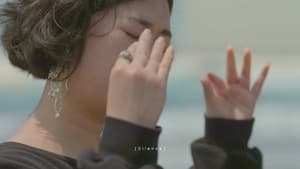
A Sonorous Melody
Growing up as a Deaf individual in Indonesia, Mufi was taught to speak instead of sign. As an adult, now she carves her music career to inspire others to express themselves through sign language.
2023
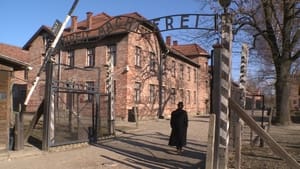
Requiem for Auschwitz - the film
13 years ago, director Bob Entrop made the film A piece of blue in the sky, the first film in the Netherlands that depicted the murder of almost 1 million Sinti and Roma during the Second World War. There is a taboo on what happened during the war, you don't talk about it with anyone and certainly not in front of a camera. Requiem for Auschwitz is a sequel, with the most valuable moments from the first film, supplemented with the grandchildren and the creation and performance of the 'Requiem for Auschwitz' by Sinti composer Roger Moreno Rathgeb by the Sinti and Roma Philharmonic from Frankfurt and a Jewish choir in the Berliner Dom in Berlin, during Holocaust Memorial Day. During his visit to Auschwitz in 2020 with four musicians from the Dutch Accompaniment Orchestra, Roger shows them the places that inspired him.
2022
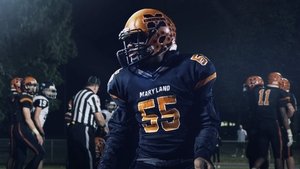
Audible
Football player Amaree McKenstry-Hall and his Maryland School for the Deaf teammates attempt to defend their winning streak while coming to terms with the tragic loss of a close friend.
2021
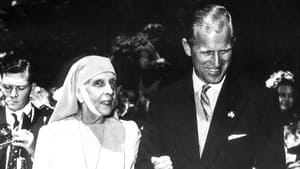
Princess Alice: The Royals’ Greatest Secret
The life of Princess Alice of Battenberg, Queen Victoria's great-granddaughter, Prince Andrew of Greece's wife and Queen Elizabeth II's mother-in-law. Born deaf, she faced tremendous hardships but found solace in faith and charity work.
2020

SORDOS
Experimental Short Film Documentary made during the social outbreak, follows 2 Deaf people walking through the outbreak in Plaza Dignidad.
2020
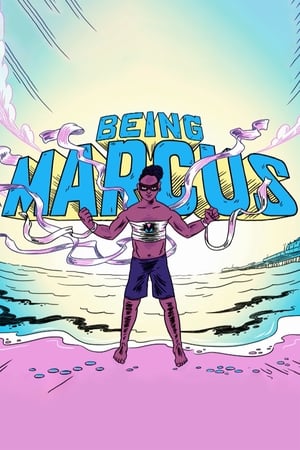
Being Marcus
Marcus Pabon-Lara loves swimming but is too self-conscious to take off his top in public. Will a mastectomy give him the body confidence needed to go for his first swim since he was a teenager? An honest insight into the experiences of a Deaf trans man, follows self-proclaimed “proud geek” Marcus during the lead up to his much-anticipated operation. Along the way, we meet his friends and his mother, finding out more about Marcus and how he feels about his transition.
2019
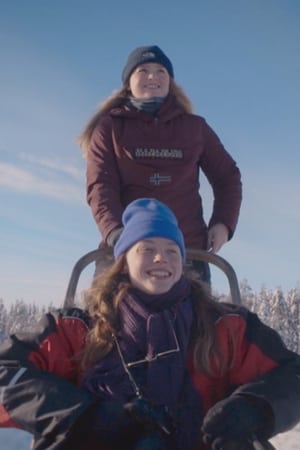
Before it gets dark
Lotte (18) and Roos (16) are sisters and both have Usher syndrome. That means they will soon become deaf and blind. It is not known how fast that will go, but they already see and hear a lot worse than their peers. How do these two high-spirited girls deal with their development into adulthood, while the time bomb of deafness and blindness ticks inexorably? They are not deterred from getting the most out of life: Lotte is studying to become a photographer and Roos is passing her final exams. At the same time, they also want to do a few things before it is too late, such as seeing the Northern Lights with their own eyes. Director Kim Smeekes followed Lotte and Roos for the film for two years.
2019
The World at Arm's Length
Sven has a dream. Once in his life he wants to walk the Camino de Santiago - the Way of St. James. But that seems impossible, Sven has Usher syndrome, a disease which slowly, inexorably robs him of hearing and vision. Profoundly deaf and completely blind since 2010, he can only communicate using a special hearing aid in the spoken language.
2018
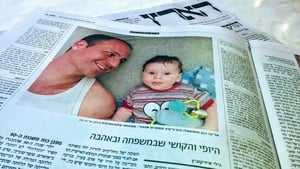
The Sign for Love
In his heartfelt documentary, co-director and subject Elad Cohen explores the meaning and experience of family. Growing up deaf and gay in a family of hearing people, Cohen never felt at home and always felt alone. That feeling of estrangement was exacerbated during his adolescence by the sudden death of his mother and the subsequent rift with his father as the family scattered in different directions. Cohen creates a sense of family with a small group of friends, including his best friend, Yaeli, a deaf woman. While he wants a child and a life partner, he fears that he won’t find the right man in the small deaf community in his “sweet little country.” Sharing a desire with Yaeli to be parents, the new “couple” decide to have a child in a shared parenting arrangement.
2017
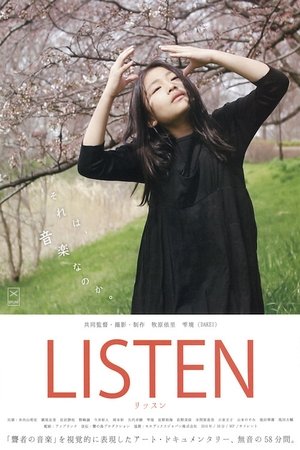
Listen
Documentary without audio produced by deaf people. Music is depicted visually with the complete absence of musical instruments or voices. Directed by Makihara Eri and choreographer Dakei. With a diverse lineup including ordinary deaf people with zero acting experience and a choreographer who performs in Japan and abroad, this film pulls out all the tops to give visual expression to music through the physical body. An aging man uses multiple sign language poems to convey the four seasons, and a girl expresses the wind amidst the rustling trees.
2016
Deaf
Martinez's second feature documentary assembles a theatre group of deaf actors in order to portray their lives and at the same time avoid any pedagogic representation of the non-hearing people. Coming from different environments and provinces, la troupe has to overcome various difficulties to put on stage their last play, hoping to attract an audience beyond the Argentine deaf community.
2015
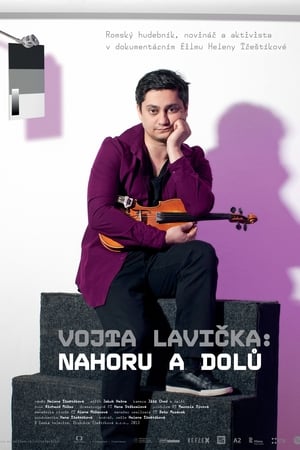
Vojta Lavička: Ups and Downs
Longitudinal documentary film was shot for past 16 years and the main protagonist is Roman musician and activist Vojta Lavička. Vojta is a master in violin play, who focuses not only on music but also deals with problems of his origin Roman nationality. Vojta is very active in media - he worked in the national radio and television, he worked in the NGO that organize street work for Roman ghettos around the Czech republic, Vojta worked also as a social worker. All together we can watch him struggling with the main topic of his life - his national minority and problems that are caused by living next to Czech majority. Aside this topic films discovers Vojta's private life and his fight for being a good musician and a good man.
2013
Land of Silence and Darkness
Through examining Fini Straubinger, an old woman who has been deaf and blind since her teens, and her work on behalf of other deaf-blind people, this film shows how the deaf-blind struggle to understand and accept a world from which they are almost wholly isolated.
1971
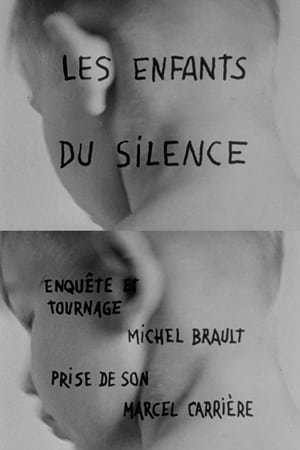
Children of Silence
This film looks at the world of children with hearing loss and the importance of early diagnosis. With its straightforward, rigorous cinematic style and intimate approach to the subject, the film focuses on the human rather than the technical side of the problem of hearing impairment.
1962