Watch Side by Side (2021) Online Free
Through daily routines in a rural village, an indigenous elder couple recall their strange marriage to their grand-daughter, and sometimes to each other, in the changing rhythm of nature around them.
Cast
Veu Pom, Seng Thong, Phoeun Pet
More Like This

Mayor of Lowell
This short documentary chronicles the culture and arts of Cambodian Americans and the Lowell, MA community through the eyes of Sokhary Chau, the first Cambodian American Mayor in the United States. Chau immigrated to the U.S. at seven years old to escape the Khmer Rouge genocide. Through this unique story that showcases the best of Lowell—immigrant success, assimilation, history, and the development of the arts—we see a man born into a war-torn country who comes to America to be a first-in-the-nation leader.
2025

Songs Within
The musically highly gifted maid Elsie, who longs for a career as a musician, is forced into marriage with Jacob, a young stable boy who dreams of owning his own horse. Both have to learn that they can only escape their lack of opportunities if they team up.
2024

Angkor et Les Mystères de L'Empire Khmer
2022

Knots: A Forced Marriage Story
Forced and child marriage is happening all across the U.S., legally. Three survivors - Nina, Sara, and Fraidy - take us on a journey into the depths of this human rights abuse hiding in plain sight.
2020

The Donut King
Cambodian refugee Ted Ngoy builds a multi-million dollar empire by baking America's favourite pastry: the doughnut.
2020
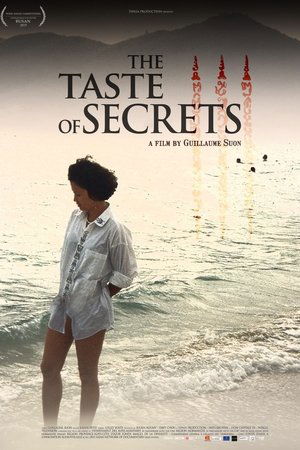
The Taste of Secrets
My mother always refused to speak about her childhood during the Cambodian genocide. Upset by her silence, my brother and I decide to follow Antoine, a grandson of Armenian genocide survivors, photographing the ghosts of his ancestors in the Middle East.
2020

Funan
Cambodia, once the ancient kingdom of Funan, April 17th, 1975. The entire country falls under the tyranny of Angkar, the communist party of the Khmer Rouge. The cities are abandoned, the population is thrown to the roads and forced to walk towards an uncertain future…
2019
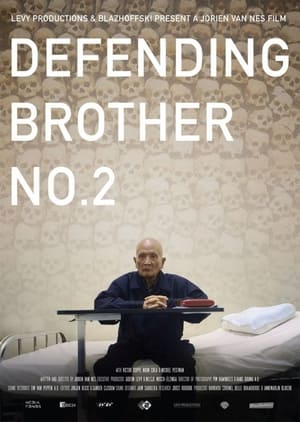
Defending Brother No.2
Two Dutch lawyers, Michiel Pestman and Victor Koppe, travel to Cambodia in 2011 to defend Nuon Chea in an international tribunal. Nuon Chea, also known as Brother No. 2, was the second man after Pol Pot in the Khmer Rouge regime. He is being charged with mass murder and crimes against humanity. For four years, the documentary follows the lawyers in their attempt to give this man a fair trial, but the UN tribunal is beset by local interests and a government which consists partly of other former members of the Khmer Rouge who would really like all of the blame to rest solely on the defendant. What should've been the crowning achievement in the careers of the lawyers turns out very different.
2017

Sonita
If 18-year-old Sonita had a say, Michael Jackson and Rihanna would be her parents and she'd be a rapper who tells the story of Afghan women and their fate as child brides. She finds out that her family plans to sell her to an unknown husband for $9,000.
2016
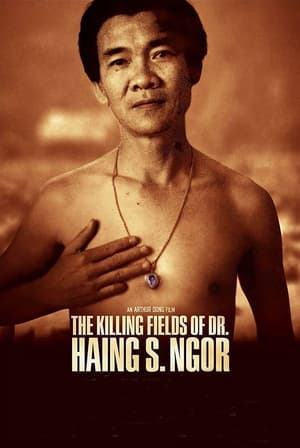
The Killing Fields of Dr. Haing S. Ngor
When Dr. Haing S. Ngor was forced into labor camps by the Khmer Rouge, little did he know he would escape years of torture and recreate his experiences in a film that would win him an Academy Award®. "The Killing Fields of Dr. Haing S. Ngor" tells the dramatic story about arguably the most recognizable survivor of the Cambodian genocide, a man who became a worldwide ambassador for justice in his homeland, only to be murdered in a Los Angeles Chinatown alley - a case still muddled with conspiracy theories. Through an inspired blend of original animation and rare archival material - anchored by Ngor's richly layered autobiography - the years encapsulating the Khmer Rouge's tyrannical rule over Cambodia are experienced though a politically charged transnational journey of loss and reconciliation.
2015
À la Poursuite des Pilleurs de Temples
In 1972, during Cambodia's civil war, a sandstone statue was torn from the age-old Koh Ker temple. Measuring 1.58m high and weighing 110 kilos, it depicts a prince and belongs to a collection that retraces the epic of the Mahabharata. The sculpture was first sold at auction in London in 1975, via a strange British art dealer based in Bangkok, and reappeared in 2011 at Sotheby's in New York with a bid of $2.5 million. A sale that was ultimately prohibited. In the meantime, experts from the École française d'Extrême-Orient, an American lawyer commissioned by Phnom Penh and UNESCO mobilized the Heritage Police across the Atlantic to denounce the theft of a cultural asset. In 2013, the work was returned to Cambodia. A captivating investigation into the international mafia of antiquities trafficking.
2014
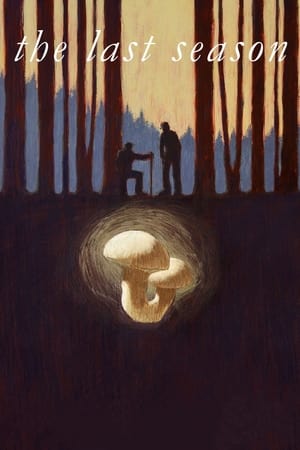
The Last Season
In search of the lucrative matsutake mushroom, two former soldiers discover the means to gradually heal their wounds of war. Roger, a self-described 'fall-down drunk' and sniper in Vietnam, and Kouy, a Cambodian refugee who fought the Khmer Rouge, bonded in the bustling tent-city known as Mushroom Camp, which pops up each autumn in the Oregon woods. Their friendship became an adoptive family; according to a Cambodian custom, if you lose your family like Kouy, you must rebuilt it anew. Now, however, this new family could be lost. Roger's health is declining and trauma flashbacks rack his mind; Kouy gently aids his family before the snow falls and the hunting season ends, signaling his time to leave.
2014
Golden Slumbers
Over three million Cambodians died in the genocide between 1975 and 1979. The Khmer Rouge’s reign of terror also decimated a homegrown film industry that had flourished since 1960: movie theaters were bombed, film prints were destroyed and artists were executed. In Golden Slumbers, French-Cambodian filmmaker Davy Chou mourns this loss of lives and culture, but balances the somber material with a playfulness that honors the lush melodramas and mythic adventures of the glory years.
2011
Journey Into Buddhism: Prajna Earth
Prajna is the Sanskrit word for radiant wisdom, and yatra is the word for pilgrimage or spiritual journey. This visually stunning documentary is a cinematic pilgrimage exploring the lost civilization of Angkor in Cambodia, including the largest temple in the world, the magnificent Angkor Wat. The journey continues to sacred sites of the natural world, Hindu Bali, jungles of Java, and discovering Buddhist Borobudur. A John Bush film.
2007
Churning the Sea of Time: A Journey Up the Mekong to Angkor
One of the mythic journeys of our time, through the exquisite, complicated, surprising terrain of Vietnam and Cambodia to the great ruins at Angkor - the magnificent Khmer temples being painstakingly restored deep in the Cambodian jungle. It is a high definition odyssey up a river far distanced in time from the corridor into the heart of darkness portrayed in Francis Coppola's "Apocalypse Now." In Angkor, the World Monuments Fund's John Stubbs and John Sanday describe their 15-year restoration of one of the jewels of a city called "the eighth wonder of the world." As we go inside the 12th Century temple complex of Preah Khan, along with the other major sites of Angkor Wat, Bayon and Banteay Srei, we learn that the story of their work in Angkor is not only a story of the rebirth of Angkor after the horrors of the Khmer Rouge Era, but it also is a story of the rebirth of Cambodia.
2006
okay bye-bye
In okay bye-bye, so named for what Cambodian children shouted to the U.S. ambassador in 1975 as he took the last helicopter out of Phnom Phenh in advance of the Khmer Rouge, Rebecca Baron explores the relationship of history to memory. She questions whether, "image and memory can occupy the same space." Building on excerpts from letters, found super-8 footage of an unidentified Cambodian man, iconographic photographs from the Vietnam War and other partial images, Baron combines epistolary narrative, memoir, journalism, and official histories to question whether something as monumental as the genocidal slaughter of Cambodians during the Pol Pot regime can be examined effectively with traditional methodologies.
1998
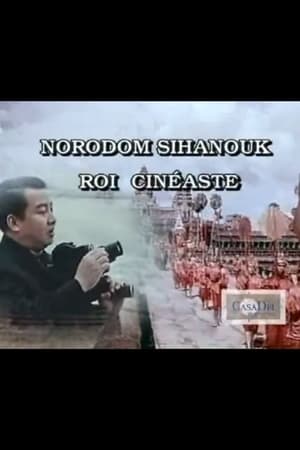
Norodom Sihanouk, King and Film-maker
Profile of the Cambodian King Norodom Sihanouk, at the head of a country that has experienced colonization, the wars of the 20th century and the tragic period of the Khmers Rouge.
1997
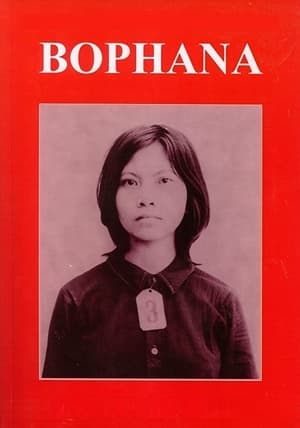
Bophana: A Cambodian Tragedy
Based upon documentation of forced confessions made during the Khmer Rouge era in Cambodia, this film reconstructs the relationship of a young woman, Hout Bophana, and Ly Sitha before they were tortured in executed in 1977.
1996

The Killing Fields
New York Times reporter Sydney Schanberg is on assignment covering the Cambodian Civil War, with the help of local interpreter Dith Pran and American photojournalist Al Rockoff. When the U.S. Army pulls out amid escalating violence, Schanberg makes exit arrangements for Pran and his family. Pran, however, tells Schanberg he intends to stay in Cambodia to help cover the unfolding story — a decision he may regret as the Khmer Rouge rebels move in.
1984
Stealing the Beauty's Corpse at Night
It is a simple story with a deep meaning. When the beautiful chanteuse Hung (Law Yim-hing) is forced to marry Commander Lau (Lau Hark-suen), her brother (Cheng Wai-sum) interferes but is brutally beaten to death. Hung also falls to her death when she tries to escape. The siblings are only hastily buried in a coffin home, which is haunted soon afterwards. Hung's lover Wong (Wong Chiu-mo) later sneaks into the haunted house hoping to see her for one last time; Lau, meanwhile, insists on inspecting the coffin home and the corpses to prove that ghosts do not exist…The film creates an eerie and uncanny atmosphere with its well-designed camera angles, sound and editing. The haunting looks of the two ghost characters are a nod to Hong Kong's typically told horror stories.
1955