Watch Shark Gangs (2021) Online Free
Scientists have discovered and investigate the reason behind the behavior of sharks swimming around in gangs even though they are viewed as solitary predators.
Cast
Christopher Lowe, Félicie Dhellemmes, André Musgrove, Dave Hoffman
More Like This
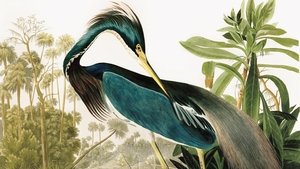
Birds of America
In the first half of the 19th century, the French ornithologist Jean-Jacques Audubon travelled to America to depict birdlife along the Mississippi River. Audubon was also a gifted painter. His life’s work in the form of the classic book ‘Birds of America’ is an invaluable documentation of both extinct species and an entire world of imagination. During the same period, early industrialisation and the expulsion of indigenous peoples was in full swing. The gorgeous film traces Audubon’s path around the South today. The displaced people’s descendants welcome us and retell history, while the deserted vistas of heavy industry stretch across the horizon. The magnificent, broad images in Jacques Loeuille’s atmospheric, modern adventure reminds us at the same time how little - and yet how much - is left of the nature that Audubon travelled around in. His paintings of the colourful birdlife of the South still belong to the most beautiful things you can imagine.
2022
The Ocean’s Greatest Feast
The story of South Africa’s sardine run is brought vividly to life on camera.
2022
Perpetual Planet: Heroes of the Oceans
Oceanographer Sylvia Earle and a cast of marine scientists tell the story of the incredible work being done to protect our oceans fragile ecosystem.
2021
Malika the Lion Queen
Follows life of Malika, a lioness in South Africa’s Kruger National Park as she battles to survive.
2021

WWF : à quoi joue le panda ?
2021
Atlantis Rising
James Cameron and Simcha Jacobovici go on an adventure to find the lost city of Atlantis by using Greek philosopher Plato as a virtual treasure map.
2017
The Return of the Wolves: The Miracle in Yellowstone National Park
For 70 years, the population of the wapiti deer in the Yellowstone National Park in the United States increased unchecked. Without natural predators and despite all human attempts to check the increase of the deer population they kept spreading and destroyed vast regions of the park's vegetation. They literally defoliated the National Park. However, a well-directed reintroduction of 41 wolves between 1995 and 1997 worked wonders: The animals restored the natural balance in the National Park.
2017
Ten Eleven O Two
Over the weekend of October 11, 2002, my uncle along with two friends set out on a camping trip in the Sierra Nevada mountains. Upon returning home, they were changed men, and recounted tales of alien abduction. Today, only two of the three men are alive to tell the story of what unfolded before, during, and after that fateful outing, and they're convinced it was extraterrestrial. This film explores the haunting accounts of two friends who underwent an alien abduction experience while camping in the remote mountains. Featuring psychedelic visuals and an alien hand print, Ten Eleven O Two opens a plethora of questions and is a must-see for anyone interested in the paranormal. Based on the true life events of Ken Mathis and Adolph Santistevan.
2016
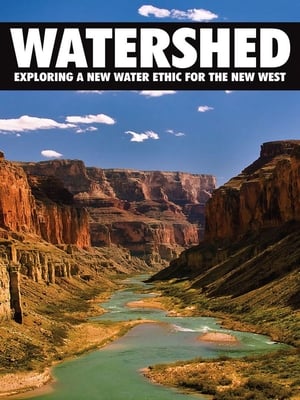
Watershed: Exploring a New Water Ethic for the New West
As the most dammed, dibbed, and diverted river in the world struggles to support thirty million people and the peace-keeping agreement known as the Colorado River Pact reaches its limits, WATERSHED introduces hope. Can we meet the needs of a growing population in the face of rising temperatures and lower rainfall in an already arid land? Can we find harmony amongst the competing interests of cities, agriculture, industry, recreation, wildlife, and indigenous communities with rights to the water? Sweeping through seven U.S. and two Mexican states, the Colorado River is a lifeline to expanding populations and booming urban centers that demand water for drinking, sanitation and energy generation. And with 70% of the rivers’ water supporting agriculture, the river already runs dry before it reaches its natural end at the Gulf of California. Unless action is taken, the river will continue its retreat – a potentially catastrophic scenario for the millions who depend on it.
2012
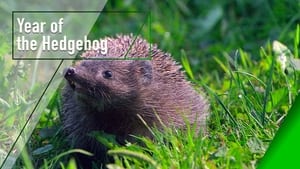
Year of the Hedgehog
It's springtime, the air is tepid, the skylarks chirp, and spring flowers cover the meadows and the forest grounds. Out of a pile of leaves a fluttery, sniffling snout tip appears: it's a hedgehog awakening from its winter sleep heading into the light of a new year, having only two things in mind: food and finding a partner.
2009
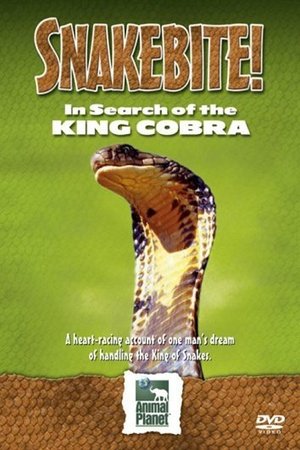
Snake Bite: In Search of the King Cobra
Snake expert Austin Stevens presents this nature documentary about the most feared snake of all - the King Cobra. Travelling to the jungles of south west India, Stevens reveals that despite its reputation, the King Cobra is in fact a reclusive creature, shy of human contact.
2005
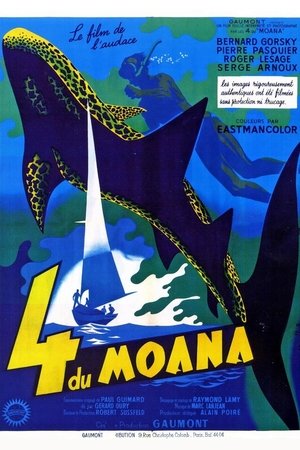
The Four of Moana
Documentary focused on underwater shootings and hawaiian dances.
1959

The Nature Effect
Head off to meet researchers from around the globe who are finding that nature stimulates unexpected biological and psychological resources and represents a boundless source of well-being. They believe there's enough proof to assert that immersion in natural environments, even if short, leads to significant physiological and psychological improvements and even boosts our natural immune system. Learn what else they're finding through their ground-breaking and vital studies.
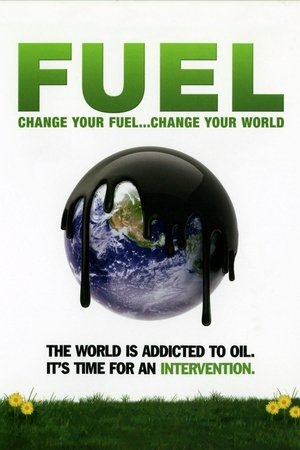
Fuel
Record high oil prices, global warming, and an insatiable demand for energy: these issues define our generation. The film exposes shocking connections between the auto industry, the oil industry, and the government, while exploring alternative energies such as solar, wind, electricity, and non-food-based biofuels.
2008
Bugs!
Explore the extraordinary hidden world of insects, where a leaf weighs more than a car, rain drops feel like exploding hand grenades and a blade of grass soars like a skyscraper. Shot on location in the Borneo rainforest, Bugs! brings the beautiful and dangerous universe of its tiny stars up close and personal with cutting-edge technology that magnifies them up to 250,000 times their normal size.
2003
Wolves
A look at the great wolf debate with comments and views from people on both sides. It also contains footage of Natives dressing up & doing tribal dances. The link between wolves, bison, and Native Americans; as well as white man's reasoning behind their determination to eliminate bison and wolves from the landscape.
1999
Atlantis
Atlantis is filmmaker Luc Besson's celebration of the beauty and wonder of the world beneath the sea, expanding upon themes touched on in his film The Big Blue. Combining stunning underwater cinematography and a hypnotic score by Eric Serra, Besson's singular vision defies dialogue or narrative structure to explore ocean life as you've never seen it before. Following the colossal success of The Big Blue, Luc Besson crisscrossed the world's seas and oceans to film the beauty and diversity of marine life: from the giant octopuses of Vancouver to the manta rays of the Pacific (New Caledonia), and the grey sharks of Tahiti. A film with no actors or sets other than the underwater world. A breathtaking view of marine species: sharks, dolphins, manatees, octopuses. An exploration of the seabed in the Bahamas, the Galapagos, Vancouver, and Tahiti.
1991
Pukaskwa National Park
This short documentary by Bill Mason explores Pukaskwa National Park on Lake Superior, providing a background of the park's geological past and plant life. The film also shows scenes of hiking, canoeing and camping. The result is to put us back in touch with the natural elements that our ancestors both fought and enjoyed.
1983

The Outdoorsman
A group of outdoorsmen demonstrate duck hunting as a preliminary to traveling the various hunting and fishing centers of the world. They begin their journey with a trip to the Rocky Mountains to hunt elk and mountain lions and to fish in the freshwater lakes. They travel to Lac la Ronge in Saskatchewan and to Anchorage and the Katmai Peninsula in Alaska to fish for trout, salmon, and grayling and hunt moose and bear. In the Arctic, the hunters go with a group of Eskimos for their biggest catch, the polar bear. The hunters travel south by plane, to the Fishing Club of Panama to fish for marlin, tuna, shark, and dolphin in the Gulf of Panama. In South Africa and the Zambesi River basin, they often hunt with only a camera. Accompanied by native beaters, they hunt elephants, antelope, buffalo, crocodiles, and hippopotami. As conservationists they capture some almost extinct white rhinoceros and take them to a game preserve for protection.
1968
Beneath Camp Ian
Ian loves camp. 2011 marks his seventh year at William Lawrence Camp in New Hampshire, USA. After many summers as a camper, 2011 was his first year as a full camp counselor. Ian's love and enthusiasm for his summer retreat are unrivaled. How will he adapt to the demands of his new role?