Watch Seattle Freeway Revolt (2020) Online Free
In the 1950s, Seattle had plans to build one of the densest networks of freeways in the world. It would have displaced thousands, especially the poor and people of color. Over the next two decades, a broad coalition of communities came together and halted these plans. Testimonies from that era are juxtaposed with interviews of activists who participated in the revolt, giving a picture of what Seattle could have been had the people not stood up to the highway lobby and their representatives.
Cast
Frank Chopp, Larry Gossett
More Like This
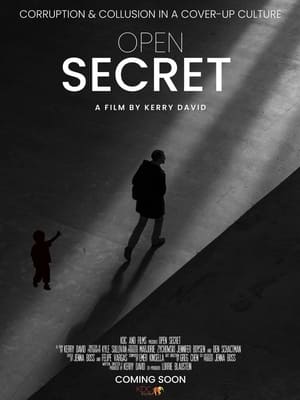
Open Secret
This riveting documentary investigates allegations of systemic racism and child sexual abuse in the New Hanover School District.
2025

Kabzaa
Amidst the urban transformation driven by progress, bulldozers dismantle 'illegal' settlements, leaving countless lives shattered. In the aftermath of such upheaval, one basti, sacrificed to conceal poverty during the G20 summit, and another basti, abandoned by authorities without alternative housing, illustrate the stark realities of displacement. The film delves into the daily struggles of individuals who persist in the rubble of their former homes.
2024
Free Space
Under pressure from activist groups, art is increasingly being cancelled for ideological reasons, because of 'cultural appropriation' or because of the desire for a 'safe space'. The colour and gender of the artist seem to be all-determining in this. How do you relate to this as an artist? Is this a disturbing development or a sign of emancipation? And what does it mean for freedom of expression? Director Karin Junger investigates this with Anne-Fay Kops, Ted van Lieshout, Angel-Rose Oedit Doebé, Raymi Sambo, Boris van Berkum, Marian Markelo, Stephan Sanders and Thomas Chatterton Williams.
2024
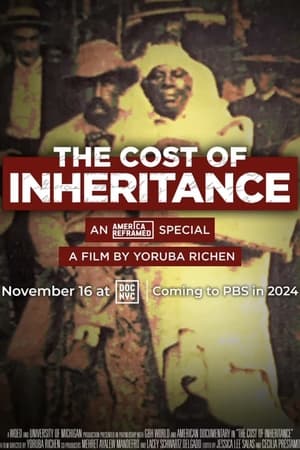
The Cost of Inheritance
The decades-long debate surrounding reparations is fraught, mired in racial tension and the semantics of restorative justice. While the national conversation remains stalled due to legislative inaction, communities across the country examine their histories and take it upon themselves to arrange their own form of reparations. This detailed investigation of restitution presents accounts of everyday people confronting the past and exploring the possibilities of wealth transfer.
2023
Hijos de África
2023
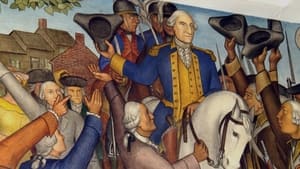
Town Destroyer
Controversy erupts over a New-Deal-era mural of the namesake of San Francisco’s George Washington High School. The thirteen-panel artwork "The Life of Washington" by Victor Arnautoff offers a view of the Founding Father both celebratory and critical, referencing his involvements in slavery and Native American genocide.
2022
Who We Are: A Chronicle of Racism in America
Jeffery Robinson's talk on the history of U.S. anti-Black racism, with archival footage and interviews.
2022
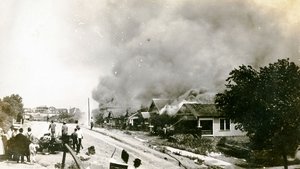
Dreamland: The Burning of Black Wall Street
This documentary celebrates the Black cultural renaissance that existed in the Greenwood district of Tulsa, OK, and investigates the 100-year-old race massacre that left an indelible, though hidden stain on American history.
2021
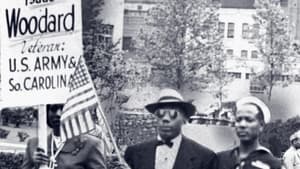
The Blinding of Isaac Woodard
In 1946, Isaac Woodard, a Black army sergeant on his way home to South Carolina after serving in WWII, was pulled from a bus for arguing with the driver. The local chief of police savagely beat him, leaving him unconscious and permanently blind. The shocking incident made national headlines and, when the police chief was acquitted by an all-white jury, the blatant injustice would change the course of American history. Based on Richard Gergel’s book Unexampled Courage, the film details how the crime led to the racial awakening of President Harry Truman, who desegregated federal offices and the military two years later. The event also ultimately set the stage for the Supreme Court’s landmark 1954 Brown v. Board of Education decision, which finally outlawed segregation in public schools and jumpstarted the modern civil rights movement.
2021
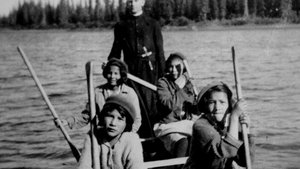
Killing the Indian in the Child
The Indian Act, passed in Canada in 1876, made members of Aboriginal peoples second-class citizens, separated from the white population: nomadic for centuries, they were moved to reservations to control their behavior and resources; and thousands of their youngest members were separated from their families to be Christianized: a cultural genocide that still resonates in Canadian society today.
2021

Obaida
OBAIDA, a short film by Matthew Cassel, explores a Palestinian child’s experience of Israeli military arrest. Each year, some 700 Palestinian children undergo military detention in a system where ill-treatment is widespread and institutionalized. For these young detainees, few rights are guaranteed, even on paper. After release, the experience of detention continues to shape and mark former child prisoners’ path forward.
2019
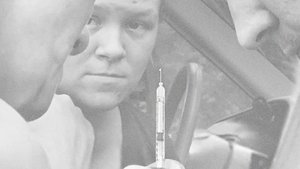
Meth Storm
As police and DEA agents battle sophisticated cartels, rural, economically-disadvantaged users and dealers–whose addiction to ICE and lack of job opportunities have landed them in an endless cycle of poverty and incarceration–are caught in the middle.
2017
OJ: Trial of the Century
OJ: TRIAL OF THE CENTURY, premiered on June 12, 2014 and it chronicles the twists and turns of the OJ Simpson murder trial and allows viewers to relive every moment of the investigation first-hand.
2014
That World Is Gone: Race and Displacement in a Southern Town
Kathy's family left on a Saturday morning in 1965. The rumble of bulldozers echoed through the neighborhood, and her block was empty. Federally-funded urban renewal had arrived in Charlottesville, scattering dozens of families like Kathy's. The once-vibrant African American community, built by formerly enslaved men and women who had secured a long-denied piece of the American dream, disappeared.
2010
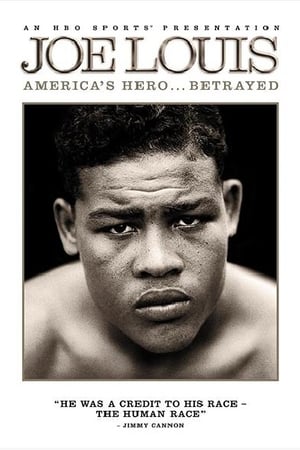
Joe Louis: America's Hero Betrayed
An American story. Traces the career of Joe Louis (1914-1981) within the context of American racial consciousness: his difficulty getting big fights early in his career, the pride of African-Americans in his prowess, the shift of White sentiment toward Louis as Hitler came to power, Louis's patriotism during World War II, and the hounding of Louis by the IRS for the following 15 years. In his last years, he's a casino greeter, a drug user, and the occasional object of scorn for young Turks like Muhammad Ali. Appreciative comment comes from boxing scholars, Louis's son Joe Jr., friends, and icons like Maya Angelou, Dick Gregory, and Bill Cosby.
2008
Methadonia
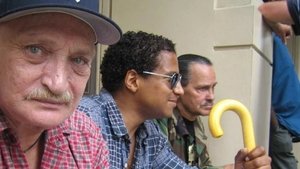
Shot over the course of 18 months in New York City's Lower East Side, METHADONIA sheds light on the inherent flaws of legal methadone treatments for heroin addiction by profiling eight addicts, in various stages of recovery and relapse, who attend the New York Center for Addiction Treatment Services (NYCATS).
2005
The Tulsa Lynching of 1921: A Hidden Story
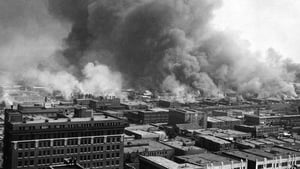
Documents the race riot of 1921 and the destruction of the African-American community of Greenwood in Tulsa, Oklahoma. With testimony by eyewitnesses and background accounts by historians.
2000
The Salt Mines
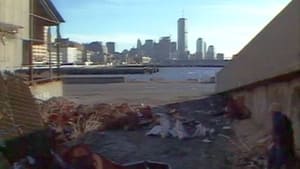
Explores the lives of Sara, Gigi and Giovanna, three Latino transvestites who for years have lived on the streets of Manhattan supporting their drug addictions through prostitution. They made their temporary home inside broken garbage trucks that the Sanitation Department keeps next to the salt deposits used in the winter to melt the snow. The three friends share the place known as "The Salt Mines".
1990
Surinamese in The Netherlands: The Return of the Black Gold
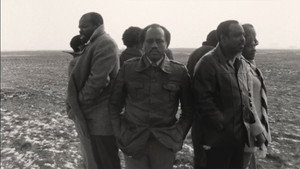
In Surinamers in Nederland: De terugkeer van het zwarte goud, we see Surinamese people arriving in the Netherlands, unsure of what to expect, and being packed into overcrowded boarding houses. The government's idea is that they should then be integrated into society as quickly as possible. This was to be done by the Centraal Bureau Uitvoering Vestigingsbesluit Rijksgenoten, set up in 1974.
1978
"...arm würd' ich nicht sagen..."
The start of a long-term observation of the Bronnmann family from Cologne, who have seven children - what are their concerns, plans, and dreams?
1978