Watch Scorched Earth (2022) Online Free
Based on declassified US military documents and archival footage, as well as testimonies from those who participated in bombings and civilian victims, director Lee Mi-young thoroughly illuminates the reality of the US Air Force’s indiscriminate bombing that resulted in numerous civilian casualties during the three-year Korean War.
More Like This

One "Orphan" Every Hour
Nearly 250,000 South Korean children were adopted to the West as “orphans” in the 60 years following the Korean War. Some to loving homes. Others to tragic ends. Raised in places where they looked like nobody else, many were told to forget their past and be grateful. But the innate desire to understand where you came from has led many Korean adoptees to search for their roots. In the process, they discover lies in their past and families they never knew existed. In this documentary series, correspondent Wei Du travels around the world to meet Korean adoptees and accompany a few on their journey to reclaim who they are. Together, they reveal how an “orphan rescue” mission separated families and erased the roots of hundreds of thousands.
2025
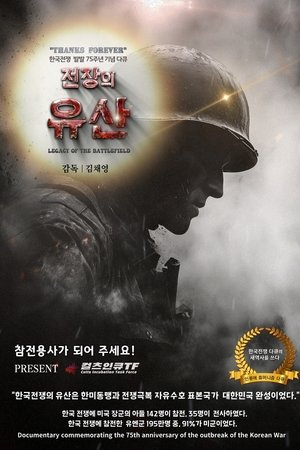
Legacy of the Battlefield
2025
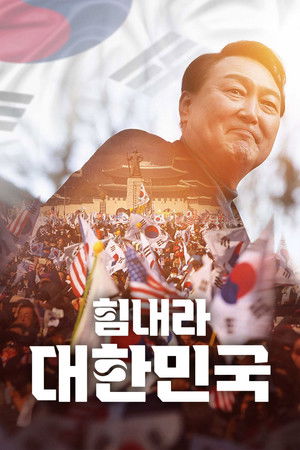
Cheer Up, Korea
2025
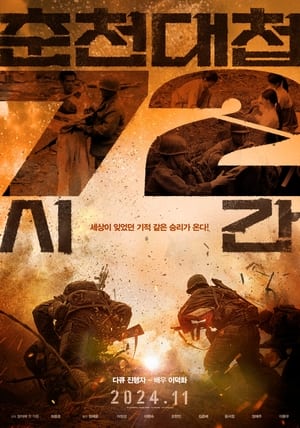
Chuncheon Battle 72 Hours
2024

Shim: American Opens a Cafe at the DMZ
A cafe is growing, tucked in to the mountainside air raid shelter of the DMZ borderlands. A light light flickers, illuminating the past, present, and future. I'll see you at the DMZ! Shim was a free, one-day pop-up cafe staged in Yangji-ri village’s air raid shelter at the Korean DMZ. Referencing Korean cafe culture’s fixation on third place, the DMZ’s evolution from security tourism, to ecological peace tourism, and its repurposing as art production site, Shim attempts to intervene and align the past and present. Yangji-ri was one of many minbuk propaganda villages established by the Park Chung Hee regime in the 1960s to showcase the farming bounty and prosperity of the south for a North Korean gaze. The village was formerly part of the Civilian Control Line (CCL) until 2013 when it was reterritorialized as a normal part of South Korea.
2024

The Birth of Korea
Since South and North Korea's liberation in 1945, North Korea, a communist dictatorship that suppresses freedom and oppresses human rights, and South Korea, which has entered the path of economic prosperity and advanced countries based on freedom and democracy, have taken different paths. How did the two countries with the same language, history, and race, become divided into two extreme countries? A work that highlights the sacrifices and struggles of President Syngman Rhee and the first generation of founding members who worked to create and protect today's Republic of Korea over the past 70 years of history.
2024

The Origin of Miracles
A documentary film covering the life of President Syngman Rhee and the contributions he made to the Republic of Korea, spanning his childhood, focusing on his independence movement, the founding of the nation, the process of leading to victory in the Korean War, and the process of laying the foundation for Korea's industrialization.
2023
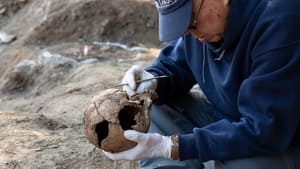
206: Unearthed
After the dissolution of the Truth and Reconciliation Commission, which was launched as a South Korean government organization in 2005, civic groups and bereaved families wishing to complete the mission the government had failed to accomplish form a joint organization to investigate the remains of civilians who were massacred during the Korean War. A three-year-long documentary about the organization’s three-year-long excavation efforts, 206: Unearthed is a record of sunlight, dirt, and sweat.
2023
PAN MUN JOM, You have never seen
In July 1951, all the sides to the Korean War sought a ceasefire. For a ceasefire, the Allied and Communist forces began to hold talks at Naebongjang, located northeast of Kaesong. However, they only sharply opposed each other and didn't make progress in the negotiation. In October 1951, the two sides met again in the small village of Neolmun-ri below Gaeseong. They set up tents there to negotiate and named the place Panmunjom. The name Panmunjeom is a combination word of Panmun, meaning Neulmun-ri, and “Jom,” of an inn.
2021

Korea, A Hundred Years of War
A contemporary history of Korea(s) from a unique point of view that embraces the inner history of both South and North Korea in a single narrative.
2020
Optigraph
After my grandfather 's Baek-su (age 99’s birthday party) banquet, asking me to write an autobiography for him. Two years later, he passed away and left his favor as homework to me. I discovered the history of the past that I could not associate with his name. As a filmmaker, I frequently attended burials that were far from my life. I have been living in the United States for a while, and I have often come to think about the country and nationality.
2017
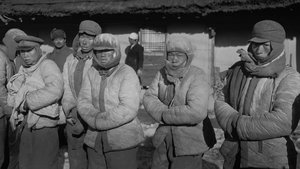
The Battle Of Chosin
An amazingly harrowing story of the 17 day engagement of bloody combat and heroic survival in subartic temperatures. UN forces largely outnumbered and surrounded, due to a surprise attack led by 120,000 Chinese troops.
2016
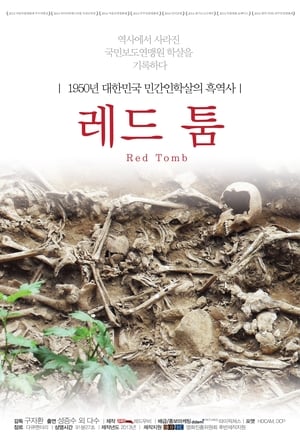
레드 툼
2015
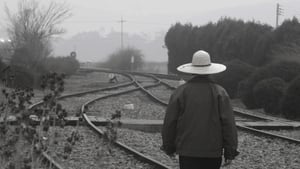
My Father's Emails
The director's father, who did not know how to use a computer, left her an autobiography via email. It includes his whole life through many notable events such as the Korean War, the Vietnam War, 88's Seoul Olympic, New Town Development, etc.
2014
The Ghosts of Jeju
Documentary about the struggle of the people of Jeju Island, South Korea. Set in the context of the U.S. presence in Korea after World War II, the film reveals horrible atrocities at the hands of the U.S. Military Government of Korea.
2013
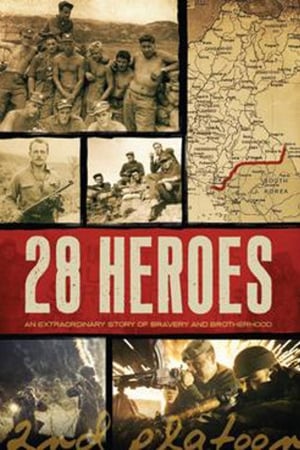
28 Heroes
Heroes brings to life the harrowing exploits of a Canadian platoon who fought to hold their vulnerable outpost in the face of repeated attacks during the Korean War.
2013
USS Midway
A visit to the famed aircraft carrier USS Midway and interviews with men who served aboard it bring the exciting story of the vessel to life in this dramatic documentary. In service for 47 years, the Midway saw heavy action during the Vietnam War, and its hair-raising missions to rescue downed pilots were legendary. After Vietnam, the Midway, now berthed in San Diego, participated in numerous operations, including the Gulf War.
2010
Korean War Stories
The Korean conflict is often called "The Forgotten War," but it has never been forgotten by the men and women who experienced it. These veterans share their thoughts, experiences and memories, highlighting the human and social costs of war.
2001
Homes Apart: Korea
They speak the same language, share a similar culture and once belonged to a single nation. When the Korean War ended in 1953, ten million families were torn apart. By the early 90s, as the rest of the world celebrated the end of the Cold War, Koreans remain separated between North and South, fearing the threat of mutual destruction. Beginning with one man's journey to reunite with his sister in North Korea, filmmakers Takagi and Choy reveal the personal, social and political dimensions of one of the last divided nations on earth. The film was also the first US project to get permission to film in both South & North Korea.
1991
Fighting Korea
1953