Watch Salvemos el Prado. El frente del arte en la Guerra Civil (2003) Online Free
A definitive review of the long and arduous journey of the works of Spanish Artistic Heritage during the Spanish Civil War. The filmmakers travel the tortuous way back from Madrid to Geneva, passing through Valencia and Figueres, interviewing the protagonists of that unrepeatable feat.
More Like This
La Era
2022
La Antorcha de los Éxitos: Cifesa (1932-1961)
The amazing story of Cifesa, a mythical film production company founded in Valencia by the Casanova family that managed to dominate the box office during the turbulent times of the Second Spanish Republic, the carnage of the Civil War and the hardships of the long post-war period and Franco's dictatorship — and survive until the sixties, when Spain was timidly beginning to change.
2022
Emilio Prados, cazador de nubes
Heart of the Generacion 27, Spanish poet Emilio Prados recalls his lifetime from Mexican exile where Spanish Civil War has forced him, as other Spanish intellectuals in 1930s.
2022
El món on volíem viure. Robert Capa, 15 de gener de 1939
Analysis of Robert Capa's professional career and the historical impact of his visual treatment of the Spanish Civil War.
2014
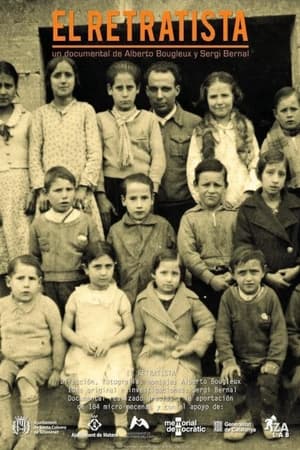
The Portraitist
During the 30s, the young Catalan teacher Antoni Benaiges takes office at a rural school in northern Spain. Antoni has a simple project: he wants to teach his pupils to write and to be free through the use of the printing press. But his dream ends very soon. An individual and collective story in memory of the victims of the Franco's repression.
2013
The Man Who Was There
The Spanish journalist Manuel Chaves Nogales (1897-1944) was always there where the news broke out: in the fratricidal Spain of 1936, in Bolshevik Russia, in Fascist Italy, in Nazi Germany, in occupied Paris or in the bombed London of World War II; because his job was to walk, see and tell stories, and thus fight against tyrants, at a time when it was necessary to take sides in order not to be left alone; but he, a man of integrity to the bitter end, never did so.
2013
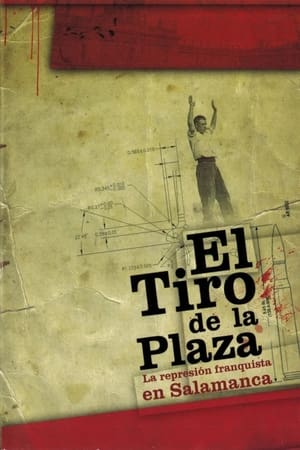
El tiro de la plaza
Documentary that narrates a key moment in our history: the Franco coup d'état, the cruel repression that was carried out and the attempts at resistance in the Charra province. Many people are convinced that Salamanca surrendered with open arms to the coup plotters; However, nothing could be further from the truth. In Salamanca there was repression and there were attempts at resistance; There were arrests and there were tortures, there were shootings and there were disappearances. In Salamanca there was also harsh repression that manifested itself in all its forms.
2010

La segona pàtria
The victory of the fascist army in the Spanish civil war caused a mass exodus of republicans who had to take refuge wherever they could. Mexico, led by its president, Lázaro Cárdenas, was the only country that openly supported the republican cause and opened its doors to thousands of Catalans who found their second homeland in that land. This documentary aims to be a tribute to all the exiles and the people who welcomed them. "Mexico, you have opened your doors and your hands to the wanderer, the wounded, the exiled, the hero..." Pablo Neruda.
2009
The Moroccan Labyrinth
2007
Brigadistas
2007
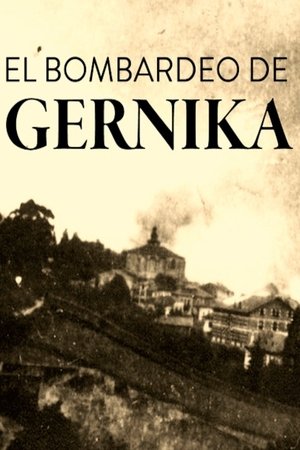
Gernika bonbardaketa
Documentary about the bombing of Gernika carried out by Nazi aviation in support of Franco's troops. Contains testimonies from survivors and unpublished color images.
2007
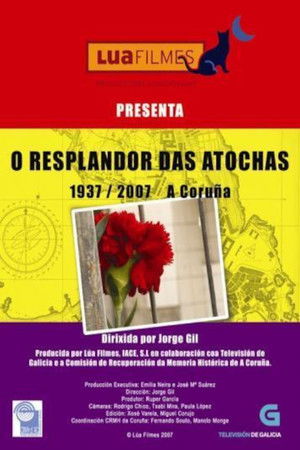
O resplandor das Atochas
The memory of a defeat, a barbarism: the destruction at the dawn of the civil war of people who fought for freedom, a group of anarchists from A Coruña located in the Atochas area. Through valuable witnesses and historical images a reconstruction of a metaphorical episode in the history of the country. This projection is made in collaboration with its author and the Commission for the Recovery of Historical Memory.
2007
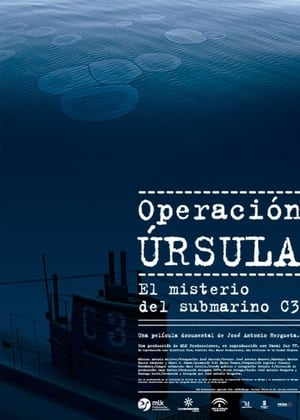
Operación Úrsula. El misterio del submarino C-3
A missing submarine in Spanish Civil War leads to the first German Navy operation before WW2. Republican submarine C-3 was the victim of international secrecy and intrigues, after a torpedo from U-34 sunk it on December 12th 1936.
2006
Cautivos en la arena
2006
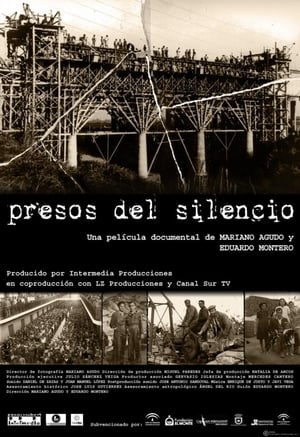
Presos del silencio
2004
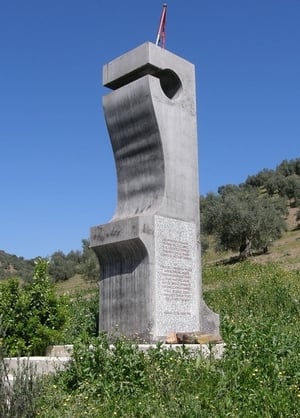
Los últimos guerrilleros - Historia de la A.G.I. (Agrupación guerrillera de Levante)
2003
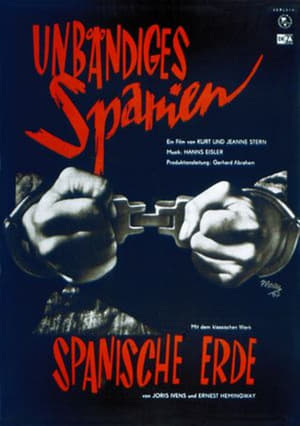
Unbändiges Spanien
Documentary film about the Spanish Civil War.
1962

Benito Mussolini: Anatomy of a Dictator
1962

L'Exode d'un peuple
At the start of 1939 an exodus of nearly 500,000 Spanish Republicans, soldiers and civilians together, fleeing Franco's troops crossed the border to France. Louis Llech, a Perpignan based shopkeeper and enlightened amateur cineaste, owned a 16mm camera. Together with his friend Isambert, he filmed this extraordinary migration. Fascinated by the military aspect of this Retirada, he favoured shots of parades, of crowds, like those showing military equipment. He nonetheless also showed civilian distress, without insisting on its picturesque aspects, focussing more on images of the uninterrupted flow of refugees.
1939
Toma de Belchite y Teruel
1937