Watch Rout of the Filipinos (1899) Online Free
A reenacted short from 1899 produced by Thomas Edison’s company during the Philippine-American War. The film dramatizes an engagement in which Filipino forces are routed (defeated) by U.S. troops. It was part of a wave of patriotic war “actualities” designed to appeal to American audiences, stirring imperialistic sentiments.
More Like This

The Library of Congress
The documentary about the Library is C-SPAN’s original feature on America’s iconic government institutions and buildings. This in-depth examination of the Library takes an intimate look at the oldest U.S. federal cultural institution, providing a behind-the-scenes glimpse into the history of the world’s largest library and its vast collection of books, photographs, maps and manuscripts. The documentary also examines how the Library is using science and technology to protect the nearly 150 million items in its collections. The Library of Congress is the only library in the world with its own preservation-science laboratory. Founded in 1800, the Library of Congress is the nation’s oldest federal cultural institution. Many of the Library’s rich resources can be accessed through its website at www.loc.gov.
2011

These Amazing Shadows
Tells the history and importance of The National Film Registry, a roll call of American cinema treasures that reflects the diversity of film, and indeed the American experience itself.
2011
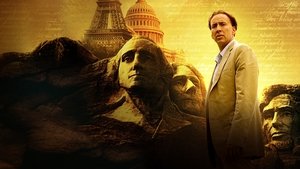
National Treasure: Book of Secrets
Benjamin Franklin Gates and Abigail Chase re-team with Riley Poole and, now armed with a stack of long-lost pages from John Wilkes Booth's diary, Ben must follow a clue left there to prove his ancestor's innocence in the assassination of Abraham Lincoln.
2007
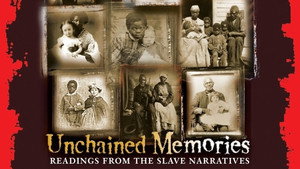
Unchained Memories: Readings from the Slave Narratives
When the Civil War ended in 1865, more than four million slaves were set free. Over 70 years later, the memories of some 2,000 slave-era survivors were transcribed and preserved by the Library of Congress. These first-person anecdotes, ranging from the brutal to the bittersweet, have been brought to vivid life in this unique HBO documentary special, featuring the on-camera voices of over a dozen top African-American actors.
2003
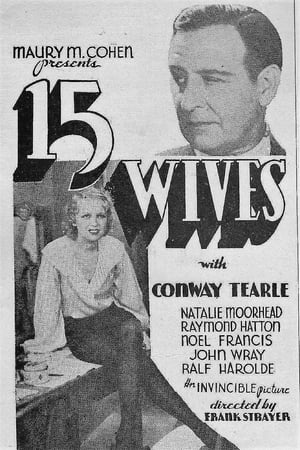
Fifteen Wives
Shortly after his arrival from South America to New York, Steven Humbolt is found dead in his apartment at the Savoia Hotel. Inspector Decker Dawes investigates the case and although the cause of death is described as apoplexy, Dawes is convinced it as murder, especially after he learns that Humbolt had been married fifteen times.
1934

Say It with Diamonds
American silent drama film following an early Vitagraph leading man and matinee idol. Prints of the film are held at the Library of Congress and George Eastman House Motion Picture Collection.
1927
Wandering Footsteps
Hal Whitney, an irresponsible young millionaire, befriends Timothy Payne, a wise old college professor whose life had been ruined by alcohol. After "adopting" Timothy as his father, Hal introduces him to his sweetheart, Helen Maynard. The outraged Helen breaks their engagement, certain that Timothy will be a bad influence on her hard-drinking fiancé. However, both men assist in each other's reformation, and Hal is soon reunited with Helen, while Timothy marries Hal's mother, Elizabeth, whom he had loved in his youth.
1926
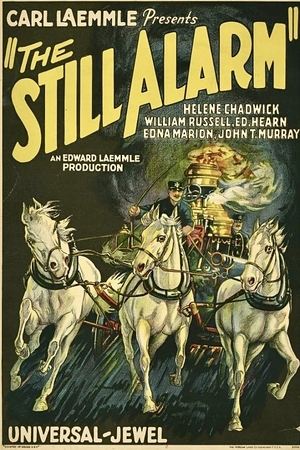
The Still Alarm
Lucy Fay leaves her husband, Richard, a fireman, for a suave politician, Perry Dunn. Richard compensates for the loss by adopting Drina, a baby girl whose mother perished in a fire. Drina develops into a beautiful young lady and becomes a model at a modiste shop owned by Dunn and managed by Lucy. Dunn is attracted to Drina and plots to get her alone by giving her a drugged drink. An untimely fire interferes with his plans, leaving Drina drugged and trapped by flames in Dunn's room, where she is sleeping.
1926
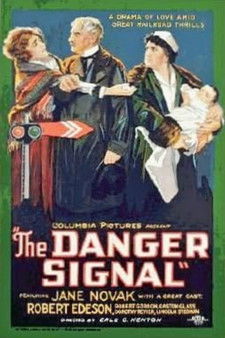
The Danger Signal
A recently widowed and destitute young mother (Jane Novak) appeals to her wealthy and heartless father-in-law (Robert Edeson) for financial aid. Instead, he convinces her to hand over her new baby to his care so that the child will be brought up with "everything money can buy." Unbeknownst to the grandfather, we learn that there are twin sons and our heroine keeps one baby to raise herself. The narrative jumps ahead to the boy's twenty-first birthday and we see what's become of them. Not surprisingly, the wealthy son has grown up spoiled and greedy while the poor one works hard and loves his mother.
1926
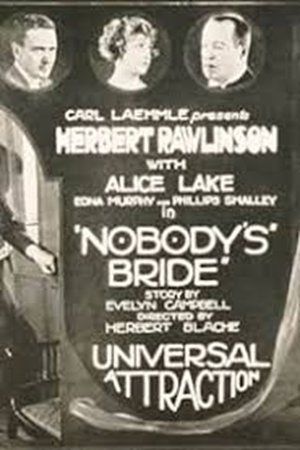
Nobody's Bride
Jimmy Nevins--once wealthy and now engaged to Doris Standish--is reduced to poverty and jilted by her when he is befriended by Mary Butler, the leader of a gang of crooks.
1923
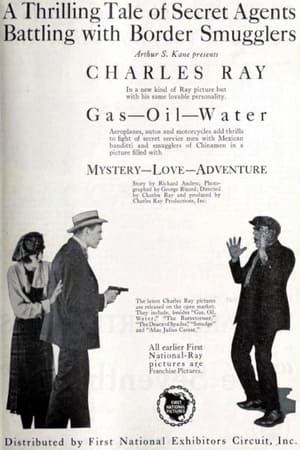
Gas, Oil and Water
George Watson may seem like a harmless gas-station attendant, but in reality he is a secret government agent, intent on ferreting out a gang of smugglers on the Mexican border.
1922
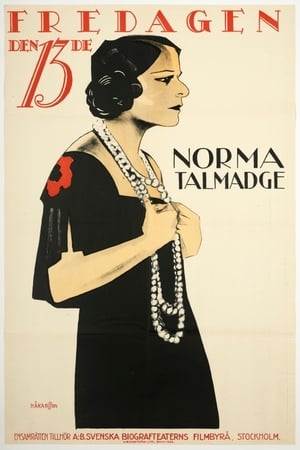
The Wonderful Thing
Jacqueline Laurentine Boggs, the daughter of an American hog farmer, is schooled in France and comes to stay with an English family. There she brings a dose of reality to her snobby hosts.
1921
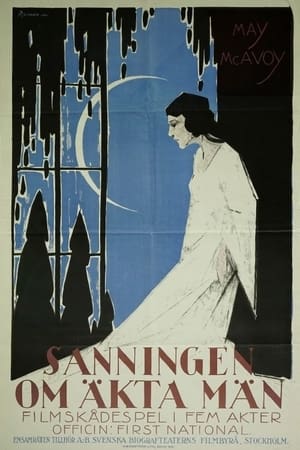
The Truth About Husbands
With an eye towards social climbing wealthy Dustan Renshaw breaks his engagement with Janet Preece to wed socialite Leslie Brown. Moving abroad after marriage Leslie welcomes her friends the Stonehays while Dustan is away, accompanied by their private secretary, Janet Preece. Janet's sudden illness compels her to remain, and the two women become fast friends. Leslie learns the story of Janet's betrayal by a man known to her only as "D. R. Devastated to learn the truth Leslie leaves Dustan but as time passes, they are reunited at Janet's deathbed.
1920

A Damsel in Distress
Maud March, the rebellious daughter of a millionaire, goes to New York to see her sweetheart Geoffrey who left town years ago. Her aunt Carolyn wants Maud to marry her son Reggie and sends the Maud's brother Percy after her to act as chaperone. Maud, trying to escape, enters a taxi where she meets handsome composer George Bevan. The man falls in love with the young lady who, when she sees how Geoffrey has changed, soon agrees to marry George.
1919
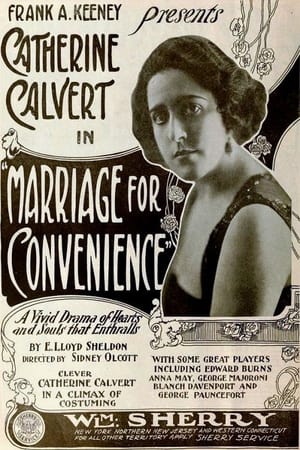
Marriage for Convenience
Barbara Rand is blinded when she leaps through a window to escape an assailant. Her sister, Natalie, reluctantly abandons her fiancé, Ned Gardiner, and marries Oliver Landis, who can provide the money needed for Barbara's operation. Unaware that Oliver was Barbara's attacker, Natalie blames his business partner, Howard Pollard, who was with Barbara on the night she was injured. Natalie holds Howard at gunpoint, but when her husband arrives, he promises to deal with the villain making sure Howard falls to his death. Upon Barbara’s release from the hospital, Oliver tries to blind her once. Natalie threatens him with a pistol, but Oliver wrests it away from her. He then realizes that he can no longer hide his guilt from Natalie or the police and shoots himself. Barbara has been avenged, and Natalie is free to marry Ned.
1919
A Modern Knight
Percival Cadwallader Perkins was so bashful that whenever a woman would look at him he would blush like a beet, and this brought the "Happy Family," the cowboys of the Flying U, to calling him "Pink."
1916
The Caprices of Kitty
Orphaned heiress Katherine Bradley, known as "Kit," is an orphan and heiress is attending a fashionable and select seminary for young women. A favorite of the dean, she is allowed to take her automobile for a spin every evening with the proviso that she takes a chaperone with her. Willful Kit manages to slip out alone one day and has a blowout by the roadside. Young and handsome Gerald Cameron is passing by and offers a hand. Kit and he are instantly attracted and after many complications they are finally happily united.
1915
Three Weeks
A young English nobleman is sent to Switzerland by his parents, where he meets a mysterious older woman with whom he has a torrid three-week romance.
1914
Mother
Maurice Tourneur's first American made film is a silent drama about a mother's love and sacrifice starring Emma Dunn, who also starred in the 1910 Broadway play version of the story.
1914
Chip of the Flying U
When he's fired from his bank job aimless Claude Bennett decides to head West. Once he gets a job as a cowboy on the Flying "U" ranch he restyles himself as Chip and discovers who he really is through a series of adventures.
1914