Watch Rose (2021) Online Free
"Rose" is a filmed one-woman theatrical performance. A moving reminder of some of the harrowing events that shaped the century. It remains sadly relevant today as racial tensions escalate, and allegations of antisemitism are rife.
Cast
Maureen Lipman
More Like This

The Performance
Harold May, an excellent Jewish-American tap dancer, on tour in Europe with his company, receives an offer from a German that is difficult to pass up: a large sum to put on a show in Berlin. The German does not know that Harold is of Jewish origins; the year is 1937 and, once they arrive in Germany, the company discovers that he will have to perform in the presence of Adolf Hitler.
2024

Marco: The Invented Truth
Enric Marco, a Spanish trade unionist, claims to be a survivor of Nazi concentration camps.
2024

Love on a Two Way Street
Regina McKenzie struggles with still living at home with her parents, juggling questionable career choices, and dating the wrong men. Love on a Two Way Street is a live stage play event that covers the entire emotional spectrum.
2020
The Gabriels: Election Year in the Life of One Family, Play Three: Women of a Certain Age
Eight months after we first meet the Gabriels, Patricia, the family matriarch, joins her children and daughters-in-law as they prepare a meal from the past and consider the future of their country, town and home. Paying tribute to the difficult year behind them, the Gabriels compare notes on the search for empathy and authenticity at a time when the game seems rigged and the rules are forever changing.
2017
The Gabriels: Election Year in the Life of One Family, Play Two: What Did You Expect?
Back in the kitchen of the Gabriel family, the country is now in the midst of the general election for President. In the course of one evening in the house they grew up in, history (both theirs and our country's), money, politics, family, art, and culture are chopped up and mixed together, while a meal is made around the kitchen table.
2017
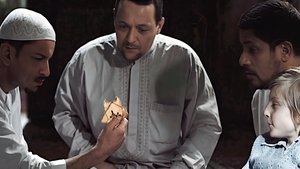
Ensemble
In Paris in full German occupation in 1942, a Jewish child Isaac escapes a raid organized by the SS. He then took refuge in the Great Mosque of Paris. The imam decides to protect him by passing him off as a Muslim, as well as the other Jewish children that he manages to free with the help of the resistance networks. The French militia and the Gestapo have suspicions... This fiction film is based on the true story of the rector of the Paris mosque, Si Kaddour Benghabrit, who saved several Jews from deportation during the Second World War.
2010

Adam Resurrected
After again attempting to commit murder, a Jewish man with a mysterious past and extraordinary intelligence, charisma, and body control returns to an insane asylum, where he makes a startling discovery.
2008
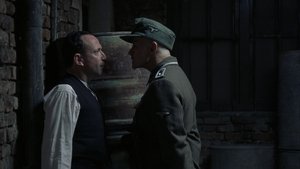
The Grey Zone
The story of Auschwitz's twelfth Sonderkommando — one of the thirteen consecutive "Special Squads" of Jewish prisoners placed by the Nazis in the excruciating moral dilemma of assisting in the extermination of fellow Jews in exchange for a few more months of life.
2001
House of the Generals
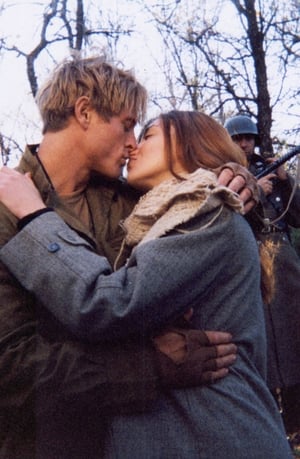
Based on a true story. The life of a Ukrainian Jewish girl from the last days of the Russian Czarist regime through the end of WWII and the affects of the political turmoil and Jewish persecution on her and those closest to her. Ukraine amassed thousands of WWII monuments. 600,000 Ukrainian Jews perished as victims of Hitler and Stalin, and half of the Russian losses occurred in Ukraine.
2000

After the Truth
Famous Nazi doctor Josef Mengele — the 'Death Angel of Auschwitz', who killed more than 300.000 people — emerges from his hideout in Argentina to Germany as a 87-year-old man, and must stand for his crimes in court. The young solicitor Peter Rohm is assigned to defend him, but Rohm himself — an expert on Mengele and his crimes — feels unable to do so. When he decides to take on the case, he endangers not only his marriage but also his and his wife's lives.
1999

Sunshine
The fate of a Hungarian Jewish family throughout the 20th century.
1999
Germans
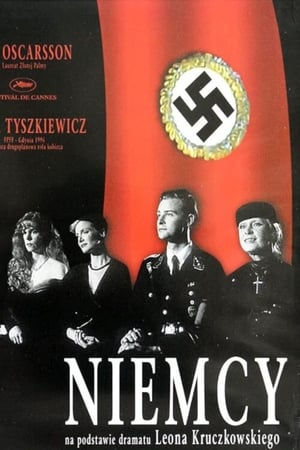
A story about a German family during World War II with every family member having a different approach to Jews, raging from hatred to compassion.
1997
Die Steine
Sophie, fourteen years old, rides her bike to a remote area after school to read a book about the holocaust. She collides with Joseph, who is the same age, on her bike, and their paths become intertwined. A pile of paving stones next to a bunker triggers an idea: they want to dedicate a stone to each person murdered by the Nazis.
1985

Sophie's Choice
Stingo, a young writer, moves to Brooklyn in 1947 to begin work on his first novel. As he becomes friendly with Sophie and her lover Nathan, he learns that she is a Holocaust survivor. Flashbacks reveal her harrowing story, from pre-war prosperity to Auschwitz. In the present, Sophie and Nathan's relationship increasingly unravels as Stingo grows closer to Sophie and Nathan's fragile mental state becomes ever more apparent.
1982
The Gin Game
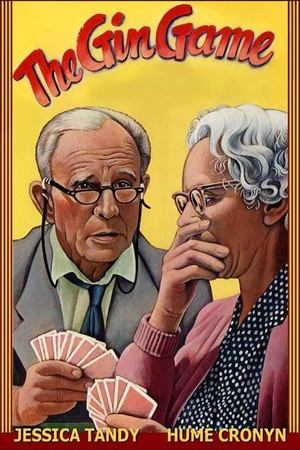
Weller Martin and Fonsia Dorsey, two elderly residents at a nursing home for senior citizens, strike up an acquaintance. Neither seems to have any other friends, and they start to enjoy each other's company. Weller offers to teach Fonsia how to play gin rummy, and they begin playing a series of games that Fonsia always wins. Weller's inability to win a single hand becomes increasingly frustrating to him, while Fonsia becomes increasingly confident. While playing their games of gin, they engage in lengthy conversations about their families and their lives in the outside world. Gradually, each conversation becomes a battle, much like the ongoing gin games, as each player tries to expose the other's weaknesses, to belittle the other's life, and to humiliate the other thoroughly.
1981

The Fed One
Group of concentration camp prisoners is being constantly tortured by their Kappo. Since they are too weak to stand against him, they pick the strongest among themselves and feed him with parts of their rations.
1970
Witness Out of Hell
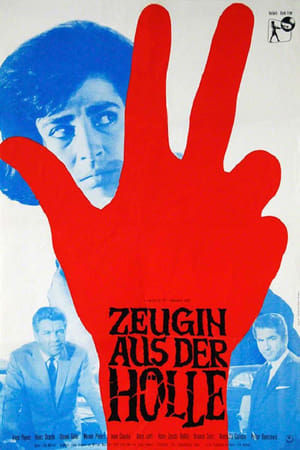
Leah Weiss, a Polish Jew, was first forced into prostitution at Auschwitz. Afterwards, she was victimized in medical experiments. Now, twenty years later, German war crimes prosecutors hope she will be their star witness. But can she stand up to the shame, the publicity, and the reliving of those experiences?
1967

The Pawnbroker
A Jewish pawnbroker, a victim of Nazi persecution, loses all faith in his fellow man until he realizes too late the tragedy of his actions.
1965
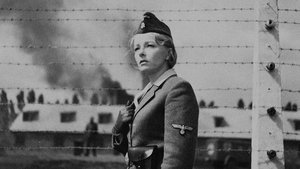
Passenger
A German woman on a ship returning to Europe notices a face of another woman which brings recollections from the past. She tells her husband that she had been an overseer in Auschwitz during the war, but she has actually saved a woman's life.
1963

Long Is the Road
The first feature film to represent the Holocaust from a Jewish perspective. Shot on location at Landsberg, the largest DP camp in U.S.-occupied Germany, and mixing neorealist and expressionist styles, the film follows a Polish Jew and his family from pre-war Warsaw through Auschwitz and the DP camps.
1948