Watch Rolanda Polonsky, Sculptor (1971) Online Free
Enter the imaginative world of acclaimed sculptor Rolanda Polonsky, who had been a resident of Netherne Psychiatric Hospital in Coulsdon, Surrey for 26 years when this film was made. One of the positive aspects of her illness, described in the film as a schizophrenia, is that it "tapped a deep source of mystical vision and human feeling" which finds expression in her work.
Cast
Rolanda Polonsky
More Like This
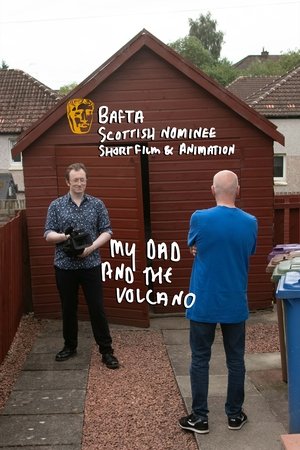
My Dad and the Volcano
Gavin built a giant volcano sculpture that's now in his dad's shed. Gavin seeks his dad's understanding but he's uninterested in modern art and refuses to participate in the documentary.
2024

I'll See You Again
A group of artists settle in a swamp on the banks of the Indre River. Meanwhile, a voice describes a utopian world.
2022
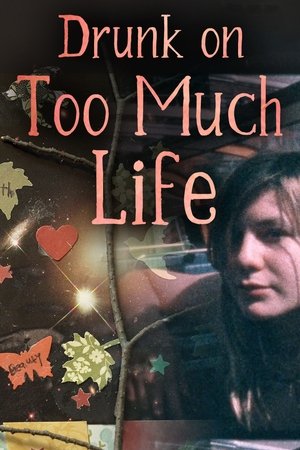
Drunk on Too Much Life
The filmmakers' 21-year-old daughter journeys from locked-down psych wards and diagnostic labels toward expansive worlds of creativity, connection, and greater meaning. Featuring insights from trauma experts and others, the film challenges the widespread idea that mental illness should be understood purely in biological terms, revealing the myriad ways that madness has meaning beyond brain chemistry.
2021
Roundabout Art
In Europe, road junctions have become public art galleries. A road trip across France, Switzerland, the Canary Islands, Greece and Germany exploring the glorious world of roundabout art.
2020
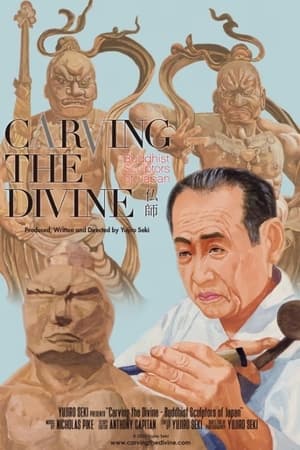
Carving the Divine
The documentary Carving the Divine offers a rare and intimate look into the life and artistic process of modern-day Busshi – practitioners of a 1400 year lineage of woodcarving that’s at the heart of Japanese, Mahayana Buddhism.
2019
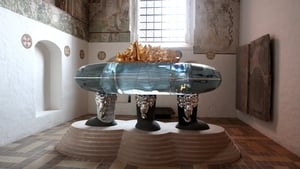
Sarcophagus for a Queen
Bjørn Nørgaard and a team of Czech glass artists in the demanding process of creating a grave monument for Queen Margrethe and Prince Henrik of Denmark.
2019
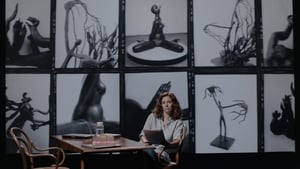
Maria: Don't Forget I Come From the Tropics
An examination of the relationship between the life and art of Maria Martins, now recognized as one of the greatest Brazilian sculptors, in addition to her engravings and texts. The film reveals the greatness of her work and her boldness when dealing directly with the feminine perspective of sexuality, a transgression that led to attacks by Brazilian critics. In parallel, her life as the wife of an important diplomat and her connection to Marcel Duchamp, in a relationship of mutual collaboration between the two artists.
2017

The Blood Is at the Doorstep
After Dontre Hamilton, a black, unarmed man diagnosed with schizophrenia, was shot 14 times and killed by police in Milwaukee, his family embarks on a quest for answers, justice and reform as the investigation unfolds.
2017
They Heard Voices
THEY HEARD VOICES is a documentary film exploring the Hearing Voices Movement, chronic psychosis, and the schizophrenia label. The film is a series of wide-ranging interviews with voice hearers, medical historians, anthropologists and psychiatrists from Britain and America, presenting different people’s views. Is schizophrenia hard science or an arbitrary, catch-all term with no real meaning? What does it mean for those experiencing psychosis?
2016
Odvaha
2016
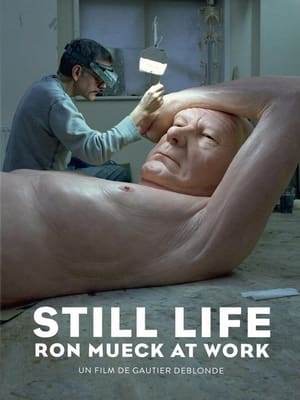
Still Life: Ron Mueck at Work
2013
Painting with 14 Personalities
British artist Kim Noble talks about the reality of living with dissociative identity disorder and shows us the artwork created by 14 of her personalities. "I'm Patricia, I don't like being called Kim, but I have got used to it now."
2012
How to Get a Head in Sculpture
From the heads of Roman Emperors to the 'blood head' of contemporary British artist Marc Quinn, the greatest figures in world sculpture have continually turned to the head to re-evaluate what it means to be human and to reformulate how closely sculpture can capture it. Witty, eclectic and insightful, this film is a journey through the most enduring subject for world sculpture, one that carves a path through politics and religion, the ancient and the modern. Actor David Thewlis has his head sculpted by three different sculptors, while the Archbishop of Canterbury Dr Rowan Williams, artist Maggi Hambling and art critic Rachel Johnston discuss art's most enduring preoccupation, ourselves.
2011
Si Monumentum Requiris, Circumspice
A monument handcrafted by Konstantin Bessmertny is exhibited at Venice Biennale 2007.
2010
Louis Theroux: A Place for Paedophiles
Louis has gained access to Coalinga Mental Hospital in California, which houses more than 500 of the most disturbed criminals in America, convicted paedophiles. Most have already served lengthy prison sentences, but have been deemed unsafe for release. Instead, they have been sent here for an indefinite time. Spending time with those undergoing treatment, Louis wrestles with whether he can ever allow himself to believe men whose whole history is defined by deception and deceit.
2009
Tarnation
Filmmaker Jonathan Caouette's documentary on growing up with his schizophrenic mother -- a mixture of snapshots, Super-8, answering machine messages, video diaries, early short films, and more -- culled from 19 years of his life.
2003
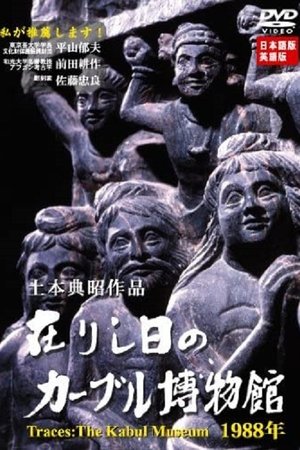
Traces: The Kabul Museum 1988
The Kabul National Museum, once known as the "face of Afghanistan," was destroyed in 1993. We filmed the most important cultural treasures of the still-intact museum in 1988: ancient Greco-Roman art and antiquitied of Hellenistic civilization, as well as Buddhist sculpture that was said to have mythology--the art of Gandhara, Bamiyan, and Shotorak among them. After the fall of the Democratic Republic of Afghanistan in 1992, some seventy percent of the contents of the museum was destroyed, stolen, or smuggled overseas to Japan and other countries. The movement to return these items is also touched upon. The footage in this video represents that only film documentation of the Kabul Museum ever made.
2003
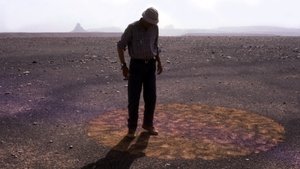
Stones and Flies: Richard Long in the Sahara
In the fall of 1987, Philippe Haas accompanied the sculptor Richard Long to the Algerian Sahara and filmed him tracing with his feet, or constructing with desert stones, simple geometric figures (straight lines, circles, spirals). In counterpoint to the images, Richard Long explains his approach. Since 1967, Richard Long (1945, Bristol), who belongs to the land art movement, has traveled the world on foot and installed, in places often inaccessible to the public, stones, sticks and driftwood found in situ. His ephemeral works are reproduced through photography. He thus made walking an art, and land art an aspiration of modern man for solitude in nature.
1988
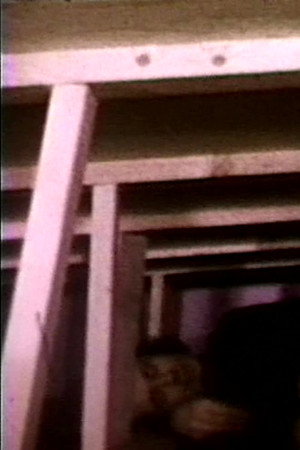
Seedbed
“In this legendary sculpture/performance Acconci lay beneath a ramp built in the Sonnabend Gallery. Over the course of three weeks, he masturbated eight hours a day while murmuring things like, "You're pushing your cunt down on my mouth" or "You're ramming your cock down into my ass." Not only does the architectural intervention presage much of his subsequent work, but all of Acconci's fixations converge in this, the spiritual sphincter of his art. In Seedbed Acconci is the producer and the receiver of the work's pleasure. He is simultaneously public and private, making marks yet leaving little behind, and demonstrating ultra-awareness of his viewer while being in a semi-trance state.” – Jerry Saltz (via: http://www.ubu.com/film/acconci_seedbed.html)
1972
Giacometti
The Arts Council commissioned this film to coincide with their major retrospective of Giacometti's work at the Tate Gallery (now Tate Britain) in the summer of 1965. A similar exhibition was held concurrently at the Museum of Modern Art in New York, sealing the artist's reputation as a modern master.
1967