Watch Reset (2025) Online Free
On April 16th, 2014, the Sewol Ferry sank in South Korea, taking with it the lives of 304 of its 476 passengers. South Korea's worst maritime disaster traumatized a nation while simultaneously sinking the country's emotional spirit. The film asks why the rescue of Korea's children and people was neglected on the fateful day the Sewol sank.
More Like This
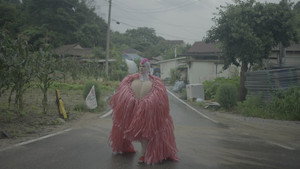
Becoming Kim
German filmmaker Susanne, married to a Korean man named Kim Jeong Rae, turns the camera toward her own intercultural marriage and family with both humor and tenderness. Blending vérité and performance, the film dives into the beautiful mess of love, identity, and cultural collision. Becoming Kim asks: How do we stay true to ourselves—while learning to love another?
2026
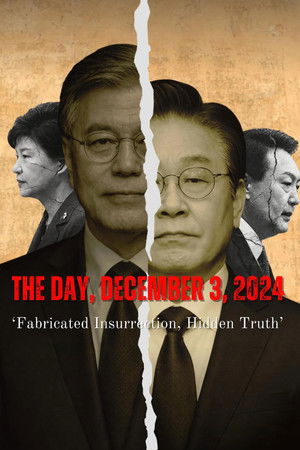
The Day, December 3, 2024 'Fabricated Insurrection, Hidden Truth'
On the night of December 3, 2024, South Korea was thrown into chaos. What the public first heard as "an insurrection" quickly became one of the most polarising political events in modern Korean history. This documentary revisits that night and asks a deeper question: Was it really a coup attempt or the result of a calculated political trap? Through interviews, legal analysis, and evidence, the film investigates the impeachment of President Yoon Suk-yeol and the rapid collapse of his administration. It explores claims that an overwhelming opposition majority, built through alleged election manipulation, enabled a form of "legislative dictatorship" that mirrored the path that led to President Park Geun-hye's impeachment eight years earlier.
2026

Relay Race
Ten years have passed since the Sewol ferry disaster. The life of KIM Dong-soo, who came back alive from the disaster, has changed a lot from before. KIM Dong-soo, who used to live as a truck driver, lost his truck in a disaster and now guards the Hallasan trail everyday. He is repeatedly hospitalized and discharged from the psychiatric ward and suffers from pain all over his body. Still, he struggles to restore his daily life by participating in the marathon event. KIM Dong-soo's wife, KIM Hyung-sook, and his two daughters support him in his daily life. The eyes looking at KIM Dong-soo with a desperate expression, asking for help, revive every moment and shake his heart, but he still lives by holding the hands of his family who stand by his side.
2025

One "Orphan" Every Hour
Nearly 250,000 South Korean children were adopted to the West as “orphans” in the 60 years following the Korean War. Some to loving homes. Others to tragic ends. Raised in places where they looked like nobody else, many were told to forget their past and be grateful. But the innate desire to understand where you came from has led many Korean adoptees to search for their roots. In the process, they discover lies in their past and families they never knew existed. In this documentary series, correspondent Wei Du travels around the world to meet Korean adoptees and accompany a few on their journey to reclaim who they are. Together, they reveal how an “orphan rescue” mission separated families and erased the roots of hundreds of thousands.
2025
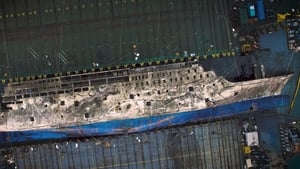
10 Years After the Sinking, Zero-Sum
Ten years ago, 304 innocent people aboard the Sewol ferry in Korea lost their lives at sea. The reason for the sinking and the complete failure of the rescue are crucial factors yet to be revealed. But the government continues to withhold key evidence, citing national security reasons. This documentary finds a conclusion of why all the matters have gone wrong.
2024

Shim: American Opens a Cafe at the DMZ
A cafe is growing, tucked in to the mountainside air raid shelter of the DMZ borderlands. A light light flickers, illuminating the past, present, and future. I'll see you at the DMZ! Shim was a free, one-day pop-up cafe staged in Yangji-ri village’s air raid shelter at the Korean DMZ. Referencing Korean cafe culture’s fixation on third place, the DMZ’s evolution from security tourism, to ecological peace tourism, and its repurposing as art production site, Shim attempts to intervene and align the past and present. Yangji-ri was one of many minbuk propaganda villages established by the Park Chung Hee regime in the 1960s to showcase the farming bounty and prosperity of the south for a North Korean gaze. The village was formerly part of the Civilian Control Line (CCL) until 2013 when it was reterritorialized as a normal part of South Korea.
2024
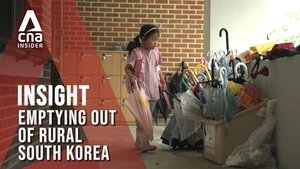
CNA Insider: Is Seoul To Blame For South Korea's Population Crisis?
South Korea's is facing a population crisis, with Seoul at the centre of it. The country’s capital remains the beneficiary of both internal and external migration. Instead, it is in the rural and peripheral areas where low birth rates and the aging population have become crises. The countryside is at risk of becoming extinct. As more opportunities and people get concentrated in Seoul, urban pressures have led to rising unemployment and cost of living. And when things get expensive, people do not have babies. Seoul now has the lowest birthrate in South Korea, in a country with the world’s most dire fertility. On the other hand, farms and factories in the rural areas desperately need workers. How can South Korea solve this population puzzle?
2024
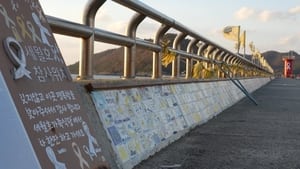
Still Waiting at Paengmok
10 years have passed since the Ferry Sewol disaster. People are still waiting for the truth about the incident at Paengmok Port.
2024

Life Goes On
Yoo Kyung-geun, who lost her daughter Ye-eun in the Sewol Ferry Disaster, sits down at the podcast production studio. It is to meet with the bereaved families of numerous social disasters before and after the Sewol Ferry Disaster. They are Hwang Myung-ae, the mother of Han Sang-im who died in the 2003 Daegu Subway Fire, Ko Seok, the father of Gahyun and Nahyun who died in the 1999 Sealand Youth Training Center Fire, and Bae Eunsim, the mother of Lee Hanyeol who died in 1987's June Struggle. The bereaved families talk about "the life after" and their daily lives, and Yoo Kyung-geun learns to live without Ye-eun.
2024
Three Sides to Every Story
This documentary tells the story of people who were at the scene of the 2014 Sewol Ferry disaster: journalists, bereaved families of the victims, and the survivors. Ten years after the disaster, what did it leave them? These are three omnibus documentaries with different perspectives.
2024
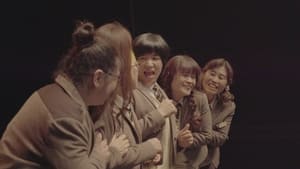
The Talent Show
Middle-aged women start acting and launch a drama club. However, nothing big or small goes right. But they never give up the play.
2023

Our Aotearoa
An animated documentary that speaks to immigrants' personal experiences living in Aotearoa, exploring themes of racism, discrimination, loss, loneliness, and maintaining cultural ties while living in another country.
2022
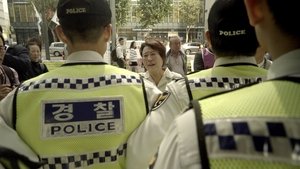
Shadow Flowers
Ryun-hee Kim, a North Korean housewife, was forced to come to South Korea and became its citizen against her will. As her seven years of struggle to go back to her family in North Korea continues, the political absurdity hinders her journey back to her loved ones. The life of her family in the North goes on in emptiness, and she fears that she might become someone, like a shadow, who exists only in the fading memory of her family.
2021

Yellow Ribbon
2021
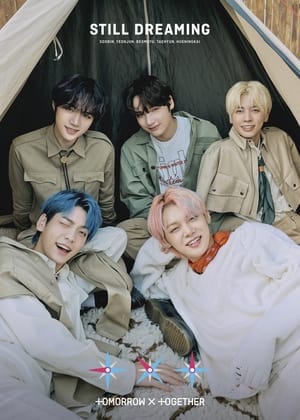
TXT (TOMORROW X TOGETHER) STILL DREAMING
Still Dreaming is TXT's first Japanese studio album. It was released on January 20, 2021. It was released with an accompanying DVD with the music video for the Japanese version of 'Blue Hour' and the making of the music video with interviews.
2021
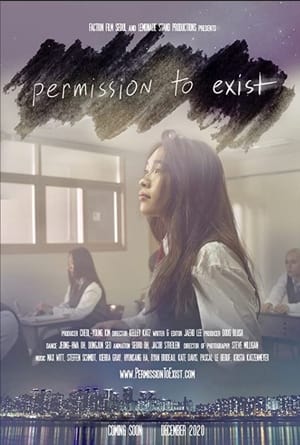
Permission to Exist
In just sixty years, South Korea went from being one of the poorest countries on the Asian continent to having the 12th largest economy in the entire world. Every year, it is measured that Korean students have some of the highest test scores and a higher rate of acceptance into Ivy League schools compared to all other nations. But on the flip side, South Korea also has one of the highest suicide rates in the developed world, the highest gender pay gap of all developed countries, and the highest plastic surgery rate per capita. Always expected to receive top scores and constantly bombarded by media and messages that seem to demand nothing short of visual “perfection,” how do these individuals come to accept and learn to love themselves as they are?
2020

K-Classics Generation
The film traces the career of some of the winners of this new generation nicknamed the "K-Classics Generation", including the 2 recent winners of the Queen Elisabeth Competition, the soprano Hwang Sumi and the violinist Lim Jiyoung. In Korea, where it all began, and in Germany where most of them have settled.
2020

President′s 7 Hours
The film traces PARK Geun-hye's life back to the 1970s, when the leader-follower relationship began between PARK, who became the first lady of the Yushin regime, and CHOI Taemin, the leader of a pseudo-religion. It then examines the Sewol ferry incident, CHOI Soonsil Gate, candlelight rallies, and finally the impeachment.
2019
Mis-President
My father led a coup in 1961. Two years later, I became the president's daughter.
2017
Quo Vadis
The church is the body of Christ. In Greece, the church embodied a philosophy. Then in Rome, it became an institution. Spreading throughout Europe, it became one with the culture there. Traveling to the US, the church became a business. And when it arrived in Korea, it became a conglomerate. The top five largest churches in the world are located in Korea. However, Christ has long been absent in the nation. So then, what is the church? Who is Jesus Christ? What kind of world do Christians want? If the church is indeed the body of Christ, then we must ask the questions point-blank. Where do we stand in all this? And where exactly are we headed? Korean churches—“Quo Vadis?” Korean society—“Quo Vadis?”
2014