Watch República del color (2015) Online Free
About the history of the Dominican Republic's visual arts from the perspective of color given by the incidence of light in the island, alongside the historical events that defined its master artists.
Cast
Sarah Jorge León, Eduardo Villanueva, Antonio Caro, Radhamés Mejía, Eddy Guzmán, José García Cordero, Chiqui Vicioso, Eduardo López Valiña, José Cesteros, Inés Tolentino, Justo Liberato, Jorge Severino
More Like This

Les trésors des ambassades parisiennes
2024
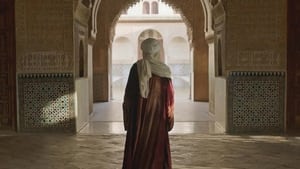
The Builders of the Alhambra
Kingdom of Granada, al-Andalus, 14th century. After recognizing that his land, always under siege, is hopelessly doomed to be conquered, Sultan Yusuf I undertakes the construction of a magnificent fortress with the purpose of turning it into the landmark of his civilization and his history, a glorious monument that will survive the oblivion of the coming centuries: the Alhambra.
2022
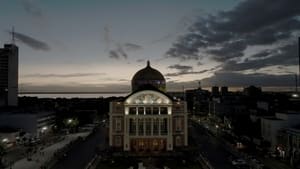
Teatro Amazonas: The Art of Sound and Nature
The history of the Teatro Amazonas in Manaus, an opera house located in the middle of the Amazon rainforest, whose construction, between 1884 and 1896, depended on the labor exploitation of the local indigenous populations, provides an insight into the cultural, social and political situation in Brazil.
2022
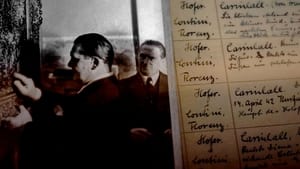
Goering's Catalogue: A Collection of Art and Blood
For more than a decade, Reichsmarschall Hermann Goering, Adolf Hitler's right-hand man during the infamous Third Reich, assembled a collection of thousands of works of art that were meticulously catalogued.
2021
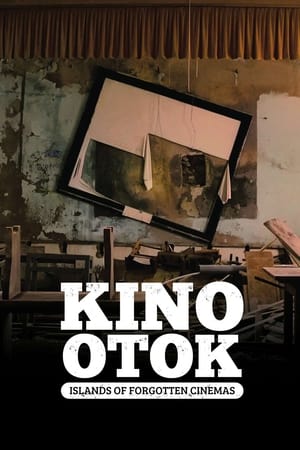
Islands of Forgotten Cinemas
A poetic documentary about the lost film culture in the small villages on the Croatian islands during the SFR of Yugoslavia.
2016
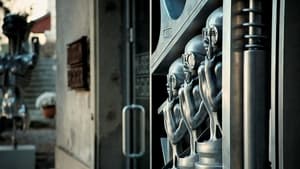
Dark Star: H. R. Giger's World
An account of the life and work of Swiss painter, sculptor, architect and designer H. R. Giger (1940-2014), tormented father of creatures as fearsome as they are fascinating, inhabitants of nightmarish biomechanical worlds.
2014

Peter Monaghan: A Portrait
This documentary features a kinetic artist who creates vibrant mixed media works that push the boundary between 2D and 3D.
2012
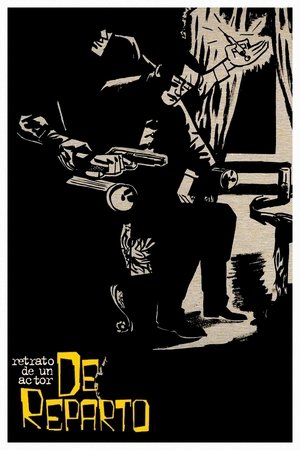
De reparto: retrato de un actor
2009
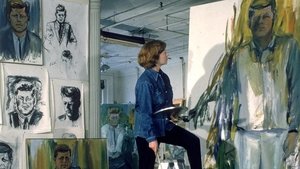
Picturing the Presidents
We go behind the scenes and into the minds of artists as they capture, commemorate, and, at times, condemn our presidents.
2009
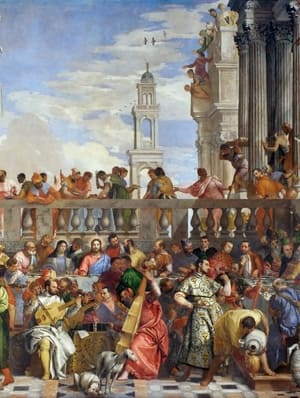
The Wedding at Cana
A short film by Peter Greenaway. It depicts the painting The Wedding Feast at Cana by Paolo Veronese, through mixed media and shows different perspectives.
2009
Journey Around My Room
The camera slowly pans through a room as Smolders offers various observations and memories.
2008
The Blue Tailor
An Tailliúr Gorm looks at the unique struggle for survival on the small, marginalised Gaeltacht island of Inis Bigil off the Mayo coast. As the only island in Ireland to have been both Protetstant and Irish speaking, it is not surprising that Inis Bigil has developed a character all of its own. However today, with only 23 remaining inhabitants, the islanders now find themselves at a crossroads. Focusing on the story of the island’s most famous inhabitant Padraig Daeid (an tailliúr gorm), the film interweaves past and present, exploring the island’s rich culture and heritage, as it faces into perhaps its greatest challenge yet.
2008
Cautivos en la arena
2006
Buñuel: Atheist Thanks to God
Documentary featuring interviews with several of legendary Spanish director Luis Buñuel’s close friends and collaborators.
2005
Presos del silencio
2004
Arne Sucksdorff: Uma Vida Documentando a Vida
2004

Woody Allen: la vida y nada más
2000
Billy Wilder: The Human Comedy
A profile of writer-director Billy Wilder
1998
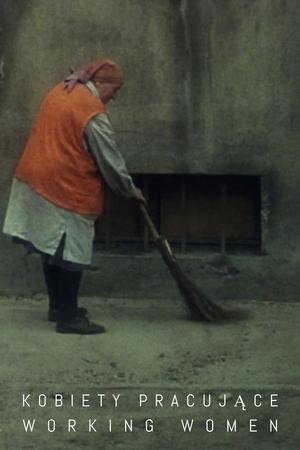
Working Women
Stylized with dramatic interiors and a distorted frame rate, this early documentary miniature from Szulkin depicts six sequences of solitary, repetitious labor.
1978
Return of the Islander
Through economic necessity, an Aran Islander is forced to travel to England to work on building sites so that he can earn money to support his family back on the Islands.
1970