Watch REMOVED: Black Erasure in Boston Online Free
Systemic and structural racism implemented by the city of Boston over the years has led to a dramatic stripping of generational wealth for Black residents, so much so that the average net worth of Black Americans in Boston is now only eight dollars. The racist grading process of ‘redlining’ primarily black neighborhoods, combined with the displacing effect of various ‘urban renewal’ projects, set the template for the wider scale gentrification seen today that is pricing black residents of Boston out of their communities. On top of that, the mass incarceration of Black Bostonians has also led to a further disruption of Black communities. The combined effect of these state sanctioned actions has led to the erasure of Black Americans in Boston.
Cast
Sabrina Salvati, Reggie Stewart, Antonia Edwards, Wawa Belle, Derrick Evans, Kate Phelps, Louis Elisa, Renee Stacey Welch, Rod Singleton, Mac Hudson, Yawu Miller
More Like This

Gentrified: Ethnic Cleansing American Style
The first in-depth analysis of the unspoken ethnic component behind the most devastating socio-economic movement in America today.
2017
Life on the V: The Story of V66
Boston's V66 music video station came and went in the mid-1980s but in the 18 months on the air, it was one of the only over-the-air music video channels ever created. But even popular success didn't mean it was going to last...
2014
Corvin variációk
When the Water Stops Flowing
Jonathan Stavleu explores, in a stream-of-consciousness video essay, the relationship people have with water and what happens when access to it is taken away. For this work, he examines anecdotal histories he has heard from Estonians, as well as stories from his own family history in the Netherlands, weaving them together into a journal-like narrative.
2026
Can You Outrun Boston's Subway?
Boston’s subway is notorious for delays, but just how fast is it compared to the city’s own runners? In this unique race organized by Run Dirty Water, Boston's runners took on the challenge, racing across the city to see if they could beat the MBTA from start to finish.
2024
Basin of Souls
Rua de Santa Catarina, a street that was formerly home to dozens of local businesses and hundreds of Porto residents, now sees a crowd of tourists attracted by the cheap, disposable amenities that are popping up everywhere at once. Gentrification has decontextualized Portuguese culture, rendering the landscape uncanny. The Basin Woman, a symbol of the female workers of the historic Bolhão Market, is chased down by seagulls in the midst of this transcendent chaos.
2024
A Reckoning in Boston
Kafi Dixon dreams of starting a land cooperative for women of color who have experienced trauma and disenfranchisement in the city of Boston. By day she drives a city bus; at night she studies the humanities in a tuition-free course. Her classmate Carl Chandler, a community elder, is the class’s intellectual leader. White suburban filmmaker James Rutenbeck documents the students’ engagement with the humanities. He looks for transformations but is awakened to the violence, racism and gentrification that threaten Kafi and Carl's very place in the city. Troubled by his failure to bring the film together, he enlists the pair as collaborators with a share in the film revenues. Five years on, despite many obstacles, Kafi and Carl arrive at surprising new places in their lives—and James does too.
2021
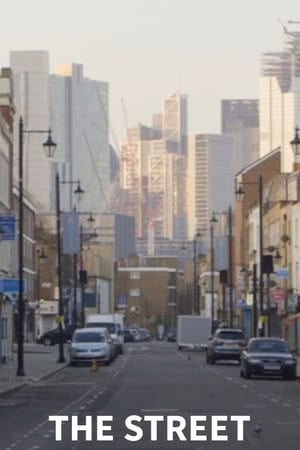
The Street
The baker, the pie-maker and the diminished long-term community of Hoxton Street face gentrification in this compelling portrait of a rapidly changing London.
2019
I Am Gentrification. Confessions of a Scoundrel
Is the city of Zurich suffering from ‘density stress’? What is it like to live in mega cities such as São Paulo, Mexico City and Tiflis? Filmmaker Thomas Haemmerli broaches the topics of city development, architecture, density, housing market, xenophobia and gentrification from an autobiographical perspective. The path of his life has led him from a childhood in the villa district of Zürichberg, through his teenage years as squatter to flat shares, yuppie apartments and finally second homes in various cities. Only recently having become a dad, he plans to further enhance Zurich’s price appreciation by purchasing a huge, extended city apartment… This multifaceted essay not only humorously questions the filmmaker’s decisions, but also those of the right-wing conservatives, who are afraid of losing their space to immigrants, and the political left, who fail to embrace modern-age architecture.
2018
One Big Home
On the tiny island of Martha's Vineyard, where presidents and celebrities vacation, trophy homes threaten to destroy the islands unique character. Twelve years in the making, One Big Home follows one carpenters journey to understand the trend toward giant houses. When he feels complicit in wrecking the place he calls home, he takes off his tool belt and picks up a camera.
2017
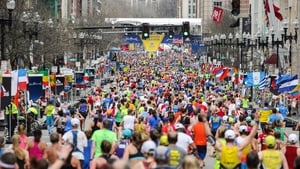
Boston
The history of the Boston Marathon from its humble origins starting with only 15 runners, to the first female runners, through the tragedy in 2013, and ultimately the triumph of 2014.
2017
Anonymous
A short film about the changing face of London Soho and the implications of gentrification on Mimi, an aging transvestite.
2017

Rikers
This film from Bill Moyers is the first documentary to focus exclusively on people formerly detained in New York City’s notorious Rikers Island Jail. They tell their compelling stories direct to the camera, revealing the violent arc of the Rikers experience – from the trauma of entry to extortion and control by inmates, to oppressive corrections officers, violence and solitary confinement.
2016

Playing for the Mob
The story of how mobster Henry Hill - played by Ray Liotta in Martin Scorsese 1990 classic, Goodfellas - helped orchestrate the fixing of Boston College basketball games in the 1978-79 season. The details of that point-shaving scandal are revealed for the first time on film through the testimony of the players, the federal investigators and the actual fixers. Playing For The Mob may be set in the seemingly golden world of college basketball, but like Goodfellas, this is a tale of greed, betrayal and reckoning. Ultimately, they both share the same message: With that much money at stake, you can't trust anybody.
2014
Fenway Park: The Golden Age
This 100-year celebration has rare footage of Red Sox southpaw Babe Ruth, Jimmie Foxx and Lefty Grove. This superb documentary bridges the gap to Ted Williams, whose hitting heroics are captured in living color along with the history of Fenway Park itself, from Opening Day, 1912, through the "Impossible Dream" season of 1967.
2012
That World Is Gone: Race and Displacement in a Southern Town
Kathy's family left on a Saturday morning in 1965. The rumble of bulldozers echoed through the neighborhood, and her block was empty. Federally-funded urban renewal had arrived in Charlottesville, scattering dozens of families like Kathy's. The once-vibrant African American community, built by formerly enslaved men and women who had secured a long-denied piece of the American dream, disappeared.
2010
Life After People
In this special documentary that inspired a two-season television series, scientists and other experts speculate about what the Earth, animal life, and plant life might be like if, suddenly, humanity no longer existed, as well as the effect humanity's disappearance might have on the artificial aspects of civilization.
2008
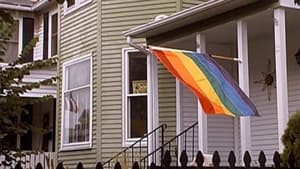
Flag Wars
Filmed over four years, this documentary focuses on the impacts of gentrification as gay white professionals move into a largely black working-class neighborhood in Columbus, Ohio.
2003
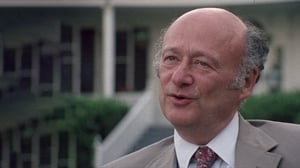
Empire City
A film essay contrasting the modern metropolis with its "golden age" from 1830-1930, with the participation of some of New York's leading political and cultural figures. Made at a time when the city was experiencing unprecedented real estate development on the one hand and unforeseen displacement of population and deterioration on the other. Empire City is the story of two New Yorks. The film explores the precarious coexistence of the service-based midtown Manhattan corporate headquarters with the peripheral New York of undereducated minorities living in increasing alienation.
1985
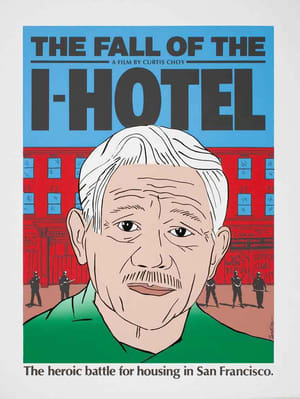
The Fall of the I-Hotel
The Fall of the I-Hotel brings to life the battle for housing in San Francisco. The brutal eviction of the International Hotel's tenants culminated a decade of spirited resistance to the razing of Manilatown. The Fall of the I-Hotel works on several levels. It not only documents the struggle to save the I-Hotel, but also gives an overview of Filipino American history.
1983