Watch Red and Black (1942) Online Free
Since childhood, Luisa and Miguel have always been good friends; but several years later, as adults, when Spain faces the abyss of the Civil War (1936-1939), they support ideologically opposed camps.
Cast
Conchita Montenegro, Ismael Merlo, Quique Camoiras, Luisa España, Ana de Siria, Emilio G. Ruiz, José Sepúlveda, Rafaela Satorrés
More Like This

The Girls
Four lucid grandmothers tell their story forgotten by history: the militancy and resistance of the young women of the leftist youth against the dictatorship of Marcos Pérez Jiménez.
2014
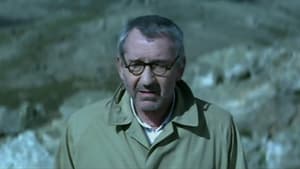
Paseo
2007

The Lives of Others
In 1984 East Berlin, dedicated Stasi officer Gerd Wiesler begins spying on a famous playwright and his actress-lover Christa-Maria. Wiesler becomes unexpectedly sympathetic to the couple, and faces conflicting loyalties when his superior takes a liking to Christa-Maria.
2006

Anbe Sivam
Anbarasu, young and arrogant, and Nallasivam, damaged - physically but not spiritually - by life, are thrown together by circumstances, and find that they are in some ways bound together by fate.
2003
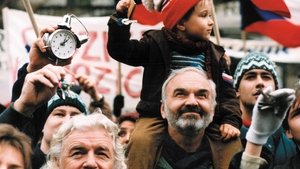
Kolya
After a fictitious marriage with a Russian emigrant, Cellisten Louka, a Czech man, must suddenly take responsibility for her son. However, it’s not long before the communication barrier is broken between the two new family members.
1996
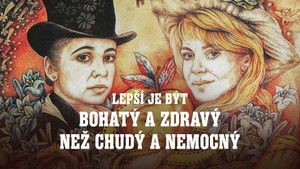
It's Better to Be Healthy and Wealthy than Poor and Sick
A satiric tragi-comedy about two women and their lover Robert who is an emigrant that keeps coming back. This film shows chaotic post-communist Europe after the fall of totalitarianism. Two opposite characters, women, meet during the Velvet Revolution in November 1989. Intellectual dissident Nona and a Communist secret police boss’ mistress Ester. They meet at an anti-regime demonstration and become friends. They don’t want anything to do with politics, both want to get married and have kids, but also get rich. Crazy plans and risky attempts to realize their shared dreams land them in many sticky situations in the post-revolution chaos. Too much money gets in the way of the power of friendship.
1992

It Happened on This Very Day
Belgrade in 1963. In a yard surrounded by buildings, a group of young people of different backgrounds and social status, but of similar views about love and self-affirmation, spend their time together. Their friendship is dyed with various events typical for socialism, such as working actions or Youth Day's parade. All what happens within this yard may become an allegory of one generation's destiny.
1987
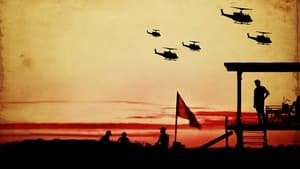
The Killing Fields
New York Times reporter Sydney Schanberg is on assignment covering the Cambodian Civil War, with the help of local interpreter Dith Pran and American photojournalist Al Rockoff. When the U.S. Army pulls out amid escalating violence, Schanberg makes exit arrangements for Pran and his family. Pran, however, tells Schanberg he intends to stay in Cambodia to help cover the unfolding story — a decision he may regret as the Khmer Rouge rebels move in.
1984
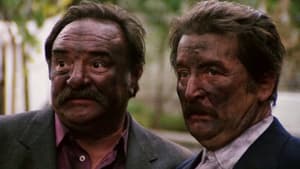
Balkan Spy
Convinced that his subtenant is a spy and an enemy of the state, Ilija Čvorović falls into deep paranoia which leads to an absurd and destructive chain of events.
1984
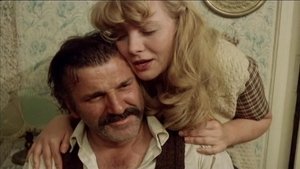
The Red Horse
A joint fight of Macedonian and Greek people against the fascist monarchical government of Greece ended with their defeat in 1949, after many years of bloodshed. Many members of the democratic party DAG, as well as the innocent inhabitants experienced the destiny of political exile.
1981

Astray
In the communist Romania of Nicolae Ceausescu, a young Romanian woman marries a German citizen just to leave the country.
1978

Man of Marble
A young Polish filmmaker sets out to find out what happened to Mateusz Birkut, a bricklayer who became a propaganda hero in the 1950s but later fell out of favor and disappeared.
1977

Breakfast with the Devil
In 1947, among the ruins of war and in anticipation of a catastrophic flood, the locals of a Vojvodina village find themselves caught between the devastation of their livelihoods and the demands of the new Communist authorities.
1971
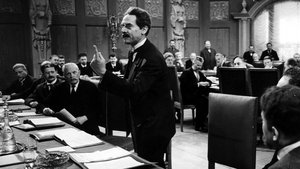
As Long as There’s Life in Me
This is part one of a two-part biopic about Karl Liebknecht. In 1914, Germany is arming itself for war. Karl Liebknecht, left-wing revolutionary Social Democrat, workers’ leader and a virulent antimilitarist, is one among 110 SPD members of Parliament who vote against approving war loans. From then on, he is considered un-German and a traitor to the fatherland, and his own party’s leadership turns against him. Despite threats, Liebknecht speaks up against the war and writes the manifesto “The Main Enemy Is at Home.” Even when he is arrested and charged with treason, he does not surrender.
1965
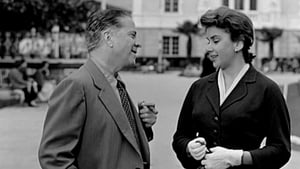
Con la vida hicieron fuego
The sailor Quico Carola, alleged war hero of the Francoist side, emigrated to America and amassed a great fortune. Fifteen years later he returns to Ferrera (Asturias), his homeland, in search of a wife who makes him forget his late girlfriend. There he will see his old friends and Armandina, the widow of a Republican shot during the Spanish civil war.
1959
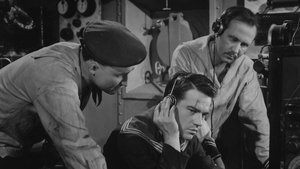
The Sailor's Song
A film about the historical uprising of the seamen in Kiel: During the Russian October Revolution of 1917, German and Russian soldiers start to solidarize with each other. By disarming the officers, machinist Henne Lonke and stoker Jens Kasten prevent the attack on a Russian freighter. When German admiralty gives out orders for operation "Nibelungen", which would lead the German fleet into a suicidal attack against England and quell the revolutionary spirit, seamen and soldiers from different political backgrounds unite in protest.
1958

The Fallen Sparrow
Imprisoned during the Spanish Civil War, John "Kit" McKittrick is released when a New York City policeman pulls some strings. Upon returning to America, McKittrick hears that a friend has committed suicide, and he begins to smell a rat. During his investigation, McKittrick questions three beautiful women, one of whom has a tie to his refugee past. Pursued by Nazi operatives, McKittrick learns of the death of another friend, and begins to suspect the dark Dr. Skaas.
1943
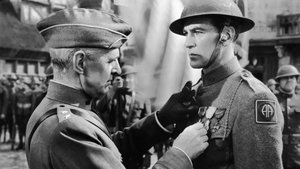
Sergeant York
Alvin York a hillbilly sharpshooter transforms himself from ruffian to religious pacifist. He is then called to serve his country and despite deep religious and moral objections to fighting becomes one of the most celebrated American heroes of WWI.
1941
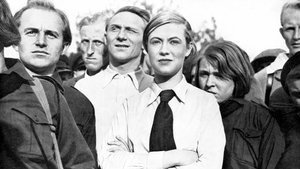
Kuhle Wampe or Who Owns the World?
Kuhle Wampe takes place in early-1930s Berlin. The film begins with a montage of newspaper headlines describing steadily-rising unemployment figures. This is followed by scenes of a young man looking for work in the city and the family discussing the unpaid back rent. The young man, brother of the protagonist Anni, removes his wristwatch and throws himself from a window out of despair. Shortly thereafter his family is evicted from their apartment. Now homeless, the family moves into a garden colony of sorts with the name “Kuhle Wampe.”
1932
Dík válečného sirotka
1916