Watch Recuerdos del futuro: Raúl Pellegrín (1992) Online Free
No overview available.
Cast
Frente Patriótico Manuel Rodríguez, Augusto Pinochet, Raúl Alejandro Pellegrin Friedmann
More Like This
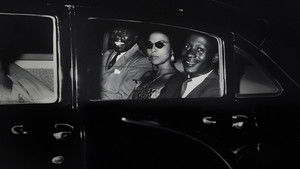
Soundtrack to a Coup d'Etat
Jazz and decolonization are intertwined in a powerful narrative that recounts one of the tensest episodes of the Cold War.
2024
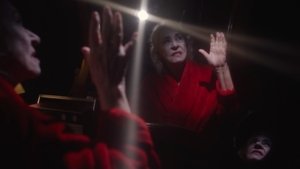
Inês
Triggered by congressman Jair Bolsonaro’s homage to the torturer Carlos Alberto Brilhante Ustra, during president Dilma Rousseff’s impeachment hearing in 2016, Inês, a 70 year-old actress, starts a fragmented narrative of her own history, transforming the memories of her youth as an artist and guerrilla fighter during the military dictatorship into performances. Using as a starting point her participation in Teatro Oficina's 1967 production of the play "King of The Candle", by Oswald de Andrade, Inês creates a manifesto in defense of art's political strength, intertwined with memories of lost love and resistance.
2020
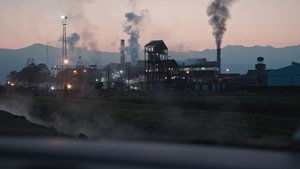
Corporate Accountability
Images of Argentinian companies and factories in the first light of day, seen from the inside of a car, while the director reads out documents in voiceover that reveals the collusion of the same concerns in the military dictatorship’s terror.
2020
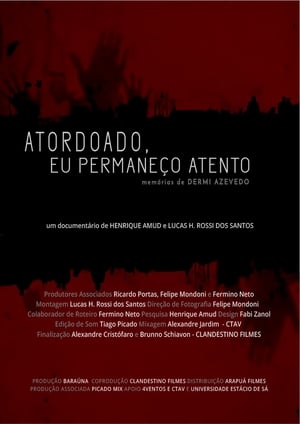
Stunned, I Remain Alert
Journalist Dermi Azevedo has never stopped fighting for human rights and now, three decades after the end of the military dictatorship in Brazil, he's witnessing the return of those same practices.
2020

Coup 53
Tehran, Iran, August 19, 1953. A group of Iranian conspirators who, with the approval of the deposed tyrant Mohammad Reza Pahlavi, have conspired with agents of the British MI6 and the US CIA, manage to put an end to the democratic government led by Mohammad Mosaddegh, a dramatic event that will begin the tragic era of coups d'état that, orchestrated by the CIA, will take place, over the following decades, in dozens of countries around the world.
2019
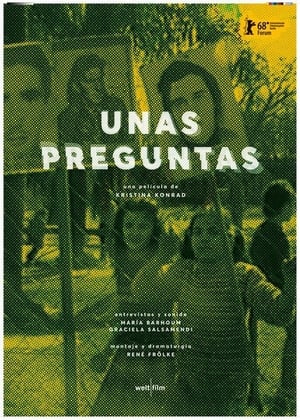
One or Two Questions
In 1986, the Uruguayan Parliament passed a law granting amnesty for all crimes and human rights violations committed by the military and police during the dictatorship (1973-85). This law of impunity prevented the clarification demanded by the relatives of those who had disappeared and been murdered by the former regime. A public initiative arose calling for a referendum in which the law be subject to the vote of the people. Unas preguntas uses U-matic footage, mostly of interviews recorded on the streets of Uruguay between 1987 and 1989, to present a time capsule of the period.
2018

Messenger on a White Horse
Explores the life and work of English journalist Robert Cox, the former editor of "The Buenos Aires Herald" daily newspaper, whose investigative reporting in the late 1970s exposed the shocking human rights crimes of Argentina's military dictators.
2017
Adriana's Pact
Lissette's favorite aunt Adriana, who lives in Australia, is arrested in 2007 while visiting her family in Chile and accused of having worked for dictator Pinochet's notorious secret police, the DINA, and of having participated in the commission of state crimes. When Adriana denies these accusations, Lissette begins to investigate her story in order to film a documentary about her.
2017

Tudo é Irrelevante. Hélio Jaguaribe
2017
Return of a President
In a fascinating geopolitical drama, Danish filmmaker Mik-Meyer closely follows Ravalomanana as he attempts to return from exile in South Africa to Madagascar, under the threat of arrest and bodily harm.
2017
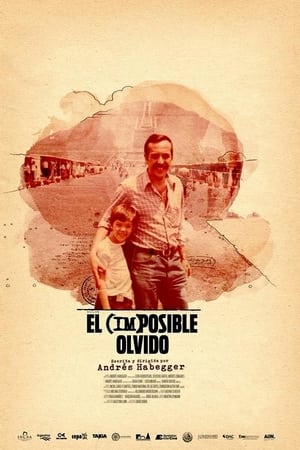
El (im)posible olvido
Argentine filmmaker Andrés Habegger embarks on a deeply personal journey in this documentary, seeking to recover memories and information about his father, Norberto Habegger, a journalist and Montonero activist who disappeared in Brazil in 1978 during a joint operation between the Argentine and Brazilian military. Traveling to places that were part of his life and revisiting old photos and his childhood diaries, the director fills in the gaps in a family history that was interrupted.
2016
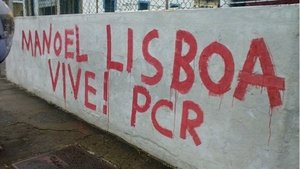
Manoel Lisboa: Herói da Resistência à Ditadura
2016

Nazis in the CIA
Florian Hartung and Dirk Pohlmann have reconstructed a previously unknown dimension of the collaboration between Nazis and the CIA in the Cold War. Drawing upon recently released documents, the film exposes for the first time a perfidious, worldwide net that reaches deep into the power structures of the Federal Republic of Germany. Lending their authority to the fact-finders’ mission are high-ranking statesmen, journalists and historians.
2013
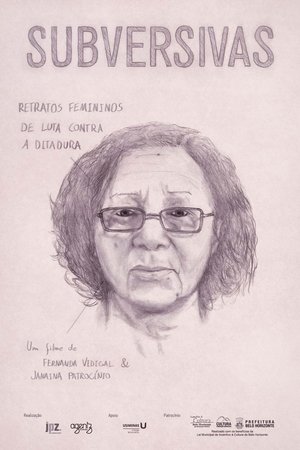
Subversivas
"Subversivas" is a documentary that reveals the brazilian military dictatorship from the perspective of women. Teresa Angelo, Gilse Cosenza, Thereza Vidigal, Angela Pezzuti and Delsy Gonçalves joined the resistance to the military regime in different ways. Their memories bring out events that marked that time and their life. These statements reveal their effort for freedom and democracy not only in political actions, but also in their family, work and everyday relationships, imbued with a belief and search for a fair and free country.
2013
American Coup
AMERICAN COUP tells the story of the first coup ever carried out by the CIA - Iran, 1953. Explores the blowback from this seminal event, as well as the coup's lingering effects on the present US-Iranian relationship. Includes a segment on the 1979 Iranian Hostage Crisis and its relation to the 1953 coup. Concludes with a section on the recent Iranian presidential election. Contains interviews with noted Middle East experts and historians and prominent public figures such as Stephen Kinzer (author, All The Shah's Men), Prof. Ervand Abrahamian, Trita Parsi, Col. Lawrence Wilkerson, Ted Koppel and Rep. Ron Paul of Texas. With Iranian cinematography by James Longley.
2010

Reparation
In 1968, Orlando Lovecchio was made victim of a guerilla's bomb terrorist attack, which main objective was to fight against the Military Regime. Orlando lost one leg after the world-reckoned attack against the U.S. Consulate in Sao Paulo.
2010
O Pasquim: A Subversão do Humor
2004

When the Mountains Tremble
A documentary on the war between the Guatemalan military and the Mayan population, with first hand accounts by Nobel Peace Prize winner Rigoberta Menchú.
1983

Freedom of Inês Etienne Romeu
August 29, 1979, Talavera Bruce Penal Institute, Bangu, Rio de Janeiro. After serving eight years in prison, Inês Etienne Romeu, the only survivor of the "House of Death" in Petrópolis and the first political prisoner sentenced to life in prison in Brazil, left prison benefiting from Amnesty. Norma Bengell filmed this moment: from the prison door to her home with her family, Inês was welcomed by family, friends and members of the Brazilian Amnesty Committee, in what marked the first act of the historic denunciation that Inês would carry out against her tormentors and the Military Regime.
1979
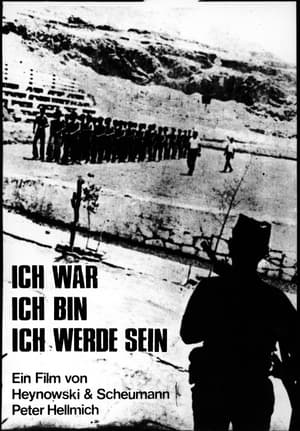
I Was, I Am, I Will Be
In the spring of 1974, a camera team from Studio H&S succeeded against the explicit orders of the Junta’s Chancellery, entered into two large concentration camps in the north of the country - Chacabuco and Pisagua - leaving with filmed sequences and sound recordings.
1974