Watch Putin's Kiss (2011) Online Free
Masha Drokova is a rising star in Russia's popular nationalistic youth movement, Nashi. A smart, ambitious teenager who – literally – embraced Vladimir Putin and his promise of a greater Russia, her dedication as an organizer is rewarded with a university scholarship, an apartment, and a job as a spokesperson. But her bright political future falters when she befriends a group of liberal journalists who are critical of the government, including blogger Oleg Kashin, who calls Nashi a "group of hooligans," and she's forced to confront the group's dirty – even violent – tactics.
Cast
Oleg Kashin, Masha Bucher, Garry Kasparov, Dmitry Medvedev, Boris Nemtsov, Vladimir Putin, Ilya Yashin
More Like This

peace love (unicorns) & communism
Chatting with another recent graduate, a former student activist learns about the controversial origin of a now-beloved campus group. she embarks on a journey through the recent past, weaving conversations with a vast ensemble of young organizers into a tapestry of disruption and determination. political, personal and bursting with youthful exuberance, peace love (unicorns) and communism is a homegrown chronicle of a decade of movements at McMaster University. as past struggles echo in the present, the film poses an urgent question to today's rising generation: do you believe that we will win?
2024

God & Country: The Rise of Christian Nationalism
Examines the implications of Christian Nationalism, how it distorts not only our constitutional republic, but Christianity itself, and asks the question: What happens when a faith built on love, sacrifice, and forgiveness grows political tentacles, conflating power, money, and belief into hyper-nationalism?
2024
The Unmaking of Boris Johnson
A deep dive surrounding the scandals and events surrounding Boris Johnson that lead to his resignation
2022

Radio Silence
Mexico, March 2015. Carmen Aristegui, incorruptible journalist, has been fired from the radio station where she has worked for years. Supported by more than 18 million listeners, Carmen continues her fight. Her goal: raising awareness and fighting against misinformation. The film tells the story of this quest: difficult and dangerous, but essential to the health of democracy. A story in which resistance becomes a form of survival.
2021

CORONA.FILM - Prologue
As the first part of our investigation, the CORONA.FILM prologue will delve into the science behind the pandemic. Starting at the very beginning, we shine a light on the responses. The aim is not to point the finger; our aim is to tell the whole story in all its complexity, as we believe that justice cannot prevail if only one side of the story is told.
2021

School Number 3
In the familiar surroundings of their everyday lives, they talk about things that matter to them, about experiences that move them, about first love and loss, hopes and fears. 13 adolescents from a school in Donbass which was destroyed during the war in Ukraine, and subsequently rebuilt, share themselves in front of the camera. 13 lives inhabiting an intermediary space, both emotionally and socially.
2017

A Better Man
Following a series of intimate conversations between a former couple who lived through two years of domestic abuse, A Better Man infuses new energy and possibility into the movement to end violence against women.
2017
Silvered Water
Shot by a reported “1,001 Syrians” according to the filmmakers, SILVERED WATER, SYRIA SELF-PORTRAIT impressionistically documents the destruction and atrocities of the civil war through a combination of eye-witness accounts shot on mobile phones and posted to the internet, and footage shot by Bedirxan during the siege of Homs. Bedirxan, an elementary school teacher in Homs, had contacted Mohammed online to ask him what he would film, if he was there. Mohammed, working in forced exile in Paris, is tormented by feelings of cowardice as he witnesses the horrors from afar, and the self-reflexive film also chronicles how he is haunted in his dreams by a Syrian boy once shot to death for snatching his camera on the street.
2014
Pussy Versus Putin
In 2012 two members of anarchistic female band Pussy Riot were sentenced to two years in a Mordovian labor camp for "hooliganism motivated by religious hatred". Russian film collective Gogol’s Wives follow each step of the feminist punk band’s battle against Putin including their first disruptive performances on a trolley bus, shooting a video about transparent elections, a controversial performance in a Red Square cathedral, and footage shot in a jail cell. Support comes from many corners including Madonna who painted the words "Pussy Riot" on her back and wore a balaclava during her Moscow show. The documentary portrays the grim state of present-day Russia, a country starkly divided between conservatism and anarchy. Pussy Riot believes that art has to be free and they're willing to take it to extremes. "Pussycat made a mess in the house," they say, and the house is Russia. The filmmakers do not seek to moralize, they simply edit events and leave viewers to draw their own conclusions.
2013

Vera Klement: Blunt Edge
As her 80th birthday is approaching, Vera Klement, an oil painter in Chicago, adamantly starts yet another new figure painting: a portrait of an artist under oppression, an homage to Russian composer, Dmitri Shostakovitch.
2010

The 11th Hour
A look at the state of the global environment including visionary and practical solutions for restoring the planet's ecosystems. Featuring ongoing dialogues of experts from all over the world, including former Soviet Prime Minister Mikhail Gorbachev, renowned scientist Stephen Hawking, former head of the CIA R. James Woolse
2007
Karaoğlan: Bir Ecevit Belgeseli
2004
Crimes of Honour
Throughout the Islamic world, each year hundreds of women are shot, stabbed, strangled or burned to death by male relatives because they are thought to have “dishonoured” their families. They may have lost their virginity, refused an arranged marriage or left an abusive husband. Even if a woman is raped or merely the victim of gossip, she must pay the price. Crimes of Honour documents the terrible reality of femicide – the belief that a girl’s body is the property of the family, and any suggestion of sexual impropriety must be cleansed with her blood. We meet women in hiding from their families, a brother who describes his reasons for killing the sister he loved, and a handful of women who have committed themselves to the protection of young women in danger of losing their lives.
1999

Princess Diana: The Mourning After
In "Diana: The Mourning After" Christopher Hitchens sets out to examine the bogusness of "a nation's grief", tries to uncover the few voices of sanity that cut against the grain of contrived hysteria. His findings suggested that the collective hordes of emotive Dianaphiles sobbing in the streets were not only encouraged but emulated by the media. In the aftermath of Diana's death a three-line whip was enforced on newspapers and on TV, selling the sainthood line wholesale. The suspicion was that journalists, like the public, greeted the death as a chance to wax emotional in print, as a change from the customary knowing cynicism, to wheel out all those portentous phrases they'd been saving up for the big occasion. Sadly, they just seemed to be showboating; the eulogies, laments and tear-soaked platitudes ringing risibly hollow.
1998
Zapatista Women
April 1994 in the Lacandona Jungle, Chiapas, México. The Zapatista women talk about the living conditions of Mexican indigenous populations and the life of peasant women. They explain the reasons for their struggle and their uprising.
1995

Destiny in Space
Travel alongside the astronauts as they deploy and repair the Hubble Space Telescope, soar above Venus and Mars, and find proof of new planets and the possibility of other life forming around distant stars.
1994
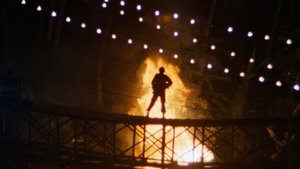
Hearts of Darkness: A Filmmaker's Apocalypse
A chronicle of the production problems — including bad weather, actors' health, war near the filming locations, and more — which plagued the filming of Apocalypse Now, increasing costs and nearly destroying the life and career of Francis Ford Coppola.
1991

A Song for Tibet
Filmed in the Indian Himalayas and in Canada, A Song for Tibet tells the dramatic story of the efforts by Tibetans in exile, including the Dalai Lama, to save their homeland and preserve their heritage against overwhelming odds. Since the invasion of their territory by China in the late 1950s, Tibetans have been struggling for cultural and political survival.
1991

How Good to See You Alive
Four years after a military coup overthrew the Brazilian government in 1964, all civil rights were suspended and torture became a systematic practice. Using a mix of fiction and documentary this extraordinary film is a searing record of personal memory, political repression and the will to survive. Interviews with eight women who were political prisoners during the military dictatorship are framed by the fantasies and imaginings of an anonymous character, portrayed by actress Irene Ravache.
1989
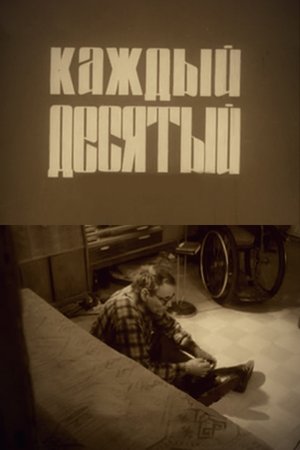
Every Tenth
A short documentary on the plight of people with disabilities in the Soviet Union.
1988