Watch Pugin: God's Own Architect (2012) Online Free
Augustus Northmore Welby Pugin is far from being a household name, yet he designed the iconic clock tower of Big Ben as well as much of the Palace of Westminster. The 19th-century Gothic revival that Pugin inspired, with its medieval influences and soaring church spires, established an image of Britain which still defines the nation. Richard Taylor charts Pugin's extraordinary life story and discovers how his work continues to influence Britain today.
Cast
Richard Taylor
More Like This
Conexões da Noite: Moda e Subcultura Paulistana
2024

Notre-Dame Résurrection
2024
Eiffel's Race to the Top
Behind the iconic Eiffel Tower lies the story of an incredible challenge to erect a thousand-foot tower that went far beyond a design competition, and marked a major turning point in engineering history. It was the beginning of radical transformation where iron was pitted against stone, engineering against architecture, and modern design against ancients. Press campaigns, lobbying, public conferences, denigration of opposing projects, bragging about big names - all participants engaged in a fierce battle without concession. Using 3D recreations, official sources (reports, letters, drawings...) and intimate archives obtained from their descendants, this film will bring to life this vertical race through a fresh and visual way to mark the centenary of Eiffel death.
2023

Listen to Britain
This spiritual successor to the 1942 original explores the vibrant yet tumultuous growth of Britishness over the past century. The film gives voices to a new reality of Britain, one that has been formed through the flourishing multiculturalism the country has seen since the original film was made. Academics and artists are interviewed to explore both past and present, and consider what a future Britain may look like.
2022
Under Tomorrow's Sky
Winy Maas, co-founder of MVRDV architects, always has 100 projects going at once. Documentary filmmaker Jan Louter followed him for two years to make "Under Tomorrow's Sky", a candid and open-hearted look at the highs and lows of the architecture profession.
2021
The Genius of Gothic Art
Death and the devil, nudity and eroticism, horror in blazing colours, Gothic art cast a spell over people 500 years ago. In these image-poor times, art deliberately and skilfully played with the emotions of the viewer, triggering fear, devotion, but also rapture. Art documentary on German gothic art of the late-middle ages.
2021
Ztracený architekt Ernst Wiesner
2020
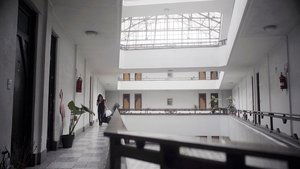
The Hermits
In the midst of the chaos of México City, a group of eight bachelor millennials who call themselves ´The Hermits´, open the doors to their tiny apartments in the historic Ermita Building, in the yet-to-be gentrified neighborhood of Tacubaya, and share their life experiences in a time when precarity changes the way in which we love, feel and relate to each other. As we explore the homes of these eight neighbors, we also witness their personalities intersect in a Whatsapp chat, a virtual space that functions as a supporting system that helps them face the adversities that living alone in this city brings.
2019
Britain's Greatest Invention
BBC Two takes us inside the world's biggest invention time capsule - the Science Museum vaults - and asks the nation to vote for Britain's Greatest Invention.
2017
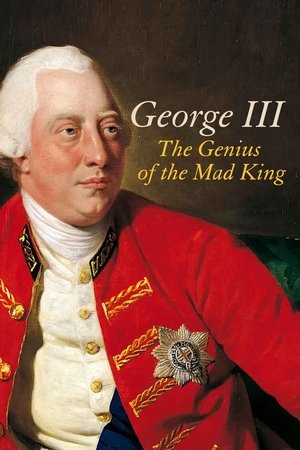
George III: The Genius of the Mad King
After 200 years under lock and key, all the personal papers of one of our most important monarchs are for the first time seeing the light of day. In the first documentary to gain extensive access to the Royal Archives, Robert Hardman sheds fascinating new light on George III, Britain's longest reigning king. George III may be chiefly remembered for his madness, but these private documents reveal a monarch who was a political micromanager and a restless patron of science and the arts, an obsessive traveller who never left southern England yet toured the world in his mind and a man who was driven (sometimes to distraction) by his sense of duty to his family and his country. Featuring Simon Callow and Sian Thomas as the voices of King George and Queen Charlotte.
2017
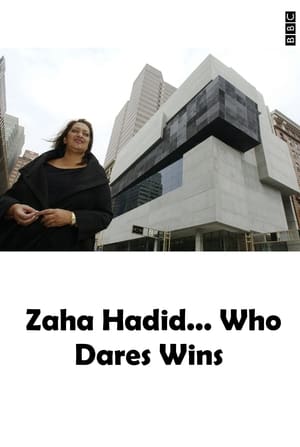
Zaha Hadid... Who Dares Wins
Alan Yentob profiles the most successful female architect there has ever been, the late Zaha Hadid, who designed buildings around the globe from Austria to Azerbaijan.
2013
Tales of Television Centre
Various actors, presenters, directors and other staff who have worked at the iconic BBC Television Centre at Shepherd's Bush in London reminisce about their time there.
2012
Gaudi, Le dernier bâtisseur
2010
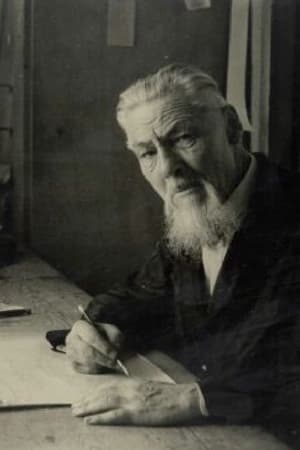
Architect Joze Plecnik: 1872-1957
Plečnik in photographs, Plečnik's house, Trnovo bridge, Trnovo port, Ljubljana castle, shoemaking bridge, triple bridge, market, lock, church of St. Jožef, church in Šiška, Church of Cyril and Methodius in Bežigrad, football stadion, baptistery of the church in Črnuče, church at Barje, NUK, Roman wall, Križanke, Vegova, Peglezen, Tivoli, Chamber of Crafts, mutual insurance company, Žale.
2008

National Vampire
National Vampire is a feature-length documentary that explores vampire culture in the United States. To achieve this, the filmmakers spent more than two years traveling around the country, attending vampire-related events, and interviewing dozens of people involved in the vampire community. Shooting locations include a Vampire’s Ball held in New Orleans each Halloween, a vampire tour of San Francisco, and a New York City shop that “transforms” people into vampires. Also featured are a vampire “dentist” who makes fangs for a living, vampire role playing gamers in Dayton, Ohio, a vampire-themed magician, and a bloodthirsty Texas couple that claims to be the real thing. Going beyond the surface, National Vampire also explores a number of subcultures that overlap the vampire community, including the goth music scene, bondage and S&M, and blood fetishists who take part in piercing and full-body suspension rituals.
2006
My Architect: A Son's Journey
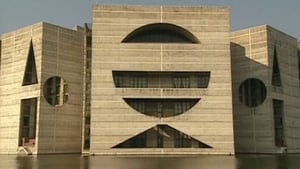
World-famous architect Louis Kahn (Exeter Library, Salk Institute, Bangladeshi Capitol Building) had two illegitimate children with two different women outside of his marriage. Son Nathaniel always hoped that someday his father would come and live with him and his mother, but Kahn never left his wife. Instead, Kahn was found dead in a men's room in Penn Station when Nathaniel was only 11.
2003
Mies
No understanding of the modern movement in architecture is possible without knowledge of its master builder, Mies van der Rohe. Together with documentation of his life, this film shows all his major buildings, as well as rare film footage of Mies explaining his philosophy. Phyllis Lambert relates her choice of Mies as the architect for the Seagram building. Mies's achievements and continuing influence are debated by architects Robert A.M. Stern, Robert Venturi, and Philip Johnson, by former students and by architectural historians. Mies is seen in rare documentary footage.
1986
Antonio Gaudí
Catalan architect Antonio Gaudí (1852-1926) designed some of the world's most astonishing buildings, interiors, and parks; Japanese director Hiroshi Teshigahara constructed some of the most aesthetically audacious films ever made. With camera work as bold and sensual as the curves of his subject's organic structures, Teshigahara immortalizes Gaudí on film.
1984
Maestro Plecnik
Documentary showing buildings made by great architect Joze Plecnik in Prague, Wien, Ljubljana...
1953
Mistr třeboňský
Documentary film about Gothic painting and its representatives.
1950