Watch Picturing the Obamas (2022) Online Free
Viewers learn from curators, journalists and art critics about the ways in which the Obamas’ portraits commissioned by the Smithsonian’s National Portrait Gallery disrupt traditional presidential portraiture and spur museums to reach new audiences. The paintings of the ex-commander in chief and first lady, by artists Kehinde Wiley and Amy Sherald, were revealed to much fanfare at the National Portrait Gallery in 2018. The portraits — which drew record attendance to the Washington art museum — have since traveled the country as part of a nationwide exhibition.
Cast
Kehinde Wiley, Barack Obama, Michelle Obama
More Like This

Melania
Offering unprecedented access to the 20 days leading up to the 2025 Presidential Inauguration — through the eyes of the First Lady-elect herself — step inside Melania Trump's world as she orchestrates inauguration plans, navigates the complexities of the White House transition, and reenters public life with her family. With exclusive footage capturing critical meetings, private conversations, and never-before-seen environments, Mrs. Trump returns to one of the world's most powerful roles.
2026

The First Lady
2024
The Revenge of Bernadette Chirac
2023

JFK Revisited: Through the Looking Glass
Thirty years after the release of his film JFK (1991), filmmaker Oliver Stone reviews recently declassified evidence related to the assassination of President John F. Kennedy, which took place in Dallas on November 22, 1963.
2021
Storming the Capitol: The Inside Story
Captures the incident of January 6, 2021, when scores of Trump supporters clashed with police, interrupting a constitutional process by Congress to affirm the victory of the then President-elect Biden and Vice President-elect Kamala Harris in the election.
2021
Corporate Accountability
Images of Argentinian companies and factories in the first light of day, seen from the inside of a car, while the director reads out documents in voiceover that reveals the collusion of the same concerns in the military dictatorship’s terror.
2020
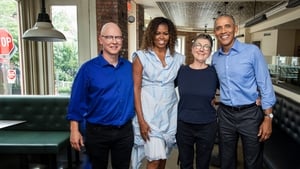
American Factory: A Conversation with the Obamas
Barack and Michelle Obama talk with the directors of the documentary American Factory about the importance of storytelling and the impact of their film.
2019
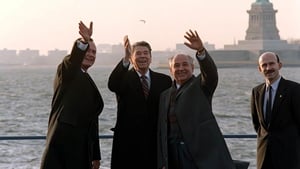
The Reagan Show
Comprised entirely of archival footage taken during those pre-reality-television years, The Reagan Show looks at how Ronald Reagan redefined the look and feel of what it means to be the POTUS.
2017
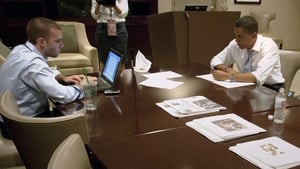
The Obama Years: The Power of Words
Barack Obama launched into our national consciousness at the 2004 Democratic National Convention and ever since, he's delivered messages of patriotism, unity, and hope through the power of words. But of all the speeches he's given, six in particular may define his legacy as, in historian Doris Kearns Goodwin's words, "one of the best writers and orators in the presidency." Interviews with eminent historians and key figures in his writing process give rare insights into these iconic speeches, as well as the Obama presidency and the man himself.
2017
Fall of the Republic: The Presidency of Barack H. Obama
Fall Of The Republic documents how an offshore corporate cartel is bankrupting the US economy by design. Leaders are now declaring that world government has arrived and that the dollar will be replaced by a new global currency.
2009
Democracy Is ...
The film is a controversy on democracy. Is our society really democratic? Can everyone be part of it? Or is the act of being part in democracy dependent to the access on technology, progression or any resources of information, as philosophers like Paul Virilio or Jean Baudrillard already claimed?
2009
Boogie Man: The Lee Atwater Story
Boogie Man is a comprehensive look at political strategist, racist, and former Republican National Convention Committee chairman, Lee Atwater, who reinvigorated the Republican Party’s Southern Strategy to increase political support among white voters in the South by appealing to racism against African Americans. He mentored Karl Rove and George W. Bush and played a key role in the elections of Reagan and George H.W. Bush.
2008
Fired Up, Ready to Go
'Fired Up, Ready To Go' follows a number of hopeful and, above all, fanatical grassroots campaigners in New York who are committed to Obama's presidency. A documentary that does not look at Obama's closest associates, but rather at the people on the ground. People who sacrifice a lot to make Obama the first black president of the US.
2008
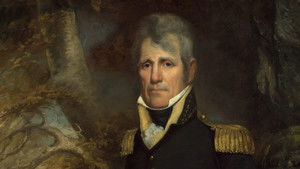
Andrew Jackson: Good, Evil & The Presidency
A fascinating account of the presidency of Andrew Jackson, who was both one of America's great presidents and a borderline tyrant. The seventh president shook up the glossy world of Washington, DC with his "common-man" methods and ideals, but also oversaw one of the most controversial events in American history: the forced removal of Indian tribes, including the Cherokees, from their homes.
2007
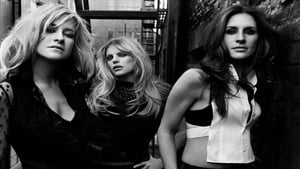
Dixie Chicks: Shut Up and Sing
Shut Up and Sing is a documentary about the country band from Texas called the Dixie Chicks and how one tiny comment against President Bush dropped their number one hit off the charts and caused fans to hate them, destroy their CD’s, and protest at their concerts. A film about freedom of speech gone out of control and the three girls lives that were forever changed by a small anti-Bush comment
2006
FDR: A Presidency Revealed
For twelve years he stood as America's 32nd President, a man who overcame the ravages of polio to pull America through the Great Depression and WWII. From his legendary Fireside Chats to his sweeping New Deal, Franklin Delano Roosevelt revolutionized the American way of life. FDR: A Presidency Revealed examines one of history's most compelling figures. Inspired by his cousin Teddy Roosevelt, Franklin D. Roosevelt rose to the nation's highest office during the depths of one of its darkest periods. A man of few words, he brought a nation together through his revolutionary Fireside Chats. He introduced vast reforms like Social Security and work relief for the unemployed. At the same time, his administration hid a dark underbelly teeming with covert maneuvers, spy rings, and powerful enemies.
2005
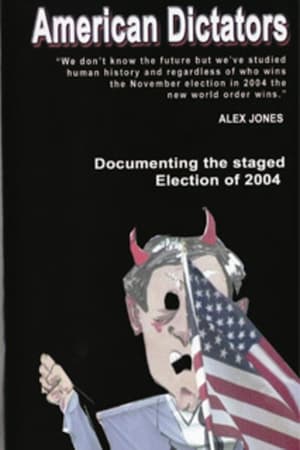
American Dictators: Staging of the 2004 Presidential Election
In Alex Jones' 11th feature documentary, made in 2004, Alex documents the major candidates in the staged 2004 United States presidential election.
2004
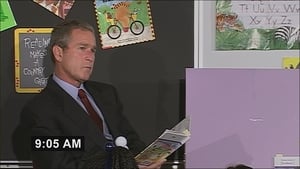
Fahrenheit 9/11
Michael Moore's view on how the Bush administration allegedly used the tragic events on 9/11 to push forward its agenda for unjust wars in Afghanistan and Iraq.
2004
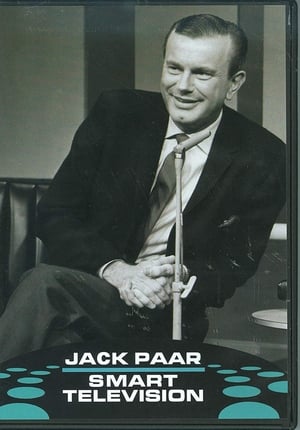
Jack Paar: Smart Television
PBS documentary examining the work of Jack Paar.
2003
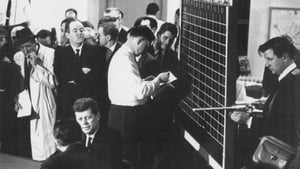
Primary
Primary is a documentary film about the primary elections between John F. Kennedy and Hubert Humphrey in 1960. Primary is the first documentary to use light equipment in order to follow their subjects in a more intimate filmmaking style. This unconventional way of filming created a new look for documentary films where the camera’s lens was right in the middle of what ever drama was occurring. Preserved by the Academy Film Archive in partnership with The Film Foundation in 1998.
1960