Watch Petals and Feathers (2020) Online Free
A roll of super 8 given to a first time filmmaker at the age of 68 by her son in law. She is asked to use the roll to take photos of her garden. She says the following about her film: "What do I see in my garden, through my windows? The plants and flowers that I love and the bird that I admire."
More Like This
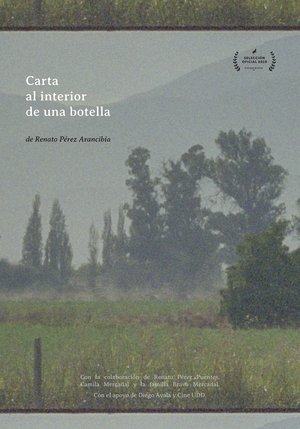
Carta al Interior de una botella
The meeting point between two comunication media: A letter written in 1929 -hidden inside the adobe walls of an old country house - and the shooting of the coutryside along the highway that connects two Chilean cities un 2018.
2019
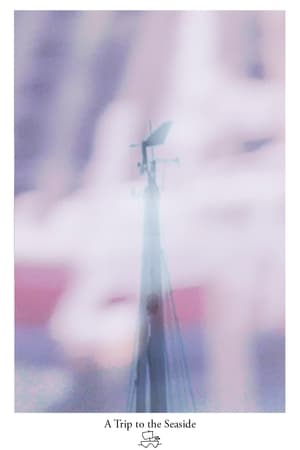
A Trip to the Seaside
Experimental short film on the excitement and rush of a day trip
2019
PLEH
An experimental journey through a year in the life of the director, using his always playing playlist to cross the boundaries of fiction and documentary. Through scenes of both comedy and tragedy, realistic documentary footage and experimental sequences of the director's environment and daily life we get a sometimes estranging image of a young man and also an intriguing insight in his mindset and how this translates to the imagery on screen.
2017
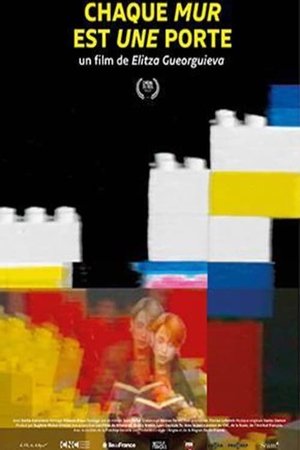
Every Wall is a Door
Drawing on VHS tapes of a programme hosted by her mother on Bulgaria’s national television, the filmmaker gives a pop-style and in-depth chronicle of the gentle – even “over-gentle” – 1989 revolution.
2017
State of Rest and Motion
This cine-portrait of New York City uses digital effects to turn the countless riders of the subway system into living, breathing paintings.
2017
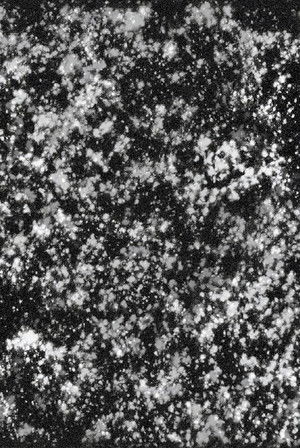
Keep That Dream Burning
Rainer Kohlberger applied various algorithms to extract the noise from a vast number of action films and used this to reduce the dramaturgy of the narrative to its essence. keep that dream burning oscillates between maximum abstraction and pure blur. Within the blurriness, objects form and disappear. The surface allows the space to be conceived.
2017
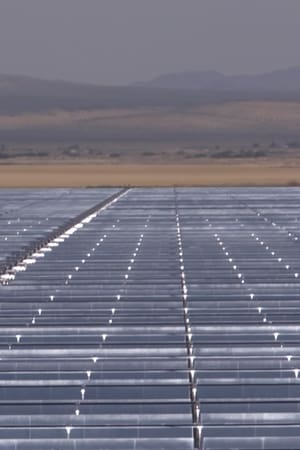
Irradiant Field
In the Mojave Desert, fields of solar panels follow the sun’s daily journey in perfect synchronicity.
2016
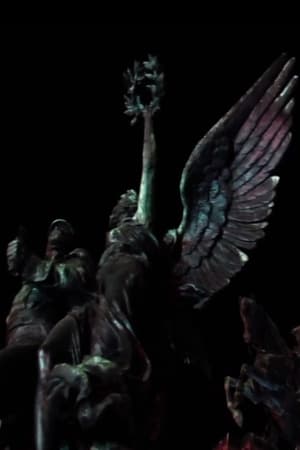
Stratigraphies
Sytratigraphies is a hyper kinetic masterpiece of a travelogue offering glimpses of scenes shot in your native Columbia, New York, Toronto and beyond. A female fantastic (Alexandra Gelis) knitting on the fly (subways, bankomats, beaches) and making audio recordings provides a throughline of sorts, as queer marriages give way to videogame palm trees, warm gatherings of friends are interwoven with public noticings, workers mostly, street hawkers and construction zones of the self. These lyrical interludes (in this movie the in-between is at the heart of the matter) are punctuated by rescanned YouTube interviews with authors/philosophers/scientists Jorge Luis Borges, Francisco Varela, Julio Cortazar, Beatriz Preciado and Gilles Deleuze. They muse briefly on creativity, exile, the biopolitics of the birth control pill, and the necessity of making mistakes in philosophy.
2015
Letter in Motion to Gilles Jacob and Thierry Fremaux
Rather than writing a simple letter to explain his absence from the press conference for his latest Cannes entry, "Goodbye to Language," at the Cannes Film Festival, instead, legendary filmmaker Jean-Luc Godard created a video "Letter in motion to (Cannes president) Gilles Jacob and (artistic director) Thierry Fremaux." The video intercuts from Godard speaking cryptically about his "path" to key scenes from Godard classics such as "Alphaville" and "King Lear" with Burgess Meredith and Molly Ringwald, and quotes poet Jacques Prevert and philosopher Hannah Arendt.
2014
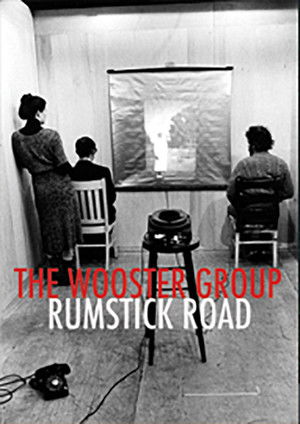
Rumstick Road
A video reconstruction of the 1977 Wooster Group production Rumstick Road, an experimental theater performance created by Spalding Gray and Elizabeth LeCompte after the suicide of Gray's mother. Archival recordings are combined with photographs, slides, and other materials to recreate the original production.
2014
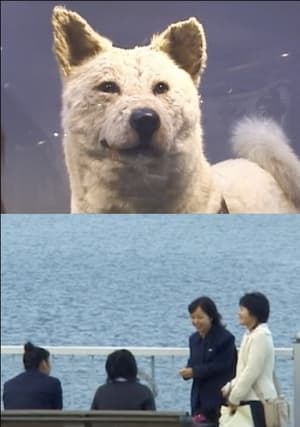
I Have No Memory of My Direction
Ostensibly searching for an emotional connection with her aging father, the woman contemplates her own inherited culture and familial touchstones. Her North American pop culture sensibility fuses with a distorted Japanese perspective to create a surreal interpretation of a “Japan of the imagination.” This fictional landscape is peppered with invented Japanese myths, ruminations on memory loss, the temporal space of digital photography and the ghosts of inherited imagination.
2005
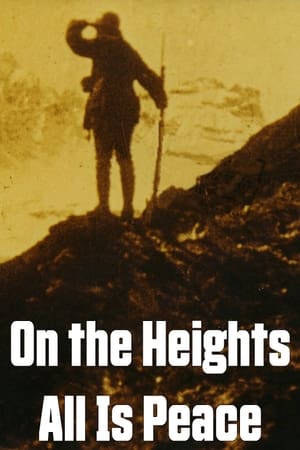
On the Heights All Is Peace
Found footage anti-war film comprising film documents of the Austro-Hungarian and Italian army on the Alpine front, and from first generation picture material by war-film pioneer Luca Comerio.
1998
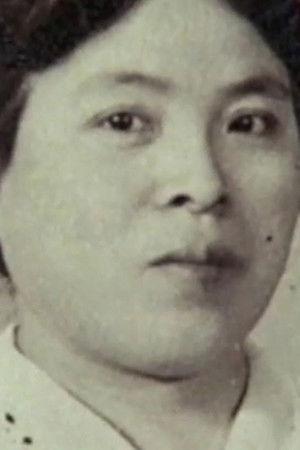
The Displaced View
The Displaced View traces a personal search for identity and pride, within the unique and suppressed history of the Japanese in Canada. Through an examination of the emotional and cultural links between the women of one family, the processes of the construction of memory and the re-construction of history, are revealed. Utilizing an innovative combination of experimental, dramatic and documentary forms, the film emerges as a deeply moving and compassionate love letter. Just as the official history of the Japanese Canadians has been thrown into question, so does the film’s fictionalized narrative, question documentary as truth.
1988
Jeune femme à sa fenêtre lisant une lettre
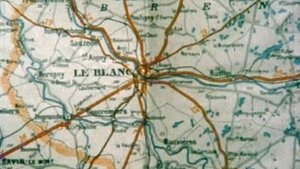
Jean-Claude Rousseau's Jeune femme à sa fenêtre lisant une lettre is not only his first medium-length film, but a chance to discover this filmmaker whom Jean-Marie Straub has called, along with Frans Van de Staak and Peter Nestler, the greatest working in Europe. With this newly restored print there is also a possibility to discover the relationship between Rousseau's art of filming and Jan Vermeer's famous painting. As Prosper Hillairet wrote in 1988, four years after Rousseau had finished Jeune femme ... (for the first time as we know today): «Without adopting the usual systematic spirit and form of cinéma structurel, Rousseau presents us with simple images and leaves it at that. Keeps the image in hand. A minimalist and ascetic expression of cinema: a shot that lasts.»
1983
Everyday Life
Dialogue-free short detailing the daily tasks of a man and his wife.
1976
Color of Korea
It shows Korea’s traditional colors and culture through the use of superimposing. It is an experimental film, which not only tries to show Korean traditional culture through the use of color, but also tries to show the modern history of Korea.
1976

The Middle Dog's Day
shows visual and metaphorical representation using rope as a motif through various rope images and meanings.
1974

The Hole
One of Han Ok-hee’s renowned pieces called The Hole uses the flicker, oblique angles, the cross-cutting of reality and fantasy to express inner entrapment and the desire for liberation. Han Ok-hee’s The Hole, The Rope and Untitled not only experimented with cinematic forms of expression, but also played an important role in the protest against forms of expression in experimental films and the artistic protest against the social suppression and censorship in 1970s Korea. (Art Cinema OFFoff)
1973
Running Shadow I
Rapidly changing images of natural objects, scenery, animals, plants, and people flicker, flash, tumble, and cascade across the screen.
1971
Rytmus
An experimental film from Jirí Lehovec, mixing the sound process with animated rhythms.
1942