Watch Parade (1962) Online Free
Filmed in Belgrade in 1962, Parade documents the city’s engagement with the annual May Day celebration by largely ignoring the formal procession. Instead, Dušan Makavejev records the informal moments surrounding it: workers, officials, wanderers, and organizers negotiating space, hierarchy, and appearance. Shot with a detached, humorous eye, the film assembles a mosaic of everyday behavior that reveals the contrast between official ceremony and lived social reality.
More Like This
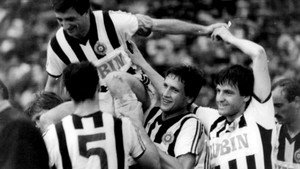
Moca: One of the Most Beautiful Football Stories
A documentary film about the life and career of Momcilo Vukotic, one of the most significant footballers of Partizan and Yugoslav football. The film follows his sports career through interviews with former teammates, rivals and family, as well as his interests outside football, including painting and theater. Momcilo Moca Vukotic, won three Yugoslav championship titles as a player in 1976,1978 and 1983. As a sports-director, he won two tittles in 1986 and 1987. With the team from Humska street, he played 791 games in total, from 1968 till 1985. As a coach, he won Yugoslavia cup and Supercup in 1989. The film won awards for the best feature-length documentary film at the 14th International Sports Film Festival in Zlatibor as well as at the 3rd Budva Sports and Arts Film Festival.
2025
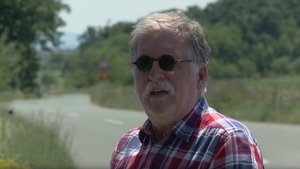
Trapped Time
Petar Peca Popović is one of the greatest, most famous, most authoritative and for sure, the best, connoisseur of Rock and Roll in the former Yugoslavia. He promoted Rock and Roll in those heroic times. We are going on a peculiar kind of trip with him, along an "emotional homeland", of ex-Yu, "searching for the lost times" and dear friends, the most significant representatives of this culture - rock'n'roll legends.
2017
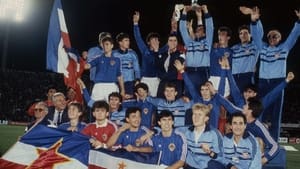
Chileans
The story of the Yugoslavian football team who became youth world champions in Chile, 1987.
2017
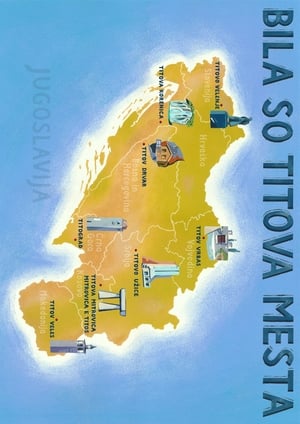
They Were Tito's Towns
Following the death of Josip Broz Tito (1892–1980), one city in each of the six republics and two autonomous regions of the Socialist Federal Republic of Yugoslavia had the honour to be named after the long-serving president. Having been chosen due to leftist ideas, proletarian character, industrialisation, urbanisation and modernity, they were often privileged. Now located across seven countries, not one of these cities is still named after Tito. We learn the stories of these cities from their residents who look back at the period under Tito’s name. Many of these stories are tragic since the majority of cities have been touched by war.
2017
The Other Side of Everything
For Serbian filmmaker Mila Turajlic, a locked door in her mother's apartment in Belgrade provides the gateway to both her remarkable family history and her country's tumultuous political inheritance.
2017
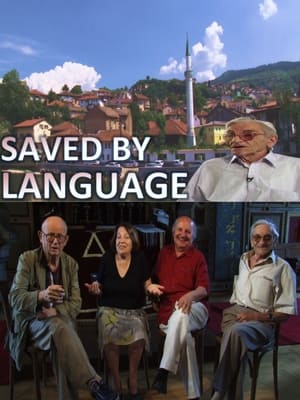
Saved by Language
Can a language save your life? Yes it can, even an ancient one from the 15th century. Saved by Language tells the story of Moris Albahari, a Sephardic Jew from Sarajevo (born 1930), who spoke Ladino/Judeo-Spanish, his mother tongue, to survive the Holocaust. Moris used Ladino to communicate with an Italian Colonel who helped him escape to a Partizan refuge after he ran away from the train taking Yugoslavian Jews to Nazi death camps. By speaking in Ladino to a Spanish-speaking US pilot in 1944 he was able to survive and lead the pilot, along with his American and British colleagues, to a safe Partizan airport.
2015
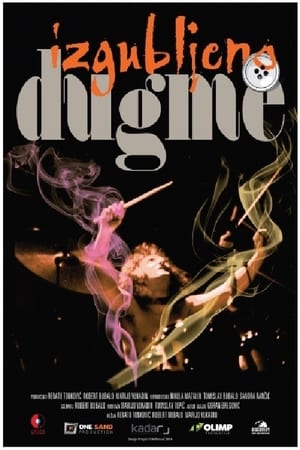
Lost Button
A documentary about Goran Ivandic 'Ipe', the drummer of most popular Yugoslav rock band of all time, Sarajevo-based "Bijelo dugme" (White Button). Ivandic's fatal jump from the balcony of hotel Metropol in Belgrade in 1994 sparked much controversy around his fate.
2015
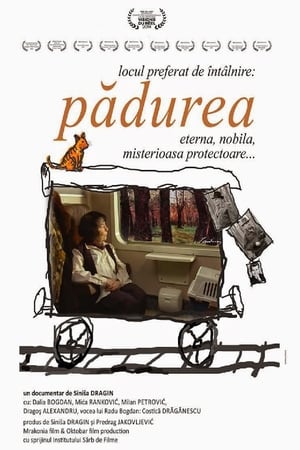
The Forest
In 1947, Yugoslav President Josip Broz Tito visited, for the first time, Romania. Its communist regime gave him, as present, a painting from a great Romanian artist Ion Andeescu: 'The Leafless Forest'. In the 60s, a young art critic, Radu Bogdan, decided to elaborate a monograph dedicated to the great painter, including reproduction of the painting given to Tito. After countless problems, he obtained the permission to photograph the painting. The moment they took the painting off the wall, they found - a microphone. Somebody was spying on Tito...
2014
Yugoslavia: How Ideology Moved Our Collective Body
A research-based essay film, but also a very personal perspective on the history of socialist Yugoslavia, its dramatic end, and its recent transformation into a few democratic nation states.
2013

The Weight of Chains
The Weight of Chains is a Canadian documentary film that takes a critical look at the role that the US, NATO and the EU played in the tragic breakup of a once peaceful and prosperous European state - Yugoslavia. The film, bursting with rare stock footage never before seen by Western audiences, is a creative first-hand look at why the West intervened in the Yugoslav conflict, with an impressive roster of interviews with academics, diplomats, media personalities and ordinary citizens of the former Yugoslav republics. This film also presents positive stories from the Yugoslav wars - people helping each other regardless of their ethnic background, stories of bravery and self-sacrifice.
2010
Once Brothers
Drazen Petrovic and Vlade Divac were two friends who grew up together sharing the common bond of basketball. Together, they lifted the Yugoslavian National team to unimaginable heights. After conquering Europe, they both went to USA where they became the first two foreign players to attain NBA stardom. But with the fall of the Soviet Union on Christmas Day 1991, Yugoslavia split up. A war broke out between Petrovic's Croatia and Divac's Serbia. Long buried ethnic tensions surfaced. And these two men, once brothers, were now on opposite sides of a deadly civil war. As Petrovic and Divac continued to face each other on the basketball courts of the NBA, no words passed between the two. Then, on the fateful night of June 7, 1993, Drazen Petrovic was killed in an auto accident. This film will tell the gripping tale of these men, how circumstances beyond their control tore them apart, and whether Divac has ever come to terms with the death of a friend before they had a chance to reconcile.
2010
The Long Road Through Balkan History
Bosnian Croat writer Miljenko Jergović and Serbian writer Marko Vidojković replace one another by the steering wheel of Yugo, a symbol of their common past while driving on the Brotherhood and Unity Highway that stretched across five of six republics of Yugoslavia.
2009
The Rose Parade: A Pageant for the Ages
An entertaining look at the history of America’s greatest parade, guided by hosts and TV icons, William Shatner and Stephanie Edwards.
2004
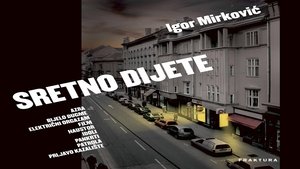
The Happy Child
The Happy Child is a story of "New Wave" rock genre predominant in the ex-Yugoslavia during the socialist 70's and 80's.
2003

Disney Presents: Main Street Electrical Parade - Farewell Season
Catch the spark after dark at Disneyland Park. And say farewell to one of the Magic Kingdom's most celebrated traditions - The Main Street Electrical Parade. Where else, but in The Main Street Electrical Parade, could you see an illuminated 40-foot-long fire-breathing dragon? And hear the energy of its legendary melody one last time? It's unforgettable after-dark magic that will glow in your heart long after the last float has disappeared.
1996
Stealing of the Sun
While new, monster housings are being erected, people grow a small farm in their vicinity. Soon the bulldozers come and ransack it.
1978
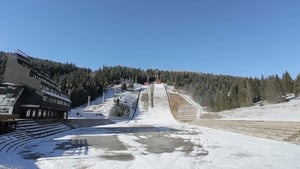
The Great Ecstasy of Woodcarver Steiner
A study of the psychology of a champion ski-flyer, whose full-time occupation is carpentry.
1974
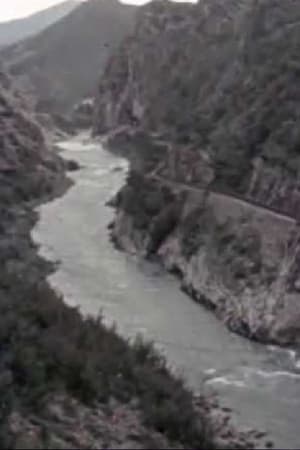
In the Valley of Neretva
It shows the Neretva river from its source to the shores of the Adriatic Sea. The document also captures the original four-hundred-year-old bridge in Mostar.
1959
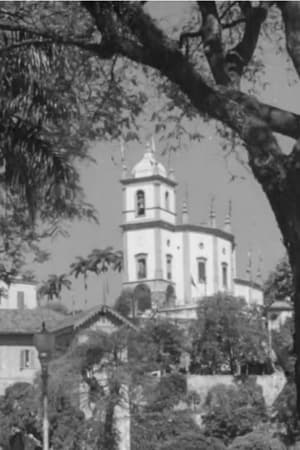
Nossa Senhora da Glória do Outeiro Fest
Fest organized by Irmandade do Outeiro Nossa Senhora da Glória with the attendance of president Eurico Gaspar Dutra.
1946
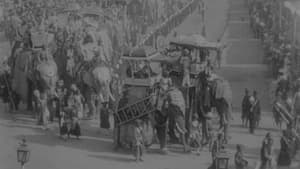
Delhi Durbar
Aristocracy, army, elephants and more mark the start of the 1903 Durbar.
1902