Watch Opéra National de Paris: Robbins / Millepied / Balanchine (2015) Online Free
Director of Dance Benjamin Millepied pays tribute to his masters, George Balanchine and Jerome Robbins, two truly great choreographers, both of Russian origin, who led the American School, and dance in general, to rarely attained heights.
Cast
Amandine Albisson, Mathias Heymann, Josua Hoffalt, Laura Hecquet
More Like This
Confluence
A mesmerizing showcase of artistic excellence, where intricate choreography and cinematography tell a story of pure, unbridled joy and creativity. Its about honoring the past, recognizing the present and looking into the future.
2025

Turn: The Street
A story of a dance crew and their long-suffering wanderings to bring together their dreams, after a long audition process.
2021
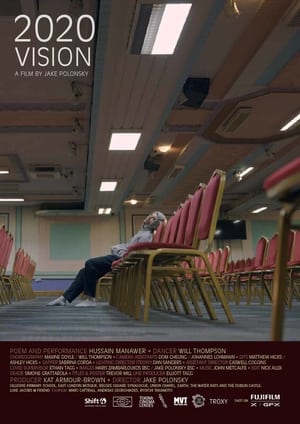
2020 Vision
A short film written by Hussain Manawer about 2020 and mental health.
2020
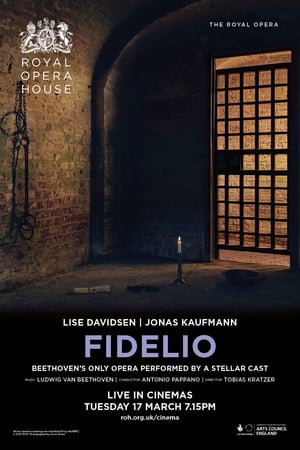
Royal Opera House: Fidelio
Beethoven’s only opera is a masterpiece, an uplifting story of risk and triumph. In this new production, conducted by Antonio Pappano, Jonas Kaufmann plays the political prisoner Florestan, and Lise Davidsen his wife Leonore (disguised as ‘Fidelio’) who daringly sets out to rescue him. Set in strong counterpoint are the ingredients of domestic intrigue, determined love and the cruelty of an oppressive regime. The music is transcendent throughout and includes the famous Act I Quartet, the Prisoners’ Chorus and Florestan’s impassioned Act II cry in the darkness and vision of hope. Tobias Kratzer’s new staging brings together the dark reality of the French Revolutionary ‘Terror’ and our own time to illuminate Fidelio’s inspiring message of shared humanity.
2020
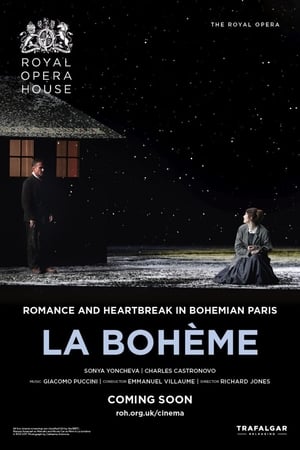
Royal Opera House: La Bohème
Richard Jones’ “La bohème” is an important weapon in the Royal Opera’s commercial arsenal. This is its second revival since Jones’ production hit the stage in autumn 2017, replacing John Copley’s beloved 40-year old staging, resplendent with period detail and resolutely naturalist. Jones brings a considerable break with the past in his approach, pointing the way towards thought-provoking possibilities for the work, though it is a clearly a show that defers to the need for regular revival and breadth of appeal.
2020
Jenůfa
When a beautiful young woman in rural Moravia becomes unexpectedly pregnant, she learns that love is sometimes only skin-deep. Janáček took Gabriela Preissová's grim tale of infanticide and redemption, and condensed it into a masterful, spine-chilling drama. The tragic plight of the protagonists is presented with unsentimental realism that cannot help but trigger a response of deep compassion. Premiered at the National Theatre in the composer's hometown of Brno 115 years ago, the opera took him nine years to complete and is the first in which his distinctive voice can clearly be heard.
2019
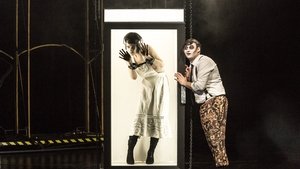
Sternenhoch
Trapped in an abusive marriage, a wealthy German prince desperately seeks a way out. But what appears to be the road to salvation soon turns into a highway to hell. The universal language of music meets the international language of Esperanto in this debut opera by Ivan Acher. The carpenter, forest worker, designer and composer has cleverly blended electro-acoustic and contemporary music to breathe life into Ladislav Klíma’s expressionist novel, The Sufferings of Prince Sternenhoch.
2019
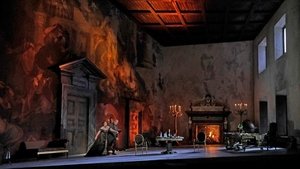
The Metropolitan Opera: Tosca
Sir David McVicar’s bold new staging of Tosca, Puccini’s operatic thriller of Napoleonic Rome, thrilled Met audiences when it rang in the New Year in 2018. Only weeks later, the production was seen by opera lovers worldwide as part of the Met’s Live in HD series of cinema presentations. In this performance, Bulgarian soprano Sonya Yoncheva is the passionate title diva, opposite charismatic tenor Vittorio Grigolo as her lover, the idealistic painter Mario Cavaradossi. Baritone Željko Lučić is the menacing Baron Scarpia, the evil chief of police who employs brutal tactics to ensnare both criminals and sexual conquests. On the podium, Emmanuel Villaume conducts the electrifying score, which features some of Puccini’s most memorable melodies.
2018

The Metropolitan Opera: The Exterminating Angel
After the acclaimed Met premiere of Thomas Adès's "The Tempest" in 2012, the composer returned with another masterpiece, this time inspired by filmmaker Luis Buñuel's seminal surrealist classic "El Ángel Exterminador", during the 2017–18 season. As the opera opens, a group of elegant socialites gather for a lavish dinner party, but when it is time to leave for the night, no one is able to escape. Soon, their behavior becomes increasingly erratic and savage. The large ensemble cast tackles both the vocal and dramatic demands of Adès's opera with one riveting performance after another. Tom Cairns, who also penned the work's libretto, directs an engrossing and inventive production, using a towering wooden archway to trap the characters onstage. And Adès himself takes the podium to conduct the frenzied score, which features a host of unconventional instruments, including the eerie electronic ondes Martenot.
2017
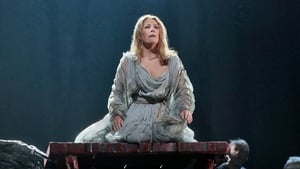
The Metropolitan Opera: Norma
Deep in a forest where druids and warriors seek revenge against the conquering Romans, Norma is scorned by the Roman proconsul Pollione, with whom she has two children. Her kindness turns to fury when she discovers that Pollione has taken Adalgisa, a novice priestess, as his new lover. When Pollione loses his high rank in the army and is offered as a sacrifice, Norma promises him freedom under one condition.
2017
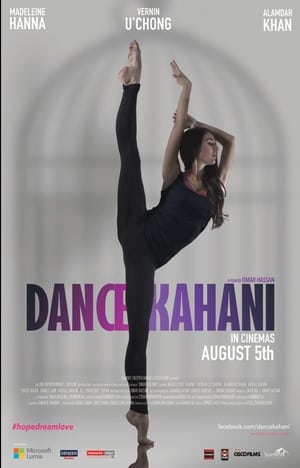
Dance Kahani
With her dream of pursuing a professional dance career shattered, Nizzy, an upscale British Pakistani, must now fight the odds to keep it alive in a society she never wanted to be a part of.
2016

Sleepover LA
An innocent tourist travels to LA and unexpectedly conjures her sister's last night alive. Bold score, stylized dance and an eccentric cast, shot at The Standard Hotel, weave a dark and luminous film that revamps traditional narrative.
2014
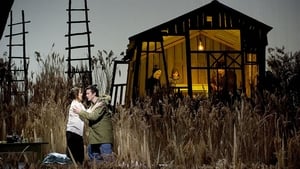
The Legend of the Invisible City of Kitezh
Opera lies at the heart of Rimsky-Korsakov's colourful idiom, but performances are few and far between; this realisation of his penultimate and grandest stage work is a very rare and special experience. Kitezh is known as "the Russian Parsifal", which encapsulates its mystical flavour and steady unfolding of a legend of redemption
2012
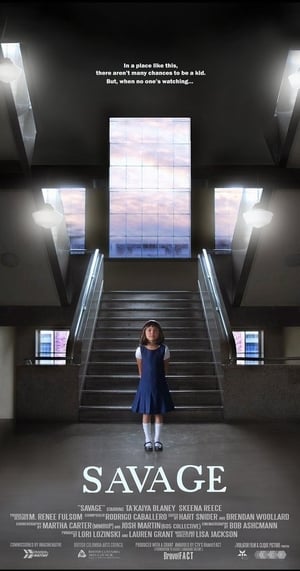
Savage
On a summer day in the 1950s, a native girl watches the countryside go by from the backseat of a car. A woman at her kitchen table sings a lullaby in her Cree language. When the girl arrives at her destination, she undergoes a transformation that will turn the woman’s gentle voice into a howl of anger and pain.
2009
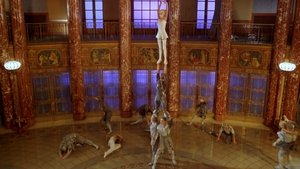
Cirque du Soleil: Journey of Man
A child is born. We see underwater swimmers representing this. He is young, in a jungle setting, with two fanciful "instincts" guiding him as swooping bird-like acrobats initially menace, then delight. As an adolescent, he enters a desert, where a man spins a large cube of metal tubing. He leaves his instinct-guides behind, and enters a garden where two statues dance in a pond. As he watches their sensual acrobatics of love, he becomes a man. He is offered wealth (represented by a golden hat) by a devil figure. In a richly decorated room, a scruffy troupe of a dozen acrobats and a little girl reawaken the old man's youthful nature and love.
2000
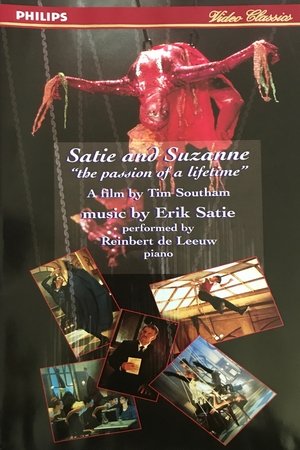
Satie and Suzanne
As the waters of the river Seine overflow their banks and surround a Parisian café, composer Erik Satie nurtures bittersweet memories of his one-time lover Suzanne Valadon.
1996
Der Goggolori
1987

Louis Riel
Opera by Harry Somers portraying Metis leader Louis Riel and his Northwest Rebellion. 1969 CBC-TV production based on the original 1967 opera.
1969
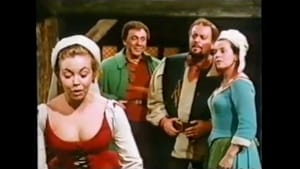
Die lustigen Weiber von Windsor
When Sir John Falstaff decides that he wants to have a little fun he writes two letters to a pair of Window wives: Mistress Ford and Mistress Page. When they put their heads together and compare missives, they plan a practical joke or two to teach the knight a lesson. But Mistress Ford's husband is a very jealous man and is pumping Falstaff for information of the affair. Meanwhile the Pages' daughter Anne is besieged by suitors.
1965
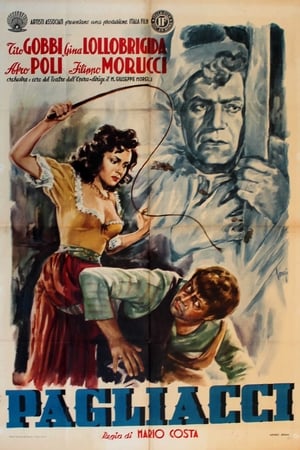
Pagliacci
Based on Ruggero Leoncavallo's opera Pagliacci. The film recounts the tragedy of Canio, the lead clown (or pagliaccio in Italian) in a commedia dell'arte troupe, his wife Nedda, and her lover, Silvio. When Nedda spurns the advances of Tonio, another player in the troupe, he tells Canio about Nedda's betrayal. In a jealous rage Canio murders both Nedda and Silvio. The only actor in the cast who also sang his role was the celebrated Italian baritone, Tito Gobbi, but the film is largely very faithful to its source material, presenting the opera nearly complete.
1948