Watch Ooremn (2017) Online Free
Ooremn, Berberian’s sixth and the latest monologue after Yevaylen, Nayev, Dagaveen, Sagayn and Yete is a witty and hilariously funny take on the many aspects that bring absurdity to our existence. The sharpest of Berberian’s monologues, Oormen takes jabs at all the facets of self deception in relation to love, marriage, religion, being Armenian and much more. Recorded live at the Glen Arden Club in Glendale, California.
Cast
Vahé Berberian
More Like This

Closer in Strife
The distant relationship between a grandmother and her grandchild is momentarily disrupted, after an unforeseen devastation occurs in the city of Beirut.
2025

DORA’S YELLOW SHOES
Dora is 84. She has lived through war, displacement, and loss—yet never lost her spirit. Each day she tends to her home and garden, preserving her dignity through familiar rhythm. In her wardrobe a suitcase and a pair of yellow shoes wait quietly. Dora’s Yellow Shoes is a poetic short documentary about memory, resilience, and the quiet rituals that hold a life together.
2025
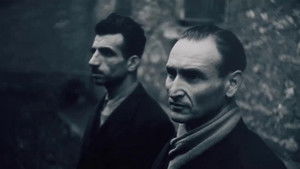
Missak Manouchian and the Red Poster
In February 1944, in a courtyard at Fresnes Prison, the Germans staged a spectacle to stigmatize a group of communist resistance fighters—all foreigners and mostly Jewish—who had been arrested a few weeks earlier. The propaganda aimed to discredit these fighters, portraying them as terrorists and criminals, even though they had managed to carry out numerous attacks against the occupiers in Paris. The red poster, plastered in thousands of copies across the country, would immortalize them in legend. They were subsequently executed at Mont-Valérien, near Paris. Missak Manouchian, the Armenian who led these fighters, now embodies this group in the collective memory as he is enshrined in the Panthéon, on behalf of all his comrades, 80 years after their execution.
2024
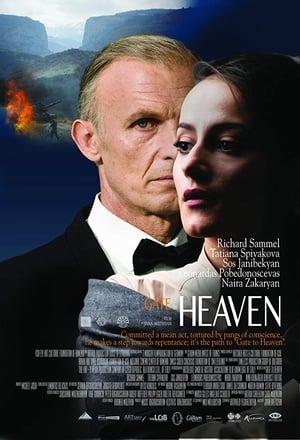
Gate to Heaven
Robert Sternvall, a German journalist, returns to Artsakh in 2016 to cover the war which has been reignited after a 22-year ceasefire. In the result of his journalistic investigation, Robert meets Sophia, a young opera singer, who happens to be the daughter of missing photojournalist Edgar Martirosyan, whom Robert abandoned in captivity during the fall of the village of Talish in 1992. Robert and Sophia’s frequent rendezvouses ignite a passionate romance...
2022

My Brother and Me
This movie is a story of two brothers who couldn't be anywhere else besides on the front lines during the 44-day Artsakh war fighting for their homeland.
2021

Happy Family
Artur is an Armenian guy who dreams about a career in filmmaking, but his grandfather wants him to take over the family wine business. When a bad review from an Estonian critic threatens to ruin the family business, Artur has to go to Tallinn to set things straight. There he meets the feisty Ingrid and things take an unexpected turn.
2018

Architects of Denial
Though both the historical and modern-day persecution of Armenians and other Christians is relatively uncovered in the mainstream media and not on the radar of many average Americans, it is a subject that has gotten far more attention in recent years.
2017
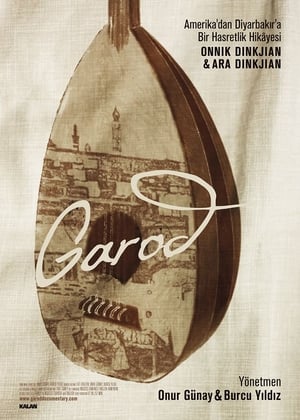
Longing
Garod means longing in Armenian. Longing for a land that lost its people. Longing for the homeland. Longing for a time that is eternally lost. “Garod” is a story of longing. It is about the lives and the musical stories of two Armenian musicians - a father and his son, Onnik Dinkjian and Ara Dinkjian. It tells the story of the remaking of a musical tradition and life in diaspora, passes through different geographies and countries following the traces of a musical tradition. In this documentary, Garod means not only longing for loss but also remaking of a musical tradition and the life itself.
2013
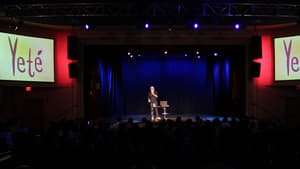
Yeté
Berberian is a master of finding the comedy in personal, social, and cultural topics– in this case, he finds the humor in anxiety. Yete is Berberian’s fifth monologue after Yevayln, Nayev, Dagaveen, and Sagayn. Following 20 sold out shows in Los Angeles, his Sagayn tour took him to Yerevan, Beirut, Istanbul, Paris, Sydney, Cyprus, Geneva and a dozen other cities. Four years have passed since Sagayn and Berberian is thrilled about his new monologue. “I love writing, painting and directing, but being alone on that stage is a completely different sensation. I feel empowered, because there’s nothing more difficult than getting up on a stage and trying to make people laugh for an hour and a half. If you fail, you can’t blame anyone else for your failure and you’ll be crushed, but if you succeed, you feel exhilarated,” says Berberian.
2013

The Diary of the Cross Stealer
Based on the 1890 novel by Raffi, about Murad, an apprentice of a blacksmith who fell under the influence of the pseudo-priest of the Armenian Church Petros and became, like him, a cross-stealer.
2010

Ultimate Heist
The Malakian clan, a family of ruthless gangsters, controls the underworld of Southern France. At its head, the violent godfather Milo Malakian rules his world with an iron fist. His son and heir, Anton, dreams of breaking free and making his own choices. But the gang's inner circle is engraved in blood. To escape, not only does Anton have to counter his own destiny, but also the man who has sworn to bring his father down.
2009
Dagaveen
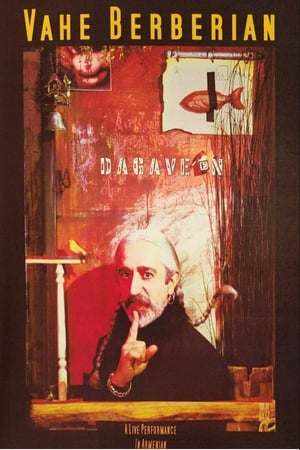
From the man who brought you "Yevaylen" and "Nayev" comes a hilarious peek into the Armenian condition and the necessity of laughter in life. Vahe’s third hysterically funny and engaging monologue tackles diverse topics such as family, marriage, surveys, concentrating on the Armenian American identity and finally the importance of laughter. Along with personal stories and meditations on the Armenian condition, Vahe tries to find an answer to the question “Are the Armenians truly happy, or – as an Irish newspaper claims – are we the saddest nation on the planet?” Vahe performed Dagaveen for over four months at Rococo in Pasadena, California, and has taken the show on the road to various cities in the U.S., Canada and Europe to packed audiences.
2004
Mother Anoush
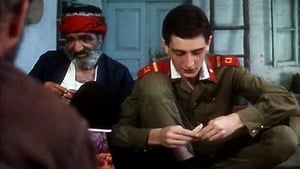
The film tells us of the adventures of a mother who tries to visit her son in one of the military units.
1984

The Man from Olympus
Hrant is tailor at the fashion house Olimpia. He's a man of great generosity and kindness but has reputation of being strange. His great love for preserving the spirit of art pushes against the wills of Yerevan's various personalities, and conflicts against the set rules of society.
1976
The Color of Pomegranates
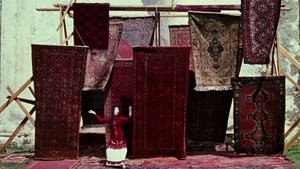
The life of the revered 18th-century Armenian poet and musician Sayat-Nova. Portraying events in the life of the artist from childhood up to his death, the movie addresses in particular his relationships with women, including his muse. The production tells Sayat-Nova's dramatic story by using both his poems and largely still camerawork, creating a work hailed as revolutionary by Mikhail Vartanov.
1969
Electricity... Water... Telephone, Plots with Installments
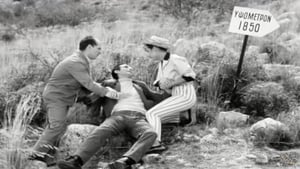
Two friends get involved in a scam involving selling of land plots.
1966
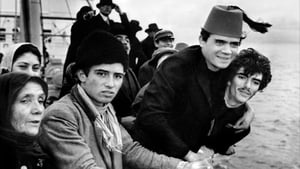
America America
A young Anatolian Greek, entrusted with his family's fortune, loses it en route to Istanbul and dreams of going to America.
1963
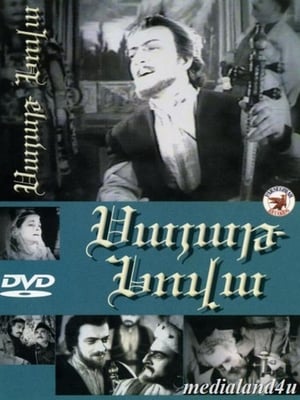
Sayat-Nova
The film is an adaptation of the life of 18th-century Armenian poet and troubadour Sayat-Nova.
1960
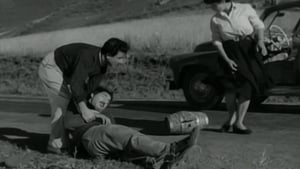
01-99
Drunkard Garsevan is supposed to bring wine for testing to specialist Poghosyan. On the road he drinks the wine and is picked up by two young men who think that he is a victim of road accident.
1959
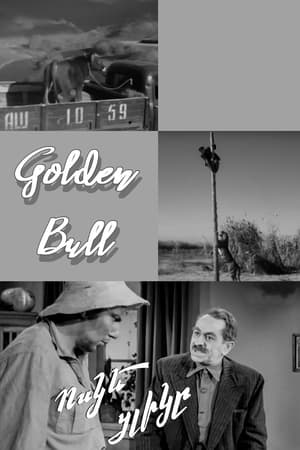
Golden Bull Calf
A pedigree bull-calf becomes boe of contention between the heads of two competitive collective farms, two brothers-in-law.
1955