Watch Oh, Bloody Life (1984) Online Free
The Hungarian Oh, Bloody Life reflects on the heavy emotional toll taken by the repressive Stalin regime. Dorotya Udvaros plays a young actress from a high-born family. The government bias against persons of wealth threatens to destroy her career before it begins. As a final blow, she is threatened with deportation. The exasperation inherent in the film's title is only the tip of the iceberg.
Cast
Dorottya Udvaros, Zoltán Bezerédy, András Kern, Ödön Rubold, László Szacsvay, Lajos Őze, Margit Lukács, Ida Turay, Éva Tímár, István Velenczei, János Körmendi, József Gáti
More Like This

"Pay" Day
"Pay" Day is a student silent film exploring the troubles of the working class.
2025

National Theatre Live: Nye
Confronted with death, National Health Service founder Aneurin 'Nye' Bevan's deepest memories lead him on a mind-bending journey back through his life; from childhood to mining underground, Parliament and fights with Winston Churchill.
2024
Sistem S.
No system don't allow to person to do work which loves, knows and finally to achieve succes in the world. If we will try along our life to follow rules of system we people neither can be happy nor to achieve succes.
2017

Made in Hungaria
Miklós Fenyö's parents returned to Communist Hungary in the mid sixties - when everyone else was fleeing to the West. Miki's old friends don't know what to make of his outrageous clothes, flawless American accent and collection of original Buddy Holly 45s. His childhood sweetheart is cold and distant while local tough guy Röné is unmoved by the challenger to his rock 'n' roll crown. But that's not all. When the authorities see the effect Miki's gyrating hips and lewd music have on teenage girls, they won't stand for it. His father's job is on the line, and, for the first time, Miki must play by the rules. He has no choice but to enter the local talent show...
2009
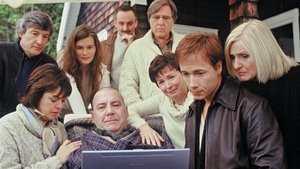
The Barbarian Invasions
In this belated sequel to 'The Decline of the American Empire', middle-aged Montreal college professor, Remy, learns that he is dying of liver cancer. His ex-wife, Louise, asks their estranged son, Sebastian, a successful businessman living in London, to come home. Sebastian makes the impossible happen, using his contacts and disrupting the Canadian healthcare system in every way possible to help his father fight his terminal illness to the bitter end, while reuniting some of Remy's old friends, including Pierre, Alain, Dominique, Diane, and Claude, who return to see their friend before he passes on.
2003

Bulgarian Lovers
Graying Spaniard Daniel has a healthy budget for indulging in the finer things in life. Daniel's favorite luxury is playing sponsor to younger men amid the lights and sights of Madrid's gay club scene. After Daniel shares a night with handsome Bulgarian emigre Kyril, he finds himself consumed with an insatiable lust for the charismatic foreigner. But, as their relationship takes shape, Daniel's latest conquest reveals his own manipulative tendencies.
2003
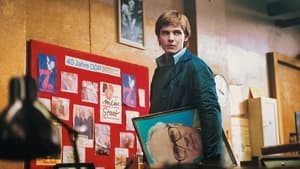
Good Bye, Lenin!
Alex Kerner's mother was in a coma while the Berlin wall fell. When she wakes up he must try to keep her from learning what happened (as she was an avid communist supporter) to avoid shocking her which could lead to another heart attack.
2003

Billy Elliot
County Durham, England, 1984. The miners' strike has started and the police have started coming up from Bethnal Green, starting a class war with the lower classes suffering. Caught in the middle of the conflict is 11-year old Billy Elliot, who, after leaving his boxing club for the day, stumbles upon a ballet class and finds out that he's naturally talented. He practices with his teacher Mrs. Wilkinson for an upcoming audition in Newcastle-upon Tyne for the royal Ballet school in London.
2000
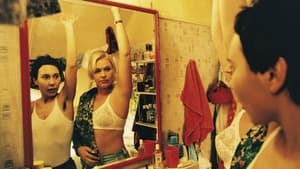
Together
Elisabeth leaves her abusive and drunken husband Rolf, and goes to live with her brother, Göran. The year is 1975 and Göran lives in a commune called Together. Living in this leftist commune Elisabeth learns that the world can be viewed from different perspectives.
2000

April Captains
Story of the 1974 coup that overthrew the right-wing Portuguese dictatorship--which continued the fascist policies of long-time dictator Antonio Salazar--and of two young army captains who were involved in it.
2000
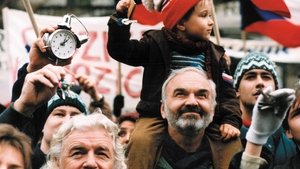
Kolya
After a fictitious marriage with a Russian emigrant, Cellisten Louka, a Czech man, must suddenly take responsibility for her son. However, it’s not long before the communication barrier is broken between the two new family members.
1996
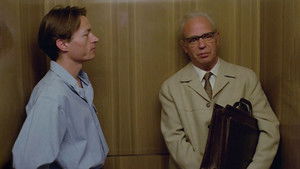
The Architects
The architect Daniel Brenner is in his late thirties when he receives his first challenging and lucrative commission: to design a cultural center for a satellite town in East-Berlin. He accepts the offer under the condition that he gets to choose who he works with. This way, he reunites with former colleagues and friends - most of them architects or students of architecture who have since chosen a different profession due to personal restraint or economic confinement. Together, they develop a concept which they hope will be more appealing to the public than the conventional and dull constructions common to the German Democratic Republic. However, their ambitious plans are once and again foiled by their conservative supervisors. As frustration grows, Daniel has trouble keeping his career in balance with his family-life: his wife Wanda wants to leave for West-Germany.
1990
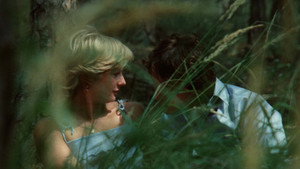
Sun, Hay, Strawberries
A Czech agricultural student, Šimon Plánička, arrives at the small South Bohemian town of Hoštice, and joins the local JZD (agricultural co-op) with the intention of trying out his experiment regarding the "Milk yield of cows in regards to a cultured environment". He runs into difficulty with the directorship of the JZD, but he finds them eager to help once they hear he's the son of the local agricultural commissioner, as his last name is also Plánička. Blažena Škopková is given the task of finding out how things are looking. However everything is complicated by the jealousy of Blažena's boyfriend Venca.
1984

Born in Flames
In near-future New York, ten years after the “social-democratic war of liberation,” diverse groups of women organize a feminist uprising as equality remains unfulfilled.
1983

White Roads
Deda, an enthusiastic young worker, is trying to fix a cut telephone line during the harsh winter, so that people can wish each other a happy New Year.
1974

I Am Curious (Blue)
The same movie with the same characters, cast and crew as I am Curious (Yellow), but with some different scenes and a different political slant. The political focus in Blue is personal relationships, religion, prisons and sex. Blue omits much of the class consciousness and non-violence interviews of the first version. Yellow and Blue are the colors of the Swedish flag.
1968
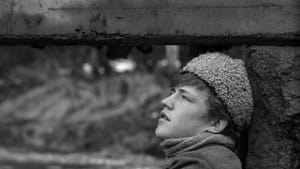
Here Is Your Life
A working class teenager comes of age in 1910s rural Sweden, moving through a series of jobs and romances that gradually shape his future.
1966
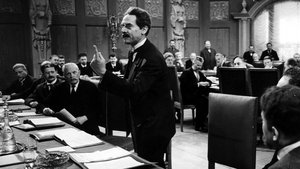
As Long as There’s Life in Me
This is part one of a two-part biopic about Karl Liebknecht. In 1914, Germany is arming itself for war. Karl Liebknecht, left-wing revolutionary Social Democrat, workers’ leader and a virulent antimilitarist, is one among 110 SPD members of Parliament who vote against approving war loans. From then on, he is considered un-German and a traitor to the fatherland, and his own party’s leadership turns against him. Despite threats, Liebknecht speaks up against the war and writes the manifesto “The Main Enemy Is at Home.” Even when he is arrested and charged with treason, he does not surrender.
1965
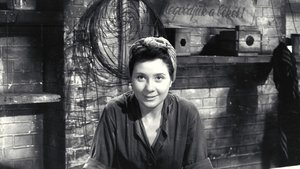
Anna Szabó
A female worker in Socialist Hungary gains the acceptance of her male colleagues.
1949
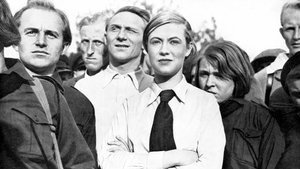
Kuhle Wampe or Who Owns the World?
Kuhle Wampe takes place in early-1930s Berlin. The film begins with a montage of newspaper headlines describing steadily-rising unemployment figures. This is followed by scenes of a young man looking for work in the city and the family discussing the unpaid back rent. The young man, brother of the protagonist Anni, removes his wristwatch and throws himself from a window out of despair. Shortly thereafter his family is evicted from their apartment. Now homeless, the family moves into a garden colony of sorts with the name “Kuhle Wampe.”
1932