Watch O Mundo de Arlindo (2022) Online Free
The documentary talks a little about the carnival experience that Arlindo Rodrigues had during his more than 25 years of artistic life.
Cast
Rosa Magalhães, Fábio Fabato, Leonardo Antan, Maria Augusta, Renato Lage, Jaci Campo Grande
More Like This
Greer Ralston – Giving It All To Art
An intimate portrait of figurative artist Greer Ralston as she astonishes us with her exceptional talent and tells of her plans to devote herself solely to art.
2024
André Brasilier: Where dreams come from
This documentary is a touching and intimate portrait of André Brasilier, both as a man and as an artist. Presented as a testament to his art, the film focuses on two main aspects: André's connection to his youth and early inspirations, and the evolution of his art. The film pays special attention to his wife Chantal, who was André's muse and who appears in many of his paintings.
2023

Sepetiba | Um Mar de Lembranças
2022
Venerdì Santo - Bronte
2021
Hermitage: The Power of Art
2019
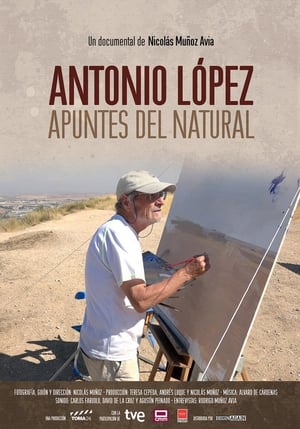
Antonio López: apuntes del natural
A documentary on the painter Antonio López and his day-to-day work.
2019
I, Claude Monet
From award-winning director Phil Grabsky comes this fresh new look at arguably the world’s favourite artist – through his own words. Using letters and other private writings I, Claude Monet reveals new insight into the man who not only painted the picture that gave birth to impressionism but who was perhaps the most influential and successful painter of the 19th and early 20th centuries. Despite this, and perhaps because of it, Monet’s life is a gripping tale about a man who, behind his sun-dazzled canvases, suffered from feelings of depression, loneliness, even suicide. Then, as his art developed and his love of gardening led to the glories of his garden at Giverney, his humour, insight and love of life is revealed. Shot on location in Paris, London, Normandy and Venice I, Claude Monet is a cinematic immersion into some of the most loved and iconic scenes in Western Art.
2017
Francis Bacon: A Brush with Violence
In this unique, compelling film, those who knew him speak freely, some for the first time, to reveal the many mysteries of Francis Bacon.
2017
National Gallery
A portrait of the day-to-day operations of the National Gallery of London, that reveals the role of the employees and the experiences of the Gallery's visitors. The film portrays the role of the curators and conservators; the education, scientific, and conservation departments; and the audience of all kinds of people who come to experience it.
2014

This Is Not a Dream
The video revolution of the 1970s offered unprecedented access to the moving image for artists and performers. This Is Not a Dream explores the legacies of this revolution and its continued impact on contemporary art and performance. Charting a path across four decades of avant-garde experiment and radical escapism, This Is Not a Dream traces the influences of Andy Warhol, John Waters and Jack Smith to the perverted frontiers of YouTube and Chatroulette, taking in subverted talk shows and soap operas, streetwalker fashions and glittery magic penises along the way.
2012
A bissele Glik
2009
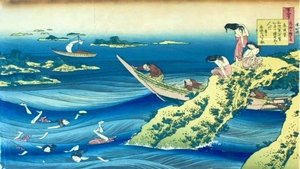
Ukiyo-e: Floating World Images
400 years ago, in Japan, a revolutionary art was born and would influence the greatest Western artists of the late nineteenth century, the Ukiyo-E "floating images of the world." A wonderful trip in a world of beauty and discovery. The concept and objectives of this documentary are, on the one hand, to show, teach and discover Japanese art (Japanese stamps and prints) and, on the other hand, to demonstrate the influence of Japanese stamps on Western modern art, showing in comparison some of the Most famous paintings (impressionism or paintings by Van Gogh).
2008
The Sophisticated Misfit
The Sophisticated Misfit is a long-awaited must-have for fans of the artist Shag and Tiki culture alike. This documentary traces the artist’s roots growing up in Hawaii, his artistic journey in college, his early work designing album covers, to his modern-day role as an art-world phenom. In addition to exclusive footage of Shag painting in his home studio, the film features intimate interviews with the artist, his family, artistic influences, tiki-philes, celebrity collectors, and fans.
2007
As the Crow Flies
Documentary film based on the artist Akbar Padamsee.
2004
Bus 174
Documentary depicts what happened in Rio de Janeiro on June 12th 2000, when bus 174 was taken by an armed young man, threatening to shoot all the passengers. Transmitted live on all Brazilian TV networks, this shocking and tragic-ending event became one of violence's most shocking portraits, and one of the scariest examples of police incompetence and abuse in recent years.
2002
Signatures of the Soul
Tattooing — "the world's oldest skin game" — is the subject of this iconic documentary. Writer/director Geoff Steven scored a major coup by signing Easy Rider legend Peter Fonda as his presenter. Travelling to Aotearoa, Samoa, Japan and the United States, the doco traces key developments in tattooing, including its importance in the Pacific, prison-inspired styles, and the influence of 1960s counterculture. Legendary tattooists feature (including Americans Ed Hardy and Jack Rudy), while the closing credits parade some eye-opening full body tattoos.
1984
Chega de Demanda
Documentary addressing the composer Cartola and the transformations that took place in Morro Carioca and in Samba during his life. Founder of the Escola de Samba Estação Primeira de Mangueira, Cartola has his life and his music marked by his community and his School, far from the city His school, created as a playful and expressive center for the mangueirense, has now become a point of tourist attraction. This made work possible for the inhabitants of the hill, but it transformed the spirit of samba and its aesthetics.
1973
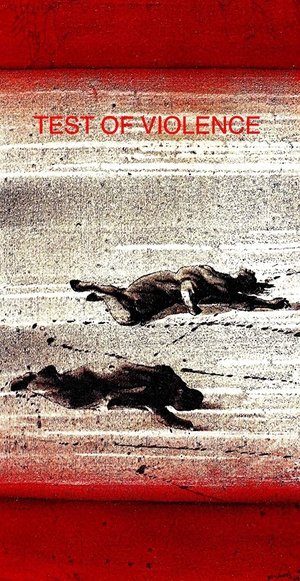
A Test of Violence
Stuart Cooper's short about the work of Spanish artist Juan Genovés is an inspired introduction to the works of this extraordinary artist, exploring its minimalist aesthetic and storytelling qualities through a variety of cinematic techniques, including rostrum, animation, news footage and live action recreations.
1969
Los pueblos dormidos (por la Quebrada de Humahuaca)
Documentary about the kolla people living in North Western Argentina.
1947
Downside Up
How does a dying working class town end up betting its future on art? With 80% of its downtown buildings closed, North Adams, Massachusetts united blue-collar locals with art world luminaries to transform economic failure into America's largest center for contemporary art, MASS MoCA. A film by North Adams native Nancy Kelly, DOWNSIDE UP is about the tentative, dangerous notion of hope in a city widely viewed as hopeless.