Watch No Sense Makes Sense (1993) Online Free
Portrait of Charles Manson. Contains various interviews with J.R. Bruun, Boyd Rice, Nikolas Schreck and other persons with an interest in Charles Manson, inter cut with a barrage of weird clips from movies and television.
Cast
Charles Manson, Boyd Rice, Nikolas Schreck, J.R. Bruun, Wally George, Geraldo Rivera, Richard Bey
More Like This
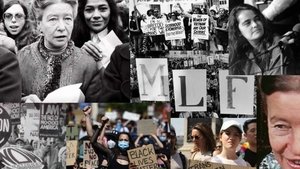
Le deuxième sexe : Sur les traces de Simone de Beauvoir
Published in 1949, The Second Sex became the bible of global feminism. An essential work that passionately advocates for gender equality, women's independence, and the liberation of morals. Today, how does this seminal work continue to resonate in our contemporary world? Conceived as an initiatory journey to the origins of Simone de Beauvoir's thinking, the film The Second Sex: In the Footsteps of Simone de Beauvoir takes us to the United States, to the places that inspired the philosopher and nourished her theories. An American road trip bringing together the worst and the best, predatory capitalism and mad love. A unique reinterpretation in the company of the great thinkers of our century.
2025

Beato, el Origen del Xacobeo
2023

Hannah Arendt, la liberté d'être libre
In a time of resurgence of social protests, political radicalization and distrust of power, Arendt's thought has never been more relevant: A critical thinker according to some or a conservative according to others, this great figure of the intellectual world remains, in many ways, an enigma. Who was Hannah Arendt?
2023
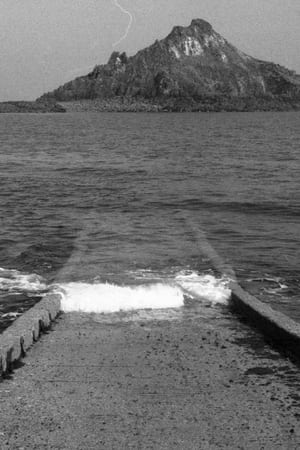
Collage
Considerations on collage as a cognitive act in artists’ cinema. A pedagogical film adrift: 35mm photographs and other materials collected over the last fifteen years by artist Stefano Miraglia meet a text written by Baptiste Jopeck and the voice of Margaux Guillemard.
2021
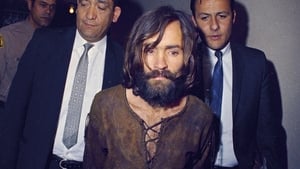
Truth and Lies: The Family Manson
ABC retells the dark, disturbing story of Manson — and his twisted cult of devoted followers he instructed to carry out a series of grisly homicides in 1969. In this two-hour documentary.
2017
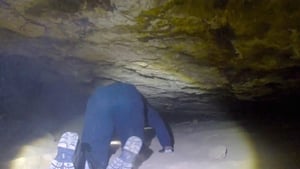
Colossal Cave
Plato's allegory of the cave is often read as a prefiguration of cinema. Yet this film illustrates how online gaming was born from a network of caves. The reconstruction of one couple's hobby, spending all their time in the world's largest cave system, leads us to the conception of a pioneering video game.
2016

Face of Evil: The Charles Manson Murders
CNN revisits the vicious, horrific killings by Charles Manson's followers, 45 years later in their special documentary report - Face of Evil: The Charles Manson Murders.
2015
The Look of Silence
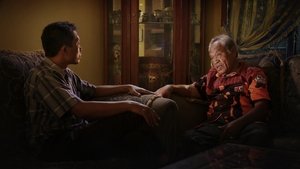
An Indonesian man with a communist background named Ramli was brutally murdered when the "Communist" purge occurred in 1965. His remaining family members lived in fear and silence until the making of this documentary. Adi, a brother of his, decided to revisit the horrific incident and visited the men who were responsible for the killings and one survivor of the purge. These meetings uncovered sadistic details of the murders and exposed raw emotions and reactions of the killers' family members about what happened in the past - much to Adi's disappointment.
2014
Albert Hofmann - Wahrnehmungen
2011
Manson's Missing Victims
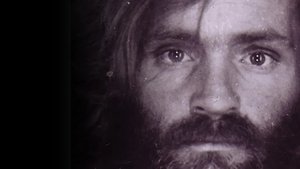
It is almost universally believed by those who were involved with, or who have studied, the Manson murders that there are far more victims still out there. This documentary looks for some of their graves.
2008
The Making of Fallout 3: The Vault-Tec Files
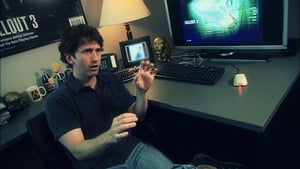
Documentary exploring the making of the third installment of the popular post-apocalyptic roleplaying game series Fallout. The Making of Fallout 3 features behind the scenes footage, concept art and was only made available to people who had purchased the collectors edition of the game.
2008

Bowling for Columbine
This is not a film about gun control. It is a film about the fearful heart and soul of the United States, and the 280 million Americans lucky enough to have the right to a constitutionally protected Uzi. From a look at the Columbine High School security camera tapes to the home of Oscar-winning NRA President Charlton Heston, from a young man who makes homemade napalm with The Anarchist's Cookbook to the murder of a six-year-old girl by another six-year-old. Bowling for Columbine is a journey through the US, through our past, hoping to discover why our pursuit of happiness is so riddled with violence.
2002
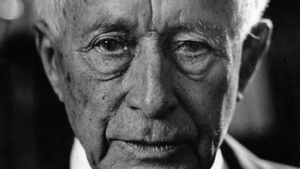
102 Years in the Heart of Europe: A Portrait of Ernst Jünger
102 Years in the Heart of Europe: A Portrait of Ernst Jünger (Swedish: 102 år i hjärtat av Europa) is a Swedish documentary film from 1998 directed by Jesper Wachtmeister. It consists of an interview by the journalist Björn Cederberg with the German writer, philosopher and war veteran Ernst Jünger (1895-1998). Jünger talks about his life, his authorship, his interests and ideas. The actor Mikael Persbrandt reads passages from some of Jünger's works, such as Storm of Steel, The Worker, On the Marble Cliffs and The Glass Bees.
1998
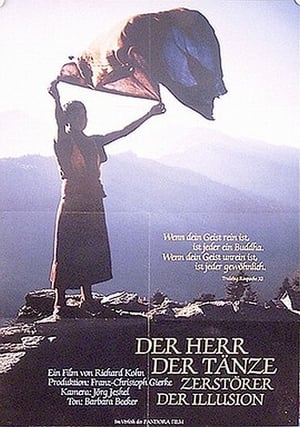
Lord of the Dance/Destroyer of Illusion
The documentary focuses on the annual Mani Rimdu festival of Tibet and Nepal, an event which encapsulates the Himalayan Buddhist experience.
1985
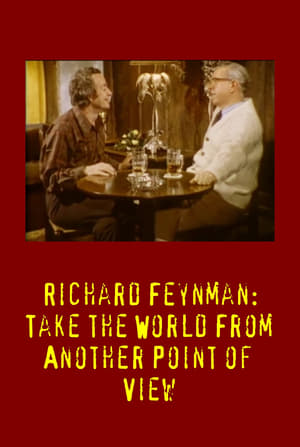
Take the World From Another Point of View
In 1973 Yorkshire public television made a short film of the Nobel laureate while he was there. The resulting film, Take the World from Another Point of View, was broadcast in America as part of the PBS Nova series. The documentary features a fascinating interview, but what sets it apart from other films on Feynman is the inclusion of a lively conversation he had with the eminent British astrophysicist Fred Hoyle.
1973

What Did You Take?
Stresses recognition and treatment of drug abuse emergencies, accurate identification of symptoms, and immediate clinical procedures. Presents scenes of actual cases in the emergency room and adjoining physician's offices of Beth Israel Medical Center in New York City. Viewers observe emergency treatment of patients in the major classes of drugs commonly abused, opiates, depressants, stimulants, and hallucinogens. The film demonstrates to health professionals that successful management of drug overdoses can save most lives and avert additional organic and psychiatric complications.
1971

Like It Is
This documentary on the "youth movement" of the late 1960s focuses on the hippie pot smoking/free love culture in the San Francisco Bay area.
1968
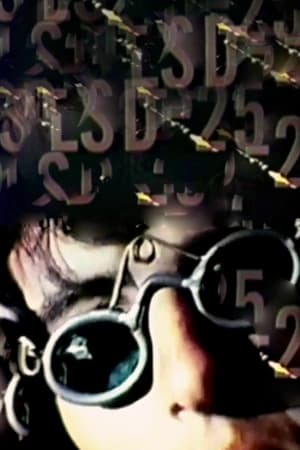
LSD-25
The dangers of LSD are driven home to teenagers in this classroom training film, which is "narrated" by an LSD tab. The "tab" tells kids that he is "a depth charge in the mind!" and various teenagers are shwn babbling about their LSD experiences. "Experts" are presented who warn that LSD makes kids "paint themselves green" and has various other horrible side effects, the most serious of which is that it gives users a police record, and that there is "no known way of getting your fingerprints out of a police file once they're in there."
1967

A Propos D'Un Crime
In 1967, Visconti came to Algiers for the filming of The Stranger with Mastroianni and Anna Karina. Camus, during his lifetime, had always refused to allow one of his novels to be brought to the screen. His family made another decision. The filming of the film was experienced in Algiers, like a posthumous return of the writer to Algiers. During filming, a young filmmaker specializing in documentaries Gérard Patris attempts a report on the impact of the filming of The Stranger on the Algerians. Interspersed with sequences from the shooting of Visconti's film, he films Poncet, Maisonseul, Bénisti and Sénac, friends of Camus, in full discussions to situate Camus and his work in a sociological and historical context. “The idea is for us to show people, others, ourselves as if they could all be Meursault, or at least the witnesses concerned to his drama.”
1967
The Psychedelic Experience
Experimental movie, where a man comes home and experiences LSD. His kaleidoscopic visions follow, with readings inspired by the Tibethan Book of the Dead.
1965