Watch New Home in the West (1943) Online Free
This short film traces the journey of the first Ukrainian settlers in Canada. Seeking freedom and opportunity, they came here and became instrumental in helping to open the Canadian West. Though they had little in the way of money or machinery, they had courage and faith in the future and were willing to put in the hard work. Every member of the family helped in the struggle, and in time, their efforts paid off.
More Like This
Traces of Home – A Story from Congo
This short film tells the deeply personal and emotional journey of a father who made the life-altering decision to immigrate to Canada from Congo with his family. Narrated from his perspective, it dives into the challenges and obstacles he faced while fleeing his home country.
2025

In a Film by Allan King
In 1968, Billy and Antoinette Edwards participated in a landmark documentary that would intimately observe their turbulent relationship. Over 50 years later, their son Bogart sat down to view and discuss the resulting film, A Married Couple.
2024

A Return to Memory
When Canada entered World War II, the National Film Board suddenly had an urgent new mission—and hundreds of women stepped forward, helping to create Canadian cinema as we now know it.
2024

Sometime, Somewhere
Sometime, Somewhere sheds light on the challenges faced by Latino communities in Charlottesville, Virginia against the backdrop of immigration driven by factors like climate change, poverty, and drug-related violence.
2024

Seven for Jack
Documentary on career criminal Jack Black during an episode of burglary in Victoria BC. Locations around Victoria and Vancouver are explored in present day, with narration from Black's autobiography.
2022
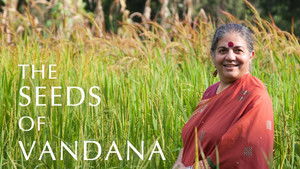
The Seeds of Vandana Shiva
How did the willful daughter of a Himalayan forest conservator become Monsanto’s worst nightmare? The Seeds of Vandana Shiva tells the remarkable life story of Gandhian eco-activist Dr. Vandana Shiva, how she stood up to the corporate Goliaths of industrial agriculture, rose to prominence in the regenerative food movement, and inspired an international crusade for change.
2021
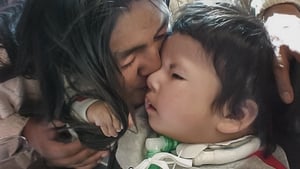
Jordan River Anderson, The Messenger
The story of a young boy forced to spend all five years of his short life in hospital while the federal and provincial governments argued over which was responsible for his care, as well as the long struggle of Indigenous activists to force the Canadian government to enforce “Jordan’s Principle” — the promise that no First Nations children would experience inequitable access to government-funded services again.
2019
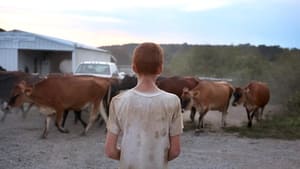
Farmsteaders
Clear-eyed and intimate, Farmsteaders follows Nick Nolan and his young family on a journey to resurrect his late grandfather’s dairy farm as agriculture moves toward large-scale farming. A study of place and persistence, Farmsteaders points an honest and tender lens at everyday life in rural America, offering an unexpected voice for a forsaken people: those who grow the food that sustains us.
2018
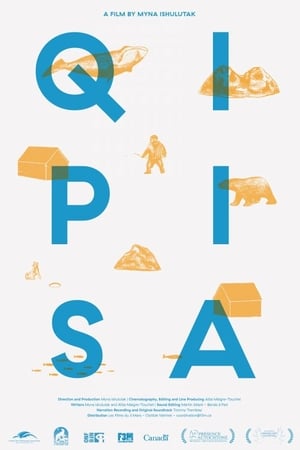
Qipisa
The director goes back to her roots in Pangnirtung, amongst her family and community. It leads her to another journey: to Qipisa, the outpost camp from where they were uprooted.
2017
2017 Oscar Nominated Short Films: Documentary
2017
Portrait of a Wind-up Maker
Chema is an expat architect from Spain who lives in Amsterdam. He has built up a new life there as a wind-up toy maker. He creates small pieces of art from recycle items.
2015
Déception durable
2014
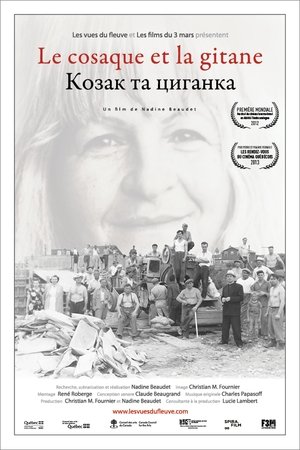
The Cossack and the Gypsy
The Cossack and the Gypsy takes us to the heart of intimate worlds of Lev Chayka and Régine Gabrysz, illustrating their memories, interior views composed of the stories about their childhood and devotion to their country of origin (Ukraine and Soviet Union). The wars and dictatorship of the past in the Eastern Europe is set in contrast with the Far North of Quebec in a forgotten boom town. Vera and Jack, the last miner, Régine and Lev are among the last first immigrants. Their Slavic voices and accents still lull the Abitibi sonorous landscapes, but for how long...
2013
Sunflower Seeds
A group of children living on the streets of Athens. Among them is Sayid, a twelve-year-old boy, who works all day selling sunflower seeds in the city’s parks and squares. His existence borders on absolute poverty, as he goes looking for food at soup kitchens. His daily routine in the chaotic capital of Greece is a continuous struggle for survival. At the same time, however, he manages to find and enjoy the freedom the city streets can offer. Sayid, along with his friends who are all immigrants from Afghanistan, escape their desperation by clinging onto their hopes. With them, he plays innocent childhood games and dreams of a better future: He wants to leave for Northern Europe, to go to school, and to get a decent job when he grows up. Sayid is trapped in Greece, a country plagued by a financial crisis, increasing unemployment, rampant xenophobia, and racist violence. Sayid doesn’t mince his words: “I’ve been here for about two years, and it feels like twenty.”
2013
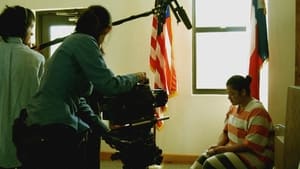
My Life Inside
Rosa is a Mexican woman who, at the age of 17, migrated illegally to Austin, Texas. Some years later, she was jailed under suspicion of murder and then taken to trial. This film demonstrates how the judicial process, the verdict, the separation from her family, and the helplessness of being imprisoned in a foreign country make Rosa’s story an example of the hard life of Mexican migrants in the United States.
2007

The Corporation
Since the late 18th century American legal decision that the business corporation organizational model is legally a person, it has become a dominant economic, political and social force around the globe. This film takes an in-depth psychological examination of the organization model through various case studies. What the study illustrates is that in the its behaviour, this type of "person" typically acts like a dangerously destructive psychopath without conscience. Furthermore, we see the profound threat this psychopath has for our world and our future, but also how the people with courage, intelligence and determination can do to stop it.
2003

Bowling for Columbine
This is not a film about gun control. It is a film about the fearful heart and soul of the United States, and the 280 million Americans lucky enough to have the right to a constitutionally protected Uzi. From a look at the Columbine High School security camera tapes to the home of Oscar-winning NRA President Charlton Heston, from a young man who makes homemade napalm with The Anarchist's Cookbook to the murder of a six-year-old girl by another six-year-old. Bowling for Columbine is a journey through the US, through our past, hoping to discover why our pursuit of happiness is so riddled with violence.
2002
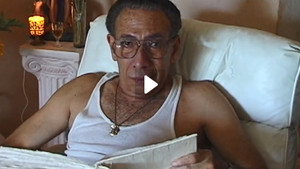
90 Miles
Having grown up within the Cuban Revolution, in 1980, Juan Carlos Zaldívar was a 13-year-old "pioneer" jeering in the streets at the thousands of "Marielitos" leaving the island by boat for the United States. Within weeks, he was a Marielito himself, headed with the rest of his family for a new life in Miami. Now a U.S.-based filmmaker, Zaldívar recounts the strange twist of fate that took him across one of the world's most treacherous stretches of water in 90 Miles, a new documentary having its broadcast premiere on PBS's acclaimed P.O.V. series in the summer of 2003. As related by Zaldívar in the intensely personal and evocative 90 Miles, arrival in South Florida is only the beginning of the family's struggles to comprehend the full meaning of their passage into exile. What follows is an intimate and uneasy accounting of the historical forces that have split the Cuban national family in two, and which shape the passage of values from one generation to the next.
2001
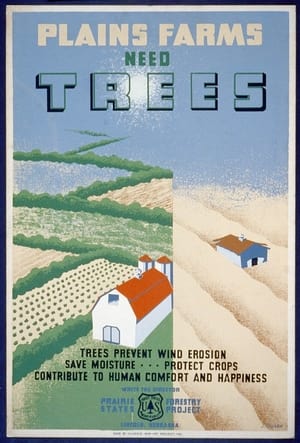
Windbreaks on the Prairies
This short film serves as a cautionary tale to farmers who recklessly cut down trees on their land. When prairie farmers engaged in this practice to facilitate plowing, they discovered that the trees had served as windbreaks protecting top soil from erosion. The Dominion Department of Agriculture's experimental station at Indian Head, Saskatchewan, cultivated acres of young trees for distribution to farmers.
1943
Home Front
This short documentary is part of the Canada Carries On series of morale-boosting wartime propaganda films. In Home Front, the various WWII-era social contributions of women are highlighted. From medicine to industrial labour to hospitality, education and domesticity, the service these women provided to their country is lauded.
1940