Watch Nejma (1984) Online Free
More Like This
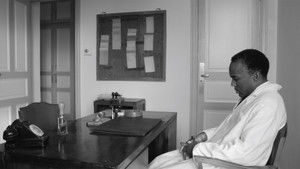
True Chronicles of the Blida Joinville Psychiatric Hospital in the Last Century, when Dr Frantz Fanon Was Head of the Fifth Ward between 1953 and 1956
1953, colonized Algeria. Fanon, a young black psychiatrist is appointed head doctor at the Blida-Joinville Hospital. He was putting his theories of ‘Institutional Psychotherapy’ into practice in opposition to the racist theories of the Algies School of Psychiatry, while a war broke out in his own wards.
2025
DNA
A woman has a close bond with her beloved Algerian grandfather, who protected her from a toxic home life as a child; his death triggers a deep identity crisis as tensions between her extended family members escalate, revealing new depths of resentment and bitterness.
2020
Far from Men
A French teacher in a small Algerian village during the Algerian War forms an unexpected bond with a dissident who is ordered to be turned in to the authorities.
2015
The Algerian War!
In a single static shot a man is threatened with death at another's gunpoint.
2014
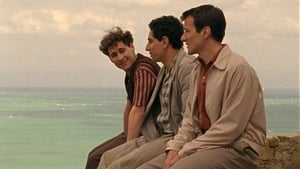
The Law of My Country
Algeria. Benjamin, Kateb and Antoine are three teenagers from three religious backgrounds who never should have met. But they share the same passion for football and the same disregard for the disapproving looks which their unusual friendship draws.
2012

A View of Love
Happily married with a daughter, Marc is a successful real estate agent in Aix-en-Provence. One day, he has an appointment with a woman to view a traditional country house. A few hours later, Marc finally puts a name to her face. It's Cathy, the girl he was in love with growing up in Oran, Algeria, in the last days of the French colonial regime. Marc hurries to her hotel. They spend the night together. Then she's gone again. And Marc's mother tells him Cathy never left Algeria. She was killed with her father in a bombing just before independence...
2010
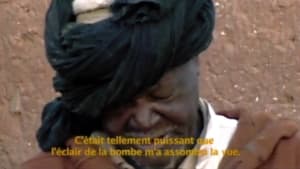
Gerboise Bleue
"Gerboise bleue", the first French atomic test carried out on February 13, 1960 in the Algerian Sahara, is the starting point of France's nuclear power. These are powerful radioactive aerial shots carried out in areas belonging to the French army. Underground tests will follow, even after the independence of Algeria. From 1960 to 1978, 30,000 people were exposed in the Sahara. The French army was recognized recognized nine irradiations. No complaint against the army or the Atomic Energy Commission has resulted. Three requests for a commission of inquiry were rejected by the National Defense Commission. For the first time, the last survivors bear witness to their fight for the recognition of their illnesses, and revealed to themselves in what conditions the shootings took place. The director goes to the zero point of "Gerboise Bleue", forbidden access for 47 years by the Algerian authorities
2009

Dark Night, October 17, 1961
Parisian authorities clash with the Front de Libération Nationale (FLN) in director Alain Tasma’s recounting of one of the darkest moments of the Algerian War of Independence. As the war wound to a close and violence persisted in the streets of Paris, the FLN and its supporters adopted the tactic of murdering French policemen in hopes of forcing a withdrawal. When French law enforcement retaliated by brutalizing Algerians and imposing a strict curfew, the FLN organizes a peaceful demonstration that drew over 11,000 supporters, resulting in an order from the Paris police chief to take brutal countermeasures. Told through the eyes of both French policemen as well as Algerian protestors, Tasma’s film attempts to get to the root of the tragedy by presenting both sides of the story.
2005
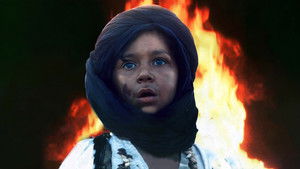
The Desert Ark
The Desert Ark (L'Arche du Desert), a variation on Romeo and Juliet set in the Algerian desert. A young couple must face inevitable conflict when their rival families discover their secret love. Taking refuge in a cave, they listen to the sounds of a senseless campaign of violence and murder, which is the culmination of the extremism that has long divided their two communities. Nominated for the Golden Leopard at the 1997 Locarno Film Festival.
1998
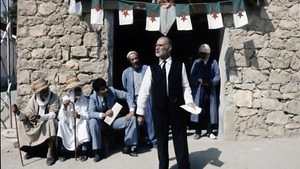
The Mill of M. Fabre
The story of the post-independence nationalization of the mill of Monsieur Fabre, an old man attached to the land of Algeria where he was born. In this small town in eastern Algeria, there was nothing else to nationalize and they were actively preparing for the arrival of high dignitaries who would elevate the mill to the rank of an industrial flour mill even though it was threatened with ruin. The comedy gets worse when the football player from the local team withdraws for love, the officials' visit is canceled and Mr. Fabre returns.
1983
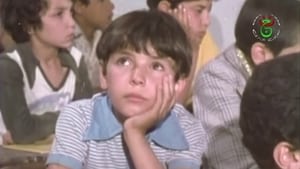
Kahla wa Bayda
Rabie is a kid from Sétif in 1980, trying to collect money to buy a wheelchair for his paralyzid sister Sassia, so she can get out of the house.
1980
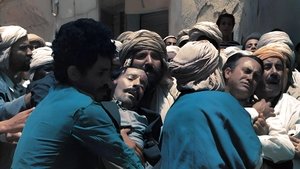
Chronicle of the Years of Fire
A meticulous chronicle of the evolution of the Algerian national movement from 1939 until the outbreak of the revolution on November 1, 1954, the film unequivocally demonstrates that the "Algerian War" is not an accident of history, but a slow process of suffering and warlike revolts, uninterrupted, from the start of colonization in 1830, until this "Red All Saints' Day" of November 1, 1954. At its center, Ahmed gradually awakens to political awareness against colonization, under the gaze of his son, a symbol of the new Algeria, and that of Miloud, half-mad haranguer, half-prophet, incarnation of Popular memory of the revolt, the liberation of Algeria and its people.
1975
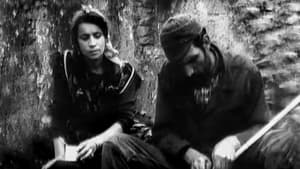
The Charcoal Maker
Film describes the miserable existence of a charcoal-burner who is barely able to feed his family. His search for work in town ends in failure and he is forced to return to his village.
1973
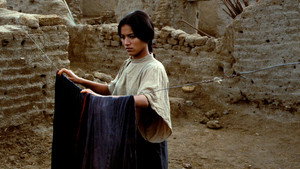
Ramparts of Clay
In a village on the edge of the Sahara, Rima, a 19-year-old orphan, dreams of learning, of discovering, of living free while the men of the salt mine go on strike. The authorities react by sending the army, Rima decides to help the strikers by trapping the soldiers. Co-produced with the Office des Actualités Algériens and shot in the region of Téhouda, 50 kilometers from Biskra, this Franco-Algerian film is fully part of the cinematographic heritage of both shores of the Mediterranean. Bertuccelli adopts the technique of cinema verite, with non-professional actors from the village itself, giving the film a striking documentary texture and a rare force of authenticity. Carried by the moving interpretation of Leila Shenna in the role of Rima, the actor Krikèche and lulled by the music of Taos Amrouche, the film questions female emancipation, social resistance and the relationship with the territory.
1970
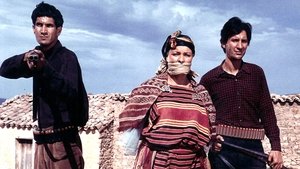
The Outlaws
In prison in colonial Algeria, shortly after the end of the Second World War, three indigenous cellmates make out. Once free, they attack the authority represented by the triad of the boss, the gendarme and the administrator. “Living the colonial condition,” confided Tewfik Farès, “is something! It’s not sociologically or historically speaking. It’s life. And I think that’s all there in it. [...] For a hundred and thirty years, we wait. We hold back. We push back. We hope. At the same time, on different occasions, there are skirmishes, unrest.
1969
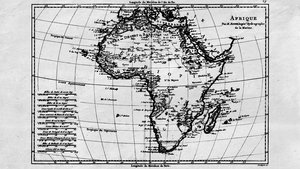
Dawn of the Damned
This excellent feature-length documentary - the story of the imperialist colonization of Africa - is a film about death. Its most shocking sequences derive from the captured French film archives in Algeria containing - unbelievably - masses of French-shot documentary footage of their tortures, massacres and executions of Algerians. The real death of children, passers-by, resistance fighters, one after the other, becomes unbearable. Rather than be blatant propaganda, the film convinces entirely by its visual evidence, constituting an object lesson for revolutionary cinema.
1965

Le Petit Soldat
Despite his lack of political convictions, photojournalist Bruno Forestier is roped into a paramilitary group waging a shadow war in Geneva against the Algerian independence movement.
1963
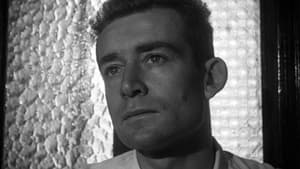
The Olive Trees of Justice
The son of a French colonialist in Algeria returns to Algeria after learning that his father is ill. Memories from childhood return. He also must deal with some problems involving the Algerian fight for independence.
1962

Jamila, the Algerian
Djamila, a young Algerian woman living with her brother Hadi and her uncle Mustafa in the Casbah district of Algiers under the French occupation of Algeria, sees the full extent of injustice, tyranny and cruelty on his compatriots by French soldiers. Jamila's nationalist spirit will be strengthened when French forces invade her university to arrest her classmate Amina who commits suicide by ingesting poison. Shortly after the prominent Algerian guerrilla leader Youssef takes refuge with her, she realizes that her uncle Mustafa is part of this network of anti-colonial rebel fighters. Her uncle linked her to the National Liberation Front (FLN). A series of events illustrate Jamila's participation in resistance operations against the occupier before she was finally captured and tortured. Finally, despite the efforts of her French lawyer, Jamila is sentenced to death...
1958
Kaddour à Paris
1938