Watch Muhai Tang - In The Ocean Of Music (2011) Online Free
MUHAI TANG – IN THE OCEAN OF MUSIC is a portrait of Chinese conductor Muhai Tang’s extraordinary life. Born in 1949, the founding year of the People’s Republic of China, and raised during the Cultural Revolution, it seemed as if he would have to abandon his dream of a career in music. However, his talent, perseverance and the support of Herbert von Karajan ultimately brought him to the world’s concert halls. Today, Muhai Tang is a global nomad. A wanderer between the worlds which he unites with music. His personal history, interspersed with historical caesurae, is typical for Chinese of his generation. He gained access to western culture early on through music. Muhai Tang’s life and work are exemplary of a changing China and the enrichment of the world by an artist between East and West.
Cast
Muhai Tang
More Like This

Dear Lara
Unveiling abuse in classical music's elite institutions — violinist Lara St. John fights for justice, exposing complicity and systemic misogyny.
2026

Mozart's Sister
For the first 18 years of her life, Mozart’s sister shared equal billing with her brother. Musical partners and collaborators, Wolfgang Mozart and Maria-Anna Mozart played together before Kings and Queens, and were the talk of Europe. What happened to her? Forced into retirement by age 16 because she was a woman, a stunning new investigation explores why she was retired against her will and the explosive theory: did Maria-Anna Mozart continue to compose in secret?
2024
Erich Kunzel: A Cincinnati Legacy
Millions around the world were touched by his music... Cincinnati was inspired by the maestro. A production of Public Media Connect.
2023

Urban Amazons
Modern Amazons are fierce heroines. They are ready to fight for what is important to them. Without explaining, without compromising, always persisting. They fight for victory in the ring for acceptance, and too, for fellow sufferers and humanity.
2021

A World Without Beethoven?
"What would the world be like without Beethoven?" That’s the provocative question posed by this music documentary from Deutsche Welle. To answer it, the film explores how Ludwig van Beethoven's innovations continue to have an impact far beyond the boundaries of classical music, 250 years after his birth.
2020
Karajan: Portrait of a Maestro
An account of the life and work of controversial German orchestra conductor Herbert von Karajan (1908-89), celebrated as one of the greatest musicians of the twentieth century.
2019

The Paris Opera
A behind-the-scenes look at the of how the Paris Opera is run under the direction of Stephane Lissner.
2017

Second Hand Heroes
Documentary about thrift shops in Berne, Switzerland and how they want people to recycle and re-use instead of throw away.
2017
Samuel Barber: Absolute Beauty
Known for his mournful "Adagio for Strings," Samuel Barber was never quite fashionable. This acclaimed film is a probing exploration of his music and melancholia. Performance, oral history, musicology, and biography combine to explore the life and music of one of America’s greatest composers. Features Thomas Hampson, Leonard Slatkin, Marin Alsop and many more of the world's leading experts on Barber's music, with tributes from composers Leonard Bernstein, Aaron Copland, Virgil Thomson and William Schuman. The film was broadcast on PBS, and screened at nine film festivals internationally, with three best-of awards. It was named a Recording of the Year 2017 by MusicWeb International.
2017
Staatenlos - Klaus Rózsa, Fotograf
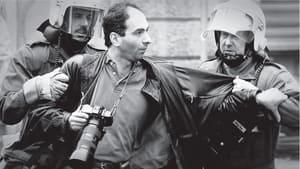
Klaus Rozsa, a well-known and politically active photographer, lived in Zurich for decades as a stateless individual. All of his applications for naturalisation were refused on political grounds. In 1956 he fled Hungary, growing up in Switzerland with a Jewish father who had survived Auschwitz and Dachau. Due to the extreme proximity of such a fate, the camera led him repeatedly to places where injustice was done. It was this particular quality of his camerawork that proved fateful for him.
2016

Family Fragments
The film reconstructs the memories of a divorced family with empathy yet merciless precision. An intimate family story emerges during the investigation into the reasons for the separation. Hinging on the subtle and touching testimonies of the family members, the film delves into complex interrelationships. Actors bring the family's memories alive as if they were their own. The result is a chronicle of a family drama, which the real protagonists complement and comment on – a reflection on the mechanisms and dynamics shaping and directing their family life over the years.
2015
Journey to the Safest Place on Earth
Over 350,000 tons of highly radioactive waste and spent fuel rods are in temporary storage on site at nuclear power complexes and at intermediate storage sites all over the world. More than 10,000 additional tons join them every year. It is the most dangerous waste man has ever produced. Waste that requires storage in a safe final repository for hundreds of thousands of years. Out of reach of humanity and other living creatures. The question is, where? Together with Swiss-British nuclear physicist Charles McCombie, who has been searching for a safe final storage site for highly radioactive nuclear waste for thirty-five years, director Edgar Hagen investigates the limitations and contradictions involved in this project of global significance. Supporters and opponents of nuclear energy struggle for solutions whilst dogmatic worldviews are assailed by doubt
2013
De la cuisine au parlement
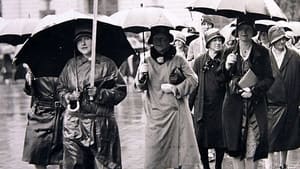
Switzerland was one of the last countries in the world to grant women the right to vote. This film guides us through a century of Swiss history, tracing the imprint left by the women who fought for the right to leave hearth and home – and by the men who did everything they could to send them back – until they gained legal equality, whose implementation seems to be in question still today.
2012
Hugo Koblet - The Charming Cyclist
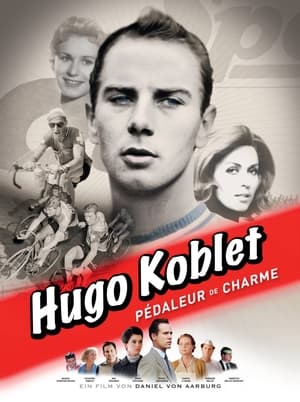
Zurich-born Hugo Koblet was the first international cycling star of the post-war period. He was a stylist on the bicycle and in life, and a huge heartthrob. Koblet had a meteoric rise and won the Giro d'Italia in 1950. Once he had reached the zenith of his career, Koblet was put under pressure by overly ambitious officials and ended up ruining his health with drugs. In 1954, he married a well-known model and they became a celebrity dream couple. After his athletic career ended, Koblet began to lose his footing. Threatened by bankruptcy, he crashed his Alfa into a tree.
2010
Karajan: Beauty As I See It
With a career that includes a 35-year tenure as composer of the Berlin Philharmonic and record sales topping 200 million, Herbert von Karajan is one of the most legendary figures in 20th-century classical music. Comprised of archival footage, performance highlights and interviews with the likes of Anne-Sophie Mutter, Christa Ludwig and Seiji Ozawa, this retrospective chronicles the life and times of the iconic Austrian maestro.
2008
Max Frisch, Citoyen
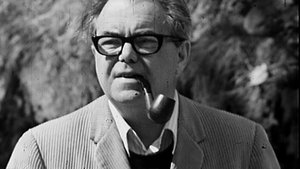
Max Frisch was the last big Swiss intellectual widely respected as a “voice” in its own right – a character hardly found today. The film retells Frisch’s story as a witness of the unfolding 20th century, wondering if such “voices” are needed at all, or if we could do without them.
2008
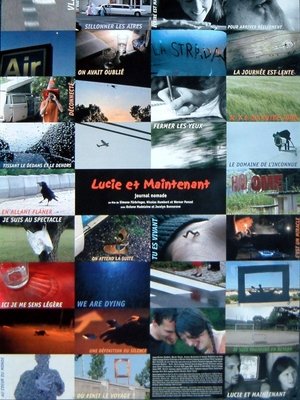
Lucie et Maintenant
In May of 1982 Julio Cortázar, the Argentinean writer and his companion in life, Carol Dunlop set out in their VW bus on a journey along the highway from Paris to Marseille that, for each of them, was to be their final one. Twenty-five years later, Océane Madelaine and Jocelyn Bonnerave set out to undertake the journey again.
2007
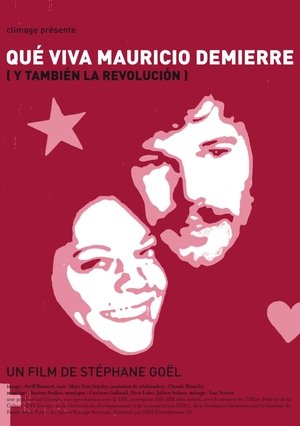
Que viva Mauricio Demierre
2006

Into Great Silence
An intimate portrayal of the everyday lives of Carthusian monks of the Grande Chartreuse, high in the French Alps (Chartreuse Mountains). The idea for the film was proposed to the monks in 1984, but the Carthusians said they wanted time to think about it. The Carthusians finally contacted Gröning 16 years later to say they were now willing to permit Gröning to shoot the movie, if he was still interested.
2005

Namibia Crossings
“Namibia Crossings” takes a trip through a country of archaic beauty and bizarre contradictions. The film creates polyphonies of soulful landscapes made up of each individual's highs and lows.
2004