Watch Motorcycle Moment (2025) Online Free
In 1964, Les Blank filmed 45 minutes of motorcycles for a documentary film that was never completed. Before his death in 2013, he asked his son Harrod Blank to cut the footage to the music of The 13th Floor Elevators. Edited by Ben Abrams, this film captures the vastness of the American West at a time when the motorcycle was the ultimate in highway adventure.
Cast
Bill Robertson
More Like This
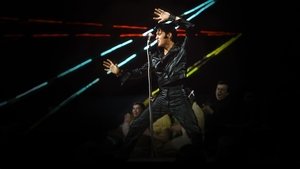
Return of the King: The Fall and Rise of Elvis Presley
He had one chance to show the world he was still the King of Rock 'n' Roll. Discover the story behind Elvis Presley's triumphant '68 comeback special.
2024
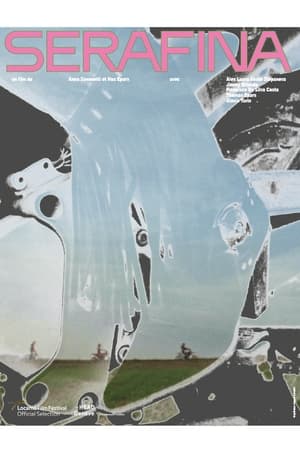
Serafina
An orthodox heroine astride a motorbike. Young people breaking the monotony of a country life through stunt riding. A meeting against a Western backdrop between two universes that are at odds with each other except for their very reason for being: passion.
2022
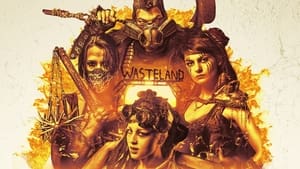
Beyond the Wasteland
Shot in Australia, USA, Italy, France, Germany, and Japan, Beyond the Wasteland follows the fans from around the world who go to extraordinary lengths in the name of Mad Max. Transporting us into the world of Mad Max, we explore the eccentric world of the fans, their costumes, and their machines as these oddball fans find their place amongst the Mad Max community. The documentary also follows original cast member, Bertrand Cadart as he continues his fight against stage IV leukemia and travels from his home on the Sunshine Coast to the “Wasteland,” the desert location of Mad Max 2 in Silverton, for the last time. Beyond the Wasteland not only celebrates life but the ability to change oneself through passion.
2022
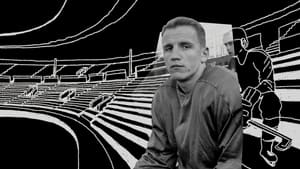
Koho – Future from Forssa
A documentary about Kari Aro, the distinctive manager of Koho -hockey-stick factory, whose visions were to change the world. Story about the fairy-tale -like success, the destructive power of money and Aro's faith in goodness of people.
2022
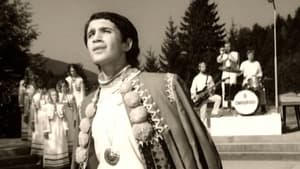
Mustache Funk
The early 70s is a golden epoch of our popular music. Hundreds of songs of exquisite beauty. Groundbreaking sound. Futuristic suits. How and whence could all of this emerge in a Soviet socialist republic? How did a brand new music scene, original in sound and philosophy in every way, and at the same time absolutely in sync with global music trends come forth? They weren't that fond of the Soviet label «VIA». And since neither of us is fond of this acronym, let us rechristen this music.
2021
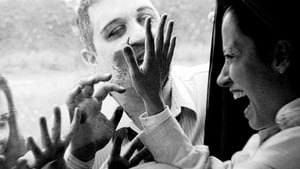
Zombies in the Sugar Cane Field: The Documentary
Tucumán, Argentina, 1965. Three years before George A. Romero's Night of the Living Dead was released, director Ofelio Linares Montt shot Zombies in the Sugar Cane Field, which turned out to be both a horror film and a political statement. It was a success in the US, but could not be shown in Argentina due to Juan Carlos Onganía's dictatorship, and was eventually lost. Writer and researcher Luciano Saracino embarks on the search for the origins of this cursed work.
2019
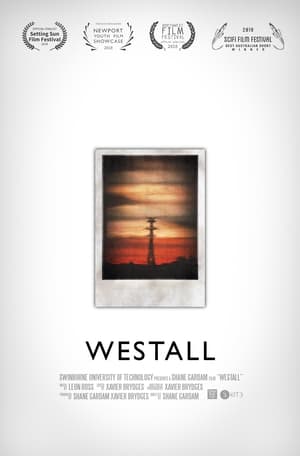
Westall
In 1966, over one hundred school kids became witness to one of the biggest UFO sightings in history. What they all have in common are five words… "I know what I saw." It still remains a mystery to this day.
2018
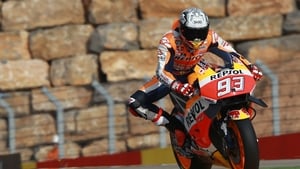
From Cervera to Tokyo
Documentary about MotoGP™ Marc Márquez’s 2016 season. In the film, different members of Márquez’ team explain for the first time the full scale of their preseason difficulties in 2016 as they tried to adapt the RC213V to the changes in the electronics and tyres introduced to the premier class last season.
2017

Drive-In Delirium: '60s and '70s Savagery
DRIVE-IN DELIRIUM is back and now delivering a collection of the most astounding trailer trash ever to engulf the Age of Aquarius and the Disco era in cinematic up-chuck! Bursting with over 6 hours of non-stop sex, violence, monsters and mayhem in 146 theatrical trailers.
2017
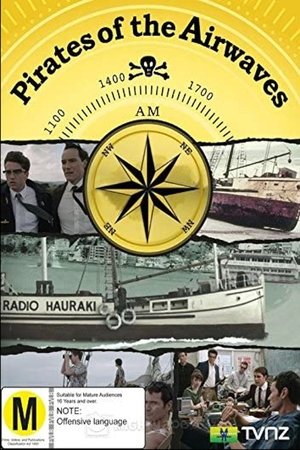
Pirates of the Airwaves
In 1966 a group of determined young men defied the New Zealand government and launched a pirate radio station aboard a ship in the Hauraki Gulf.
2014
The Doctor, The Tornado & The Kentucky Kid
THE DOCTOR, THE TORNADO & THE KENTUCKY KID is the electrifying follow-up to Mark Neale’s 2004 MotoGP smash hit FASTER. Narrated by Ewan McGregor, the movie tells the story of the biggest motorcycle race in American history, the 2005 Red Bull U.S. Grand Prix at Laguna Seca, California. It’s a tale of extraordinary characters chasing a dream in the face of real danger, under unimaginable pressure, with no margin for error. For lovers of maximum adrenaline action, this is the pure, unadulterated, 100% genuine article.
2006
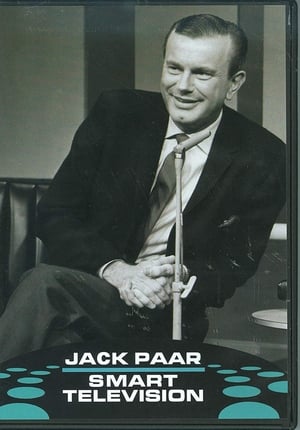
Jack Paar: Smart Television
PBS documentary examining the work of Jack Paar.
2003
A Grin Without a Cat
Chris Marker’s A Grin Without a Cat is an epic political essay tracing the rise and decline of the global left from the 1960s to the 1970s. Through archival footage and commentary, the film examines revolutionary movements in France, Latin America, and beyond, reflecting on the ideals, failures, and fading hopes of a generation.
1977
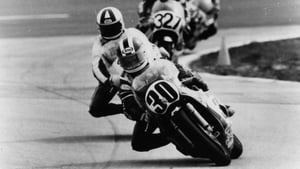
On Any Sunday
Documentary on motorcycle racing featuring stars of the sport, including film star Steve McQueen, a racer in his own right.
1971
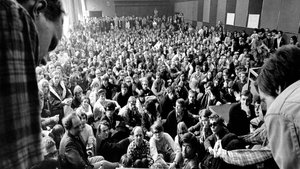
Kårhusockupationen
"The Invasion of the Student Union" - Stockholm, Sweden, May 24th. It all started as a regular student meeting, evolved into a mass-meeting and an invasion of the house, with all ended three days later. The students were primarily upset regarding a draft about a changed curriculum in higher education. They also pursued various political dogmas. The angry students called out for the responsible minister of the government. This happened to be Olof Palme. He arrived at the mass-meeting where he suffered much criticism.
1968
Spain '68
Spain, 1968. An analysis of the political and social situation of the country, suffocated by the boot of General Franco's tyrannical regime. (Filmed clandestinely in Madrid and Barcelona during the spring of 1968.)
1968
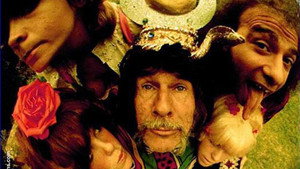
Mondo Hollywood
A documentary analyzing the social, political and cultural climate of Hollywood in the mid-1960s.
1967
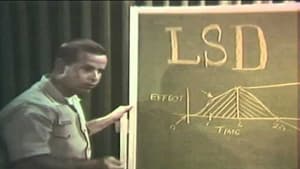
LSD
1967 Navy training film MN-10507-A. Navy physician talks about the dangers of LSD or "Russian roulette in a sugar cube." National Archives Identifier: 6379 "How LSD was discovered, the extreme dangers of using it and how it affects the brain and body."
1967
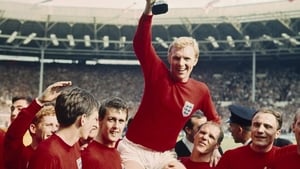
Goal!
This entertaining documentary of the World Cup Soccer tournament of 1966 follows the 15 countries competing for the sport's most coveted prize. Nigel Patrick narrates, with commentary provided by Brian Glanville. The executive producer spent $336,000 on the production and used 117 cameras to record nearly 48 hours worth of action. Four editors were employed to create the final 108-minute feature.
1966
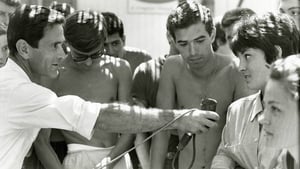
Love Meetings
Pier Paolo Pasolini sets out to interview Italians about sex, apparently their least favorite thing to talk about in public: he asks children if they know where babies come from; asks old and young women if they support gender equality; asks both sexes if a woman's virginity still matters, what do they think of homosexuality, if divorce should be legal, or if they support the recent abolition of brothels. He interviews blue-collar workers, intellectuals, college students, rural farmers, the bourgeoisie, and every other kind of people, painting a vivid portrait of a rapidly-industrializing Italy, hanging between modernity and tradition — toward both of which Pasolini shows equal distrust.
1965